Spiro has secured US$50 million in debt financing from Afreximbank, Nithio, and the Africa Go Green Fund.
This facility, announced in February 2026, is designed to accelerate the expansion of Spiro’s battery-swapping infrastructure and electric motorcycle fleet across key African markets.
The transaction builds on the company’s US$100 million equity raise in 2025 and reflects sustained institutional confidence in its Energy-as-a-Service model.
The capital will be allocated primarily to:
- Increasing the density and geographic coverage of battery-swapping stations.
- Growing the operational fleet of electric motorcycles.
- Enhancing proprietary technologies, including automated swapping systems, advanced battery management tools, and integration of renewable energy sources for charging.
This debt financing complements Spiro’s equity base, enabling capital-intensive infrastructure deployment while preserving ownership structure and supporting long-term scalability.
Current Scale and Operational Footprint
Spiro has established a significant presence across Africa:
- More than 80,000 electric motorcycles sold continent-wide.
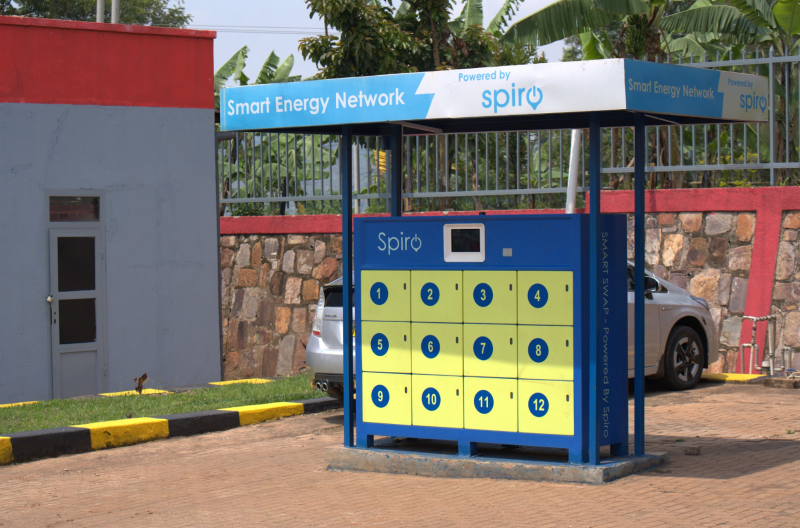
- Over 2,500 battery-swapping stations deployed.
- More than 30 million battery swaps completed.
- Over 1 billion CO₂-free kilometres driven.
In Kenya, where the company maintains its strongest concentration:
- More than 16,000 motorcycles were sold (representing a substantial share of the country’s cumulative 24,000 electric vehicles).
- Over 350 operational swap stations.
- Presence across more than 30 counties.
These metrics position Spiro as the leading player in Africa’s electric two-wheeler segment, particularly in high-utilisation urban and peri-urban transport markets.

Strategic and Sectoral Implications
The US$50 million facility carries several important implications for Africa’s e-mobility sector:
Infrastructure Density and Reliability
The capital enables Spiro to increase station density, reducing rider wait times and improving service availability. Higher density supports greater fleet utilisation and rider confidence, critical factors for widespread adoption in informal transport networks.
Fleet Expansion and Market Penetration
Additional motorcycles and stations allow Spiro to capture more riders in existing markets and accelerate entry into new countries. This scale strengthens network effects, where more stations attract more riders and generate higher swap volumes.
Technology Advancement
Funding directed toward proprietary systems, including automated swapping, battery health monitoring, predictive maintenance, and renewable energy integration, enhances operational efficiency and reduces long-term costs.
Cost Competitiveness for Operators
By maintaining predictable energy costs through swapping, Spiro continues to deliver a lower total cost of ownership compared to petrol motorcycles. This advantage is particularly compelling in markets with high fuel prices and volatile supply.
READ ALSO:
How Spiro’s Sh903 Million Funding Round Strengthens Its Growth Strategy
Signal of Commercial Viability
The participation of prominent development financiers such as Afreximbank (trade finance), Nithio (off-grid energy), and the Africa Go Green Fund (climate-focused infrastructure) validates the bankability of battery-swapping models in high-utilisation urban transport.

Operational Challenges and Execution Considerations
While the facility significantly strengthens Spiro’s position, several operational realities remain:
- Maintaining high station uptime and availability across diverse geographies and infrastructure conditions.
- Managing battery lifecycle, depreciation, and replacement costs.
- Mitigating reliance on imported components amid currency fluctuations and supply-chain disruptions.
- Balancing rapid expansion with quality control and rider training.
Successful navigation of these challenges will determine the extent to which Spiro can maintain its competitive edge and deliver consistent value to operators.
Broader Impact on Africa’s E-Mobility Ecosystem
The financing positions Spiro to play a transformative role in Africa’s clean transportation landscape.
By lowering operating costs, reducing urban emissions, and providing reliable mobility for informal-sector operators, the company contributes to multiple development objectives:
- Economic empowerment through reduced transport costs for riders.
- Environmental benefits via displacement of fossil-fuel vehicles.
- Energy security through reduced dependence on imported petroleum products.
- Job creation in station operations, maintenance, and related services.
As one of the most mature battery-swapping platforms in Africa, Spiro’s continued scaling sets a benchmark for infrastructure-led e-mobility models and supports the continent’s transition to sustainable urban transport.
Future Outlook
Spiro’s US$50 million debt facility from Afreximbank, Nithio, and the Africa Go Green Fund significantly bolsters its ability to expand battery-swapping infrastructure, grow its electric motorcycle fleet, and advance proprietary technology across Africa.
The funding reinforces Spiro’s leadership in the continent’s e-mobility sector and validates the commercial viability of Energy-as-a-Service models in high-utilisation urban transport.
This transaction enhances Spiro’s capacity to lower costs for operators, reduce emissions, and contribute to sustainable mobility at scale.
For the most current details on network expansion, station locations, or leasing terms, refer to official announcements from Spiro or its financing partners.
Spiro Overview
Spiro is an electric mobility company operating across several African markets, providing electric motorcycles and battery-swapping infrastructure.
Spiro Kenya runs large-scale electric motorbike operations, including in Spiro Mombasa, supporting last-mile delivery riders and boda boda operators with battery subscription models. Spiro Kenya prices vary depending on the bike model and battery plan, typically structured around daily or weekly battery swap subscriptions rather than full upfront purchases.
Spiro Nigeria is another major market, where the company deploys electric bikes and swap stations to reduce fuel costs and emissions.
The Spiro EKON and Spiro M1 are electric motorcycle models designed for commercial transport use, optimised for durability, range, and battery-swapping compatibility across urban African environments.
Ronnie Paul is a seasoned writer and analyst with a prolific portfolio of over 1,000 published articles, specialising in fintech, cryptocurrency, climate change, and digital finance at Africa Digest News.