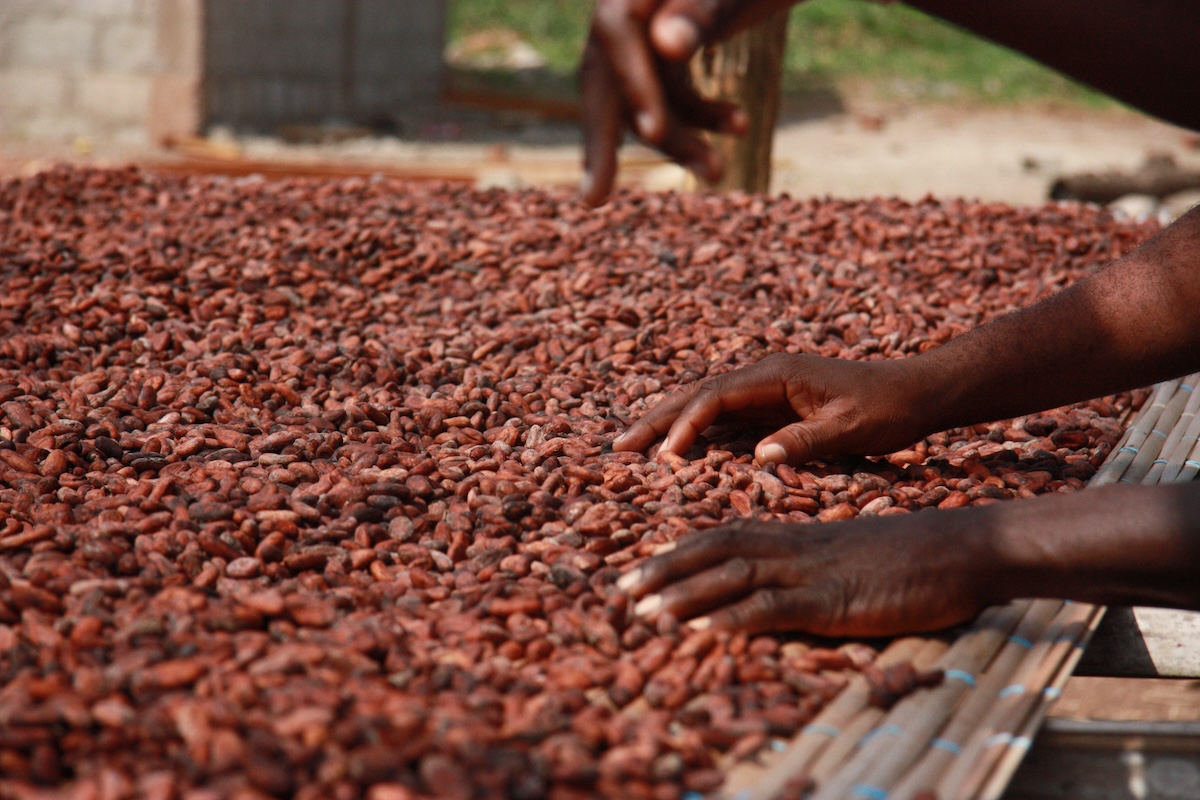
Maize is the default crop for most Kenyan smallholder farms. It fills the plate as ugali. It has the most established seed supply chains.
Local agrovet shops stock it before almost anything else. For decades, this made sense in areas with steady, predictable rainfall.
But maize is a thirsty crop. It needs consistent moisture through germination, flowering, and grain fill. When rain arrives late or stops for two or three weeks during flowering, maize yields drop fast.
National average maize yields in Kenya sit around 1.6 to 2 tons per hectare, well below the crop’s real potential, and drought is one of the biggest reasons for that gap.
In low rainfall years, especially across semi-arid Eastern Kenya, parts of Nyanza, and the lower midlands, maize is increasingly the wrong bet.
Sorghum, millet, and cassava were the traditional crops in many of these same areas long before maize became dominant.
They still make agronomic sense today. The question is whether farmers can afford to make the switch back.
Crop Comparison at a Glance
| Crop | Water need | Maturity time | Yield potential | Best zones |
|---|---|---|---|---|
| Maize (drought tolerant hybrid) | High, needs 600 to 900mm well distributed through the season | 90 to 130 days | 1.6 to 4.5 tons per hectare, depending on variety and rainfall | Medium altitude zones with reliable rain, such as Trans Nzoia, Uasin Gishu, and Bungoma |
| Sorghum | Low, tolerates 400 to 700mm and short dry spells | 90 to 150 days depending on variety | 2.5 to 4.5 tons per hectare for improved varieties like Gadam | Semi-arid Eastern Kenya, Lake Basin, and lower midlands from 500 to 1,750 meters altitude |
| Finger millet | Low to moderate, performs well on 600 to 900mm | 86 to 135 days | 1.25 to 5.68 tons per hectare, depending on variety and management | Western highlands and parts of the Rift Valley, up to 2,000 meters altitude |
| Cassava | Very low, tolerates as little as 500mm per year | 8 to 16 months depending on variety | 15 to 40 tons per hectare, with some improved varieties reaching up to 50 tons | Coast, Western, and Central Kenya, and semi-arid lowlands up to 2,000 meters |
Figures come from KALRO variety data and published agronomy guides. Actual results vary by soil, management, and the specific variety planted.
Sorghum
Sorghum is one of the most drought tolerant cereals grown in Kenya. Its root system reaches deeper into the soil than maize, and it can pause growth during a dry spell, then resume once rain returns.
Improved varieties like Gadam and Seredo mature in as little as three months, which means the crop can complete its cycle before a season’s rain runs out.
Sorghum grows well across semi-arid Eastern Kenya, parts of Nyanza, and the Lake Basin region. It tolerates poor soils better than maize and needs less fertilizer to produce a reasonable yield.
Market demand has grown steadily in recent years, driven partly by breweries and food processors buying sorghum as a raw material.
Prices are usually lower than maize, but more stable in drought years, since maize supply tends to crash first.
Finger Millet and Pearl Millet
Millet covers two distinct crops in Kenya. Finger millet, locally known as wimbi, grows best in the western highlands and parts of the Rift Valley.
Pearl millet is suited to hotter, drier conditions and is grown mainly in Tharaka Nithi, Mbeere, and Mwingi.
Both types are highly drought tolerant and can produce a harvest on rainfall levels that would fail a maize crop.
Finger millet has strong nutritional value and a long shelf life, since its small grain is naturally resistant to storage pests.
Traditional local varieties yield poorly, often under a ton per hectare, but newer KALRO varieties can more than triple that figure under good management.
Market demand is real but limited by processing capacity. Some large millers report running below capacity because farmers are not producing enough raw millet to meet demand, which suggests room for expansion.
Cassava
Cassava is arguably the most drought resilient staple crop grown in Kenya. Once established, it survives extended dry periods that would kill most cereals outright, and some varieties tolerate rainfall as low as 500mm per year.
It also has an unusual advantage after harvest. Mature cassava can often stay in the ground for months without spoiling, giving farmers flexibility on when to harvest and sell.
The tradeoff is time. Cassava takes far longer to mature than any cereal on this list, often 8 to 16 months depending on the variety.
READ ALSO :
This makes it a poor fit for farmers who need a quick harvest to cover immediate food needs.
Cassava grows across three main belts in Kenya, the Coast, Western, and Central regions, and newer disease resistant varieties have pushed yields well above older local types.
Market demand includes both fresh consumption and flour processing, and both channels have grown as awareness of cassava’s drought resilience has spread.
Why Maize Still Dominates Anyway
Given all this, it is fair to ask why maize still covers so much farmland in drought prone areas. The honest answer has little to do with agronomy.
Ugali is central to Kenyan food culture, and maize meal is what most households expect to eat daily.
Sorghum and millet can be used similarly, but the taste and texture differ, and shifting a household’s staple food takes time and willingness that not every family has.
Market infrastructure also favors maize heavily. Millers, traders, and government buying programs are built around maize at a scale that sorghum, millet, and cassava do not match.
A farmer who grows maize has an easier time finding a buyer, even in a poor season, than a farmer who grows an alternative crop with a thinner local market.
Seed availability follows the same pattern. Maize seed is sold at nearly every agrovet shop in the country.
Certified sorghum, millet, and cassava planting material is harder to find outside of extension programs or specific project areas, which limits how quickly farmers can even try these alternatives.
What’s Changing Adoption
This picture is shifting, slowly. Government and NGO backed programs, often run through KALRO in partnership with organizations like the Alliance for a Green Revolution in Africa, have expanded access to improved sorghum, millet, and cassava seed in several counties.
Some of these programs distribute planting material directly to farmers alongside training on agronomic practices.
Seed subsidy and multiplication schemes have also helped.
Programs supported by the World Bank funded Kenya Climate Smart Agriculture Project have worked to get improved finger millet varieties into farmer hands in counties like Bomet, Kericho, and Busia, alongside training on planting methods that raise yields significantly compared to traditional broadcast planting.
Market prices for alternative grains have shifted too. Sorghum in particular has drawn commercial interest from breweries and food processors, which has pushed demand and price signals in a direction that makes the crop more attractive to grow, not just as a subsistence fallback, but as a cash crop in its own right.
Practical Takeaway Box
If you farm in semi-arid Eastern Kenya or the Lake Basin, consider sorghum as a primary crop rather than a backup. Improved varieties like Gadam mature quickly and tolerate the erratic rainfall common in these zones.
If you farm in the western highlands or parts of the Rift Valley, finger millet is worth testing on part of your land. It fits the altitude and rainfall pattern well, and demand from millers is currently outpacing supply.
If you farm at the Coast, in Western Kenya, or in Central Kenya, and your soil holds up under long dry spells, cassava is worth the longer wait.
Its resilience after maturity gives you more flexibility than any cereal on this list.
If your land has reliable rainfall and reasonable market access, maize can still make sense, especially with drought tolerant hybrid varieties.
But if you are farming in a zone where rain has become unpredictable, treating maize as the only option is a bet against the odds.
Where to Get Started
KALRO centers across the country distribute improved seed for sorghum, millet, and cassava, along with agronomic guidance suited to local conditions.
County agricultural offices are usually the fastest way to find out what improved varieties are available near you and whether any current seed distribution programs are active in your area.
Asking about certified seed specifically, rather than accepting whatever is locally available, is one of the simplest ways to raise your odds in a difficult season.