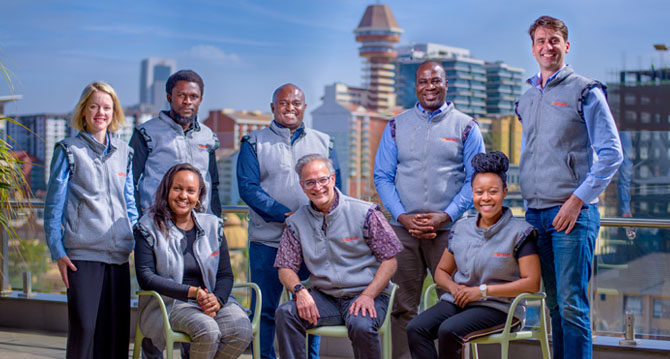
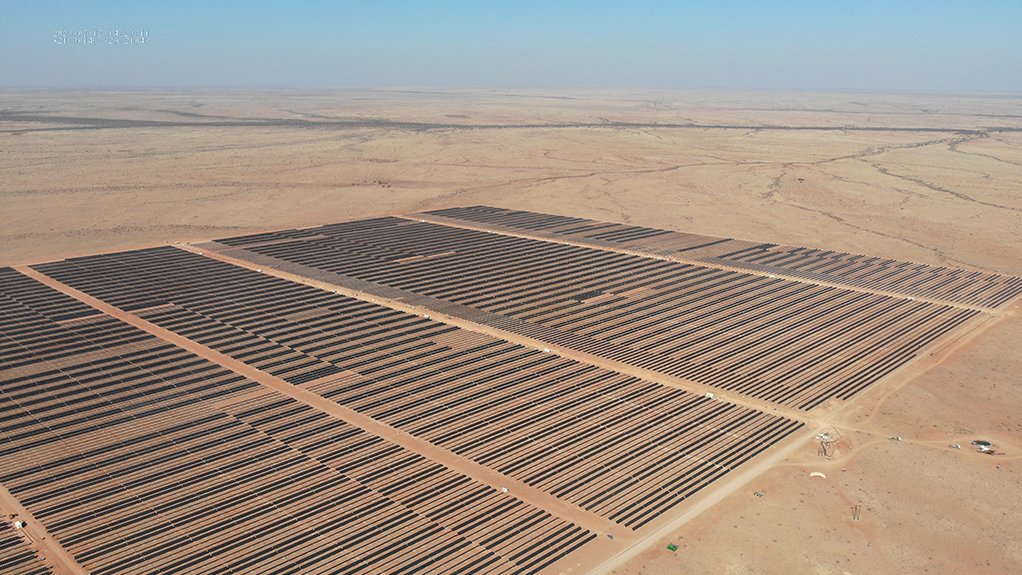
SolarAfrica has secured R1.5 billion (approximately US$94 million) in debt financing from Rand Merchant Bank (RMB, part of FirstRand Bank) and Investec Bank Limited to develop SunCentral 2, a 114 MW utility-scale solar power plant in the Northern Cape.
Announced on February 10, 2026, this transaction marks a key milestone in the company’s transition from rooftop solar installations to large-scale generation.
The facility will deliver electricity to industrial and commercial customers via wheeling arrangements over South Africa’s national grid, providing a reliable, cost-effective renewable supply amid persistent load-shedding and capacity constraints at Eskom.
SunCentral 2 follows the operational SunCentral 1 (also 114 MW) and precedes SunCentral 3, forming a combined 342 MW portfolio, with SolarAfrica maintaining a broader 3 GW renewable pipeline.
The Persistent Power Crisis Driving Private-Sector Intervention
South Africa’s electricity system has faced chronic under-capacity, frequent load-shedding, and rising tariffs from Eskom.
These challenges disrupt industrial operations, increase production costs, and deter investment. Businesses increasingly seek alternatives that guarantee stable supply without the capital expenditure of on-site generation.
Utility-scale solar, paired with wheeling, addresses this demand by enabling off-site renewable procurement. Power is generated at a central facility and transmitted via the existing grid to end-users, who benefit from predictable pricing and reduced exposure to Eskom volatility.
Why Banks Are Providing Debt Financing
Commercial banks such as RMB and Investec are stepping in due to several compelling factors:
- Proven Project Viability: Utility-scale solar offers predictable cash flows through long-term power purchase agreements (PPAs) or wheeling contracts with creditworthy industrial and commercial off-takers. This de-risks lending compared to less certain rooftop models.
- Strong Risk-Adjusted Returns: Debt facilities benefit from priority repayment, secured assets (including the solar plant and associated infrastructure), and government-backed renewable frameworks that support bankability.
- Alignment with ESG and Transition Objectives: South African banks face pressure to finance sustainable projects. Utility-scale renewables contribute to decarbonisation, energy security, and compliance with environmental lending policies.
- Scalable Impact: The SunCentral development includes investment in a main transmission substation capable of handling up to 2 GW, enabling future projects and creating broader grid capacity for renewables.
- Market Momentum: Private capital is filling the gap left by delayed public procurement and Eskom constraints, with wheeling models gaining regulatory support and traction among large consumers.
David McDonald, CEO of SolarAfrica, stated, “This funding enables us to scale meaningfully and deliver power solutions that businesses can rely on. Companies want electricity that is clean, affordable, and consistent.”
READ ALSO:
How Standard Bank Structured a $250 Million Deal to Scale Aradel Energy
Benefits for Industrial and Commercial Customers
The wheeling model provides end-users with:
- Access to renewable energy without upfront capital investment in on-site systems.
- Stable, long-term pricing insulated from Eskom tariff increases.
- Improved energy reliability and reduced exposure to load-shedding.
- Contribution to sustainability targets and potential carbon credit opportunities.
This structure supports industrial competitiveness and supports South Africa’s just energy transition goals.
Broader Implications for South Africa’s Energy Landscape
The transaction illustrates the growing role of private-sector debt in addressing the country’s energy constraints.
By financing utility-scale solar with grid integration, banks facilitate scalable renewable deployment, enhance grid resilience, and accelerate the shift from coal-dependent generation to cleaner sources.
SolarAfrica’s portfolio expansion, coupled with similar projects, demonstrates that commercial financing can deliver meaningful capacity additions while preserving developer control and aligning with national priorities.
Looking Ahead
Banks’ participation in funding SunCentral 2 reflects a strategic recognition that utility-scale solar, delivered through wheeling, offers a bankable, high-impact solution to South Africa’s power crisis.
The R1.5 billion facility not only advances SolarAfrica’s 3 GW pipeline but also signals increasing confidence in private-led renewable initiatives.
As of February 11, 2026, this development reinforces the critical role of commercial lending in supporting energy security, industrial reliability, and the transition to sustainable power.
For further details, refer to official statements from SolarAfrica, Rand Merchant Bank, or Investec.
SolarAfrica Overview
SolarAfrica inverter solutions are part of the company’s commercial and industrial solar PV and battery storage systems, typically delivered under Power Purchase Agreements rather than sold as standalone retail products.
SolarAfrica contact details: Tel +27 12 881 4800, email info@solarafrica.com. SolarAfrica address: 49 Via Salara, Irene Corporate Corner, Centurion, Gauteng, South Africa.
SolarAfrica is often ranked among the top 10 solar companies in South Africa, focused on C&I renewable energy projects. Public SolarAfrica annual financial statements are not widely available.
SolarAfrica De Aar refers to activity in large solar regions like De Aar, though multiple developers operate there.
There is no known link between SolarAfrica and any “SOLAR AFRICA vessel.” For solar energy Africa George, SolarAfrica supports projects nationally, including the Western Cape region.
Ronnie Paul is a seasoned writer and analyst with a prolific portfolio of over 1,000 published articles, specialising in fintech, cryptocurrency, climate change, and digital finance at Africa Digest News.