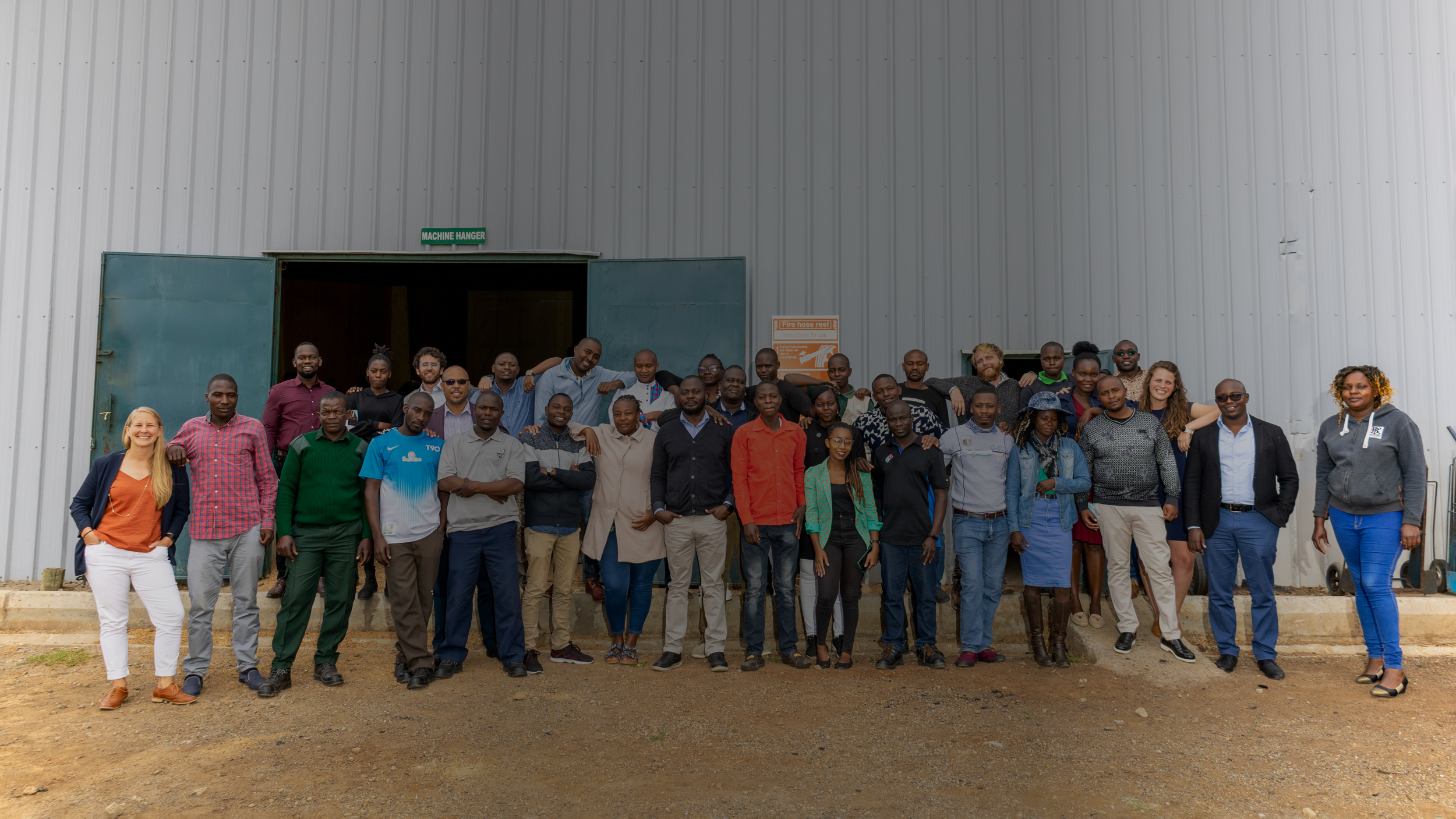
Holocene, a specialised climate tech investment fund focused on Southern Africa, has announced the final close of Holocene Ventures Fund I (HVF1), completing a fundraise that has already deployed capital into 10 companies across electric mobility, circular economy infrastructure, and sustainability solutions in just 18 months.
The close signals growing investor conviction that Africa’s demographic and economic trajectory represents a climate tech investment opportunity as much as a climate risk.
The Investment Thesis Behind HVF1
The Holocene Ventures Fund I final close for Southern Africa climate tech in 2026 is built around a framing that distinguishes Holocene from conventional climate funds.
Africa will double in population, urbanise at scale, and dramatically increase consumption levels within the lifetimes of people investing and building today.
That trajectory is typically framed as an environmental problem to be managed.
Holocene’s thesis inverts it: a continent building its cities, mobility systems, and supply chains from scratch has the opportunity to do so with climate-smart infrastructure from the outset, rather than inheriting the legacy carbon systems that developed economies must now expensively retrofit.
Josh Romisher, General Partner at Holocene, captured the choice directly: the continent’s growth can be seen as an impending climate catastrophe or a massive innovation opportunity.
Holocene chooses the latter, and its investor base has backed that choice with capital.
Why Investors Are Backing Climate Tech Innovation Funds in Africa
Why investors are backing climate tech innovation funds in Africa in 2026 reflects a maturing understanding of where climate risk and climate return intersect.
Africa contributes a small fraction of global greenhouse gas emissions but absorbs a disproportionate share of climate impacts.
The infrastructure gap that creates vulnerability also creates investment opportunity: markets where clean energy, sustainable mobility, and circular economy solutions are not yet entrenched are markets where climate tech companies can grow without competing against deeply subsidised incumbent industries.
Southern Africa climate tech investment through vehicles like Holocene also addresses a structural gap in the African venture capital landscape.
Most African VC focuses on fintech, e-commerce, and health. Climate tech has been underfunded relative to the scale of the challenge and the size of the addressable market.
Holocene’s fund close adds capital to a category that early-stage African climate entrepreneurs have found difficult to access from generalist funds.
The Holocene Portfolio: ScootHero, FARO, and Yongeza
The Holocene Ventures portfolio including ScootHero, FARO, and Yongeza across Southern Africa’s climate tech landscape illustrates the range of approaches the fund is backing within a coherent climate thesis.
ScootHero is an electric mobility platform that has deployed more than 500 electric motorbikes and over 50 battery-swap stations across South Africa, applying the battery-swapping model that has proven effective in East Africa to the South African market.
For a country with significant urban commuting demand and a grid that is itself undergoing decarbonisation, electric two-wheelers represent both a mobility solution and a load management opportunity.
FARO is a circular economy company leveraging technology-enabled supply chains for unused inventory.
READ ALSO :
Will Egypt’s Extended Plastic Project Deliver a Circular Breakthrough?
The circular economy in African markets operates differently from European models: informal reuse networks have always existed, and FARO’s technology layer formalises and scales what communities have practised for generations.
Reducing waste through better inventory matching is a climate intervention with immediate commercial returns.
Yongeza is an e-mobility infrastructure company operating in Uganda, extending Holocene’s thesis beyond South Africa into East Africa and demonstrating the fund’s appetite for backing infrastructure that supports the EV ecosystem rather than only the vehicles themselves.
Electric Mobility, Circular Economy and Africa’s Climate Tech Opportunity
The electric mobility and circular economy investment focus within African climate tech venture capital reflects two of the highest-impact intervention points available to early-stage investors on the continent.
Transport and waste are major emissions contributors in African cities, and both sectors are at early enough stages of formalisation that new entrants can shape the infrastructure rather than disrupting entrenched systems.
Southern Africa’s climate tech VC fund landscape in 2026 for EV mobility and circular economy investment is thin relative to the opportunity.
Holocene’s fund close does not fill that gap, but it establishes a replicable model: a specialist manager with deep regional context, a defined climate thesis, and a portfolio that generates both financial returns and measurable environmental outcomes.
What the Final Close Signals
For African climate tech more broadly, Holocene’s HVF1 final close is a proof point that specialist climate tech funds focused on African markets can attract investor capital and deploy it effectively.
Ten portfolio companies in 18 months is a deployment pace that suggests deal flow is not the constraint.
The constraint has been patient, informed capital willing to back climate tech solutions designed for African conditions rather than adapted from European or American models.
That constraint is beginning to ease. Holocene is one signal of that shift.
The investors who backed HVF1 are, in Romisher’s framing, choosing to see Africa’s growth as the opportunity.
The entrepreneurs building ScootHero, FARO, Yongeza, and the seven other HVF1 portfolio companies are the ones turning that choice into infrastructure.