The escalation of military activity in and around the Strait of Hormuz in 2026 has produced the most severe short-term disruption to global oil and liquefied natural gas flows since the 1979 Iranian Revolution.
Between mid-February and mid-March 2026, Brent crude futures rose from approximately US$78 per barrel to peaks above US$118, with spot LNG prices in Asia (JKM) exceeding US$22/MMBtu for extended periods.
Even partial closure scenarios (20–40% reduction in through-flow) trigger immediate upward pressure on energy input costs across Europe, South Asia, East Asia, and parts of Africa.
For import-dependent economies, particularly those in the Middle East, South Asia, and sub-Saharan Africa, the combination of higher fuel prices, freight-rate spikes, and insurance war-risk premiums has rapidly increased the delivered cost of fossil fuels.
This price shock simultaneously raises the economic case for accelerated deployment of renewables and creates acute short-term financing constraints that threaten to delay or derail the very transition it should catalyse.
The Positive Case: Reduced Import Dependence Through Solar and Wind
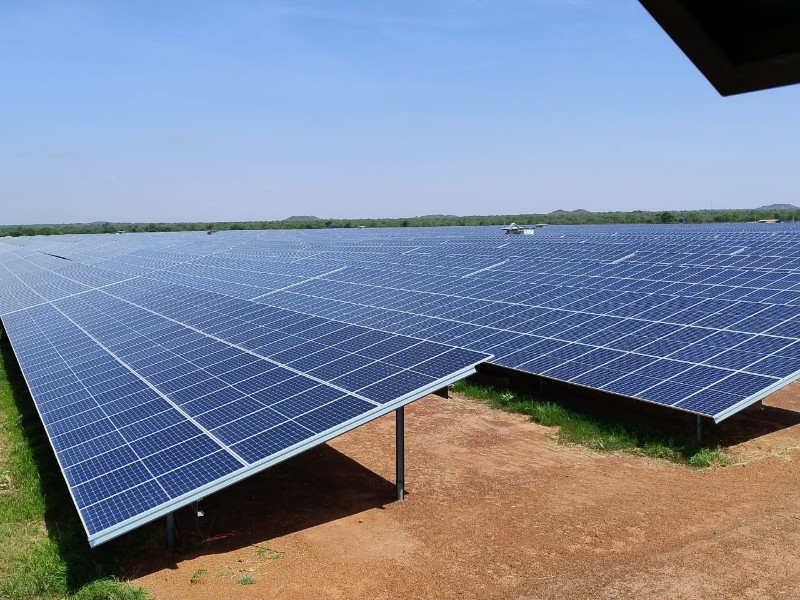
Higher fossil fuel prices improve the levelised cost of energy (LCOE) competitiveness of solar PV and onshore wind in nearly every major importing market:
- In South Africa, Morocco, Egypt, Jordan, Kenya, and parts of West Africa, utility-scale solar PV LCOE is already below US$30/MWh in recent auctions; the 2026 price shock pushes the avoided-cost benchmark well above US$80–100/MWh in many cases.
- Distributed solar + storage solutions for commercial and industrial (C&I) users now deliver payback periods under 3–4 years in high-diesel-cost environments (Nigeria, Pakistan, Bangladesh, and Lebanon).
- Floating solar on reservoirs and hybrid wind–solar–battery projects gain viability in markets previously considered marginal.
The macro effect is clear: each sustained dollar increase in Brent reduces the net present value of future fossil fuel import bills and simultaneously increases the NPV of renewable generation assets.
For many governments and large corporates, 2026 has created the strongest cost-based rationale for renewables in at least a decade.
Barriers: Financing Challenges in Volatile Conditions
Despite the improved fundamentals, several interlocking factors are constraining capital deployment:
- Elevated Interest Rates and Risk Premiums: Central banks in emerging markets have raised policy rates in response to imported inflation. Ten-year government bond yields in South Africa, Egypt, Kenya, and Nigeria have risen 150–400 basis points since January 2026. Project finance margins have widened by a similar magnitude.
- Currency Depreciation and FX Hedging Costs: Sharp devaluations in the Egyptian pound, Nigerian naira, Turkish lira, and Pakistani rupee increase the local-currency cost of debt service on foreign-currency loans. FX hedging costs have risen to 8–14% per annum in several markets, rendering many projects unfinanceable on a hedged basis.
- Insurance and Political Risk Coverage: War-risk premiums for hull, machinery, and business interruption coverage in the Gulf and Red Sea have increased five- to ten-fold. Multilateral and export-credit-agency cover is either unavailable or priced at levels that render projects marginal.
- Liquidity Squeeze on Developers: Many independent power producers and C&I solar developers are experiencing delayed payments from utilities or large corporates, reducing internal cash flow available for new project equity.
READ ALSO:
War Diverts Climate Finance: Why Conflict Zones in the Middle East Lag Global Green Transitions
The net result is a paradoxical situation: the economic case for renewables has never been stronger, yet the cost and availability of project finance have deteriorated sharply in precisely the markets that most need diversification.
Recommendations: Innovative Green Fintech Instruments
To prevent the current renewables window from closing due to financing constraints, several targeted instruments could be deployed rapidly:
- Local-Currency Green Liquidity Facilities Multilateral development banks and central banks could establish dedicated facilities that provide long-term local-currency loans or guarantees to renewable projects, reducing FX risk for developers and offtakers.
- First-Loss Guarantees and Partial Risk Coverage Expanded use of first-loss tranches (10–20% of project debt) provided by DFIs or climate funds would lower the risk premium demanded by commercial lenders and bring more projects to financial close.
- Pay-as-You-Save / Energy-as-a-Service Platforms Green fintech models that finance distributed solar or storage on a usage-based or savings-linked repayment structure can bypass traditional balance-sheet constraints for SMEs and public entities.
- Carbon-Linked Revenue Floors Blended-finance structures that include a minimum carbon-credit revenue floor (via forward purchase agreements) can improve project bankability in markets where voluntary or compliance carbon markets are emerging.
- Accelerated Concessional Blending Windows: Temporary increases in concessional debt/grant blending ratios (e.g., 30–50% grant element) for projects reaching financial close before end-2027 would directly counter the current high-rate environment.
Future Outlook
The 2026 energy crisis triggered by disruptions in the Strait of Hormuz has created the strongest economic rationale in years for accelerating renewable energy deployment in import-dependent economies.
Yet the same shock through higher interest rates, currency depreciation, risk premiums, and liquidity squeezes is simultaneously tightening the financing conditions required to realise that opportunity.
Without deliberate intervention in the form of local-currency facilities, first-loss guarantees, pay-as-you-save models, and increased concessional blending, the renewables window opened by high fossil-fuel prices risks closing before meaningful deployment can occur.
The next 12–18 months represent a critical juncture: decisive action by development finance institutions, central banks, and climate funds can convert a temporary price shock into lasting structural change in energy systems.
Failure to act will likely extend reliance on volatile fossil imports and delay the region’s green transition by years.
Ronnie Paul is a seasoned writer and analyst with a prolific portfolio of over 1,000 published articles, specialising in fintech, cryptocurrency, climate change, and digital finance at Africa Digest News.