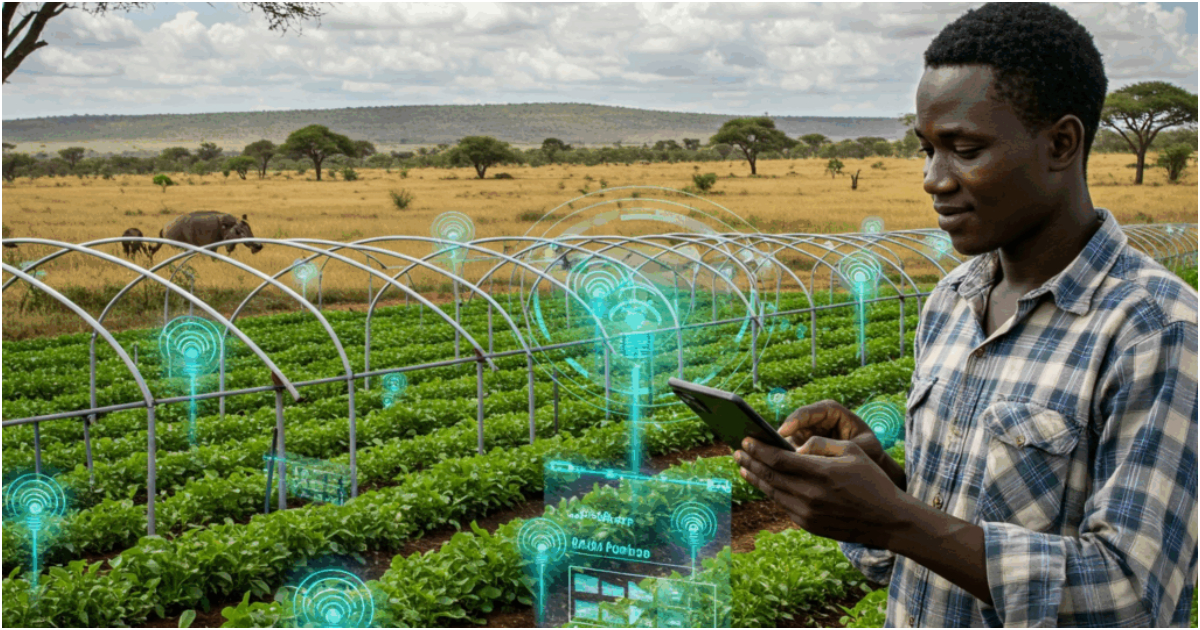
Kenya’s cold chain sector has transitioned from traditional asset-heavy models to innovative, service-oriented approaches that prioritise accessibility, affordability, and sustainability.
As of 2026, business models such as pay-per-use (often termed Cooling-as-a-Service or CaaS) and Logistics-as-a-Service (LaaS) address critical challenges including high upfront capital costs, post-harvest losses, and fragmented supply chains in agriculture, fisheries, and pharmaceuticals.

These models shift the focus from ownership to usage-based access, enabling smallholder farmers, fisherfolk, and SMEs to participate in formal cold chains without significant financial barriers.
This evolution supports Kenya’s goals of reducing food waste, enhancing export competitiveness, and promoting climate-resilient agriculture.
Pay-Per-Use and Cooling-as-a-Service Models
Pay-per-use models, commonly implemented as Cooling-as-a-Service (CaaS), allow users to pay only for the storage or cooling capacity they consume, typically on a per-kilogram-per-day, per-crate-per-day, or per-service basis. This eliminates the need for large capital investments in equipment or facilities.

Prominent examples include SokoFresh, which deploys off-grid, solar-powered cold rooms at farm level and charges farmers an affordable fee for storage while providing market linkage services.
Similarly, initiatives supported by organisations such as the Kenya Climate-Smart Cold-Chain Alliance and partners like InspiraFarms offer pay-per-kilo or pay-per-service arrangements for pre-cooling, storage, and packhouse access.
These models lower adoption thresholds, improve cash flow for users, and incorporate tiered pricing to incentivise volume while ensuring vendor profitability.
They prove particularly effective in addressing 30–50% post-harvest losses in perishable commodities by providing immediate, on-demand cooling.

Logistics-as-a-Service in the Cold Chain
Logistics-as-a-Service extends beyond storage to encompass end-to-end temperature-controlled supply chain solutions, including warehousing, transportation, monitoring, and last-mile delivery.
Providers offer integrated platforms where clients access comprehensive services on a usage or subscription basis, often leveraging digital tools for tracking and optimisation.

Companies such as Keep IT Cool, through its Markiti platform, deliver scalable cold chain solutions combining solar-powered hubs, temperature-controlled logistics, and B2B e-commerce connectivity for fisherfolk and poultry farmers.
Partnerships, including with Roam for electric delivery motorcycles, enable fully electric cold-chain networks, reducing emissions while providing reliable transport.
READ ALSO:
What Mirova’s $19 Million Investment Means for Kenya’s Cold Chain
Larger operators like Cold Solutions Kenya and ARCH Cold Chain Solutions provide one-stop-shop services, incorporating advanced monitoring, renewable energy integration, and customised logistics to serve pharmaceutical, agricultural, and food sectors across East Africa.
Comparative Advantages and Sector Impact
Pay-per-use models excel in first-mile applications, enabling small-scale producers to access cooling without ownership risks.
In contrast, Logistics-as-a-Service offers comprehensive coverage for mid- and last-mile segments, supporting larger volumes and export-oriented supply chains through integrated technology and infrastructure.
Both approaches contribute to sustainability by incorporating solar power and electric transport, aligning with global trends toward green cold chains.
They facilitate greater market access, reduce spoilage, and enhance livelihoods, particularly in underserved rural and coastal areas.
Future outlook
Kenya’s cold chain business models have matured significantly by 2026, with pay-per-use and Logistics-as-a-Service frameworks democratising access to essential infrastructure.
These innovations lower entry barriers, promote efficiency, and support economic and environmental objectives in a sector critical to food security and trade.
Continued investment and collaboration among stakeholders will further refine these models and expand their reach.
For detailed insights into specific providers, refer to official company resources and industry reports from organisations such as the Global Cold Chain Alliance and the Efficiency for Access initiative.
Ronnie Paul is a seasoned writer and analyst with a prolific portfolio of over 1,000 published articles, specialising in fintech, cryptocurrency, climate change, and digital finance at Africa Digest News.