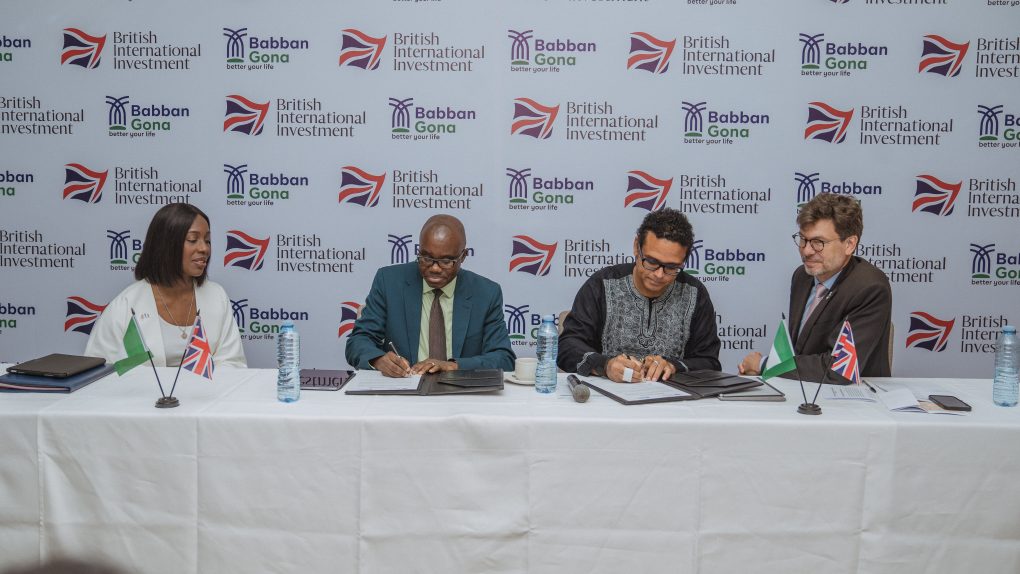
has reached financial close on a $300 million corporate loan facility.
The funding supports construction of what will become Burkina Faso’s largest power plant.
This AFC Burkina Faso power plant deal marks the Corporation’s very first investment in the country.
AFC has already disbursed the initial $60 million tranche. The funds are going to Aksa Enerji Üretim A.Ş., Türkiye’s largest publicly listed power generation company.
Aksa is developing a 119 megawatt thermal plant in Ouagadougou. Operations are expected to begin in 2027.
Why This Burkina Faso Energy Investment 2026 Matters
This Burkina Faso energy investment 2026 arrives at a critical moment for the country.
Burkina Faso has one of the lowest electricity access rates in the world.
Only around one in five people among its 24 million citizens currently have access to power.
The country also imports roughly 60 percent of its electricity from neighboring nations.
That dependence leaves households, businesses, and industries exposed to supply disruptions and elevated costs.
Once operational, the new plant is expected to cut Burkina Faso’s reliance on imported electricity by more than half.
It will also significantly strengthen domestic generation capacity.
AFC President and CEO Samaila Zubairu said reliable electricity remains fundamental to economic transformation.
He noted that without dependable power, countries cannot industrialise, businesses cannot grow, and communities cannot reach their full economic potential.
The Aksa Enerji Africa Power Project Track Record
This latest deal is not Aksa’s first major African venture.
The Aksa Enerji Africa power project portfolio already includes plants in Ghana, Madagascar, and Mali.
In 2025, AFC provided Aksa with a $150 million corporate loan facility to support utility-scale gas-to-power projects in Senegal and Ghana.
That earlier financing helped build a 255 megawatt combined-cycle gas plant in Senegal, designed to run on domestic natural gas and deliver more reliable, lower-emission baseload power.
That successful track record helped establish Aksa as a trusted partner for large-scale energy infrastructure across Africa.
Aksa Energy Chairman Cemil Kazanci called the Burkina Faso project an important milestone in the company’s long-term commitment to the continent.
He said the partnership with AFC would strengthen energy security and improve reliability for millions of people.
A Structure Built for Difficult Markets
The Burkina Faso deal is structured as a corporate loan to Aksa directly, rather than classic project finance tied to the plant itself.
In challenging jurisdictions, this structure allows deals to move faster.
It also reflects a broader pattern across the Sahel. Western lenders and companies have largely pulled back from Burkina Faso since the 2022 coups, wary of sanctions risk and instability.
Turkish firms have expanded steadily into that gap, and pan-African institutions like AFC have followed a similar path.
The choice of a thermal plant over renewables also reflects practical necessity.
Solar capacity is growing in Burkina Faso too, but industries still need reliable baseload power that keeps running after sunset.
READ ALSO:
Convergence Partners Energy Finance Commits $20 Million to Anzana Electric to Scale Hydropower and Grid Distribution Across Africa
Africa Finance Corporation Energy 2026 Strategy
This deal fits into a much larger Africa Finance Corporation energy 2026 push.
The Corporation, created in 2007, was designed specifically to finance projects that Western capital often avoids.
Expanding reliable electricity access sits at the center of AFC’s mission to accelerate industrialisation and strengthen economic resilience across the continent.
Zubairu framed the investment within a longer timeline, noting that Africa’s path to industrialisation and global competitiveness by 2050 depends on the infrastructure decisions being made today.
For AFC, success in Burkina Faso could open the door to further deals across the wider Alliance of Sahel States, a region where energy needs remain vast and financing options remain scarce.
What Comes Next
Dependence on imported electricity carries political risk as well as economic cost.
The region has already seen how power exports can become leverage, as when electricity flows from Nigeria to Niger were cut following the 2023 coup in Niamey.
For Burkina Faso, building domestic generation capacity is about more than economics.
It is also about securing greater control over its own energy future.
If the Ouagadougou plant delivers as planned by 2027, it could serve as a model for how targeted infrastructure financing helps address some of the continent’s most persistent electricity gaps, even in markets many traditional lenders have avoided.