Ronnie Paul is a seasoned writer and analyst with a prolific portfolio of over 100 published articles, specialising in climate change at Africa Digest News.
While supercomputers struggled to predict the intensity of the 2024 Amazon fire season, exacerbated by historic drought and releasing millions of tonnes of CO₂, Yanomami fire watchers in Brazil’s Roraima state used centuries-old lunar and plant-signal techniques to issue accurate warnings weeks earlier.
These traditional methods, combined with integrated fire management like prescribed burns and firebreaks, helped limit fires on Indigenous lands compared to surrounding areas.
This isn’t an isolated case: Indigenous knowledge systems are proving remarkably effective at short-term forecasting and adaptation, often filling gaps left by Western models that prioritise long-range projections over local variability.
As climate change accelerates, blending these time-tested practices with modern science offers a path to more resilient ecosystems and communities. But realising this potential requires overcoming deep-seated barriers to inclusion.
Examples from Amazon, Arctic Inuit Sea-Ice Forecasting, Aboriginal Australian Fire Management
Amazon: Yanomami and Broader Indigenous Fire Practices
In 2024, Brazil’s Amazon saw a record 346,112 fire hotspots between January and September fuelled by El Niño and global warming.
Yet Indigenous territories, like those of the Yanomami, experienced fewer and lower-intensity fires, thanks to traditional practices.
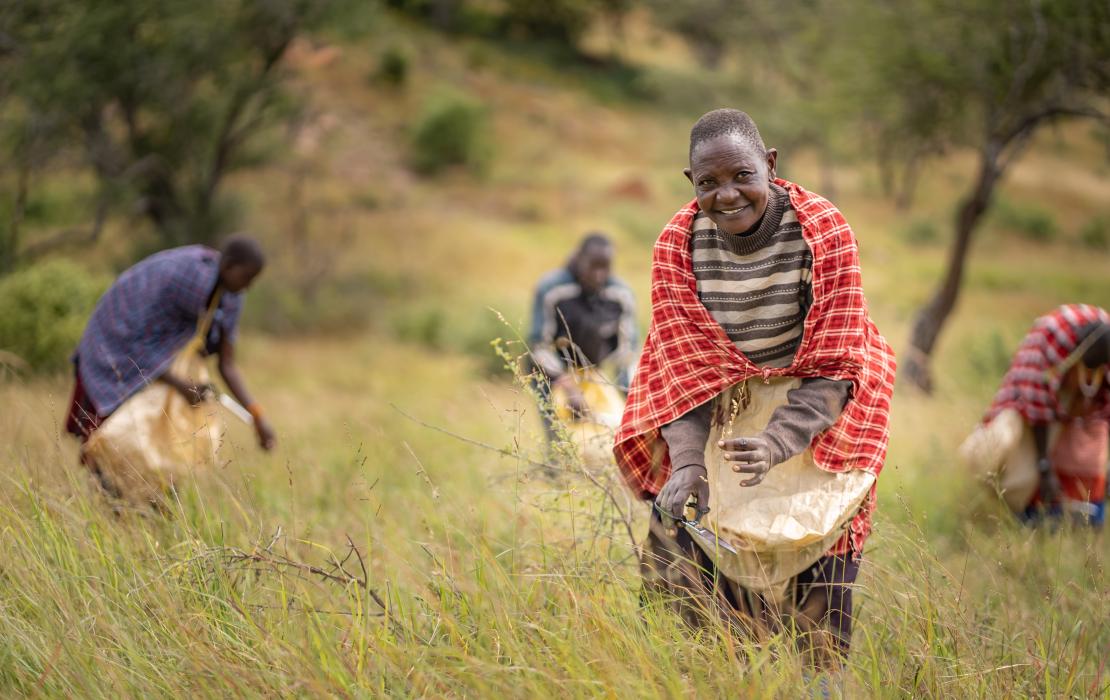
Yanomami “fire watchers” observe lunar phases, wind patterns, and plant signals (e.g., leaf wilting or smoke from controlled burns) to predict dry spells and ignite cool, mosaic burns early in the season.
This reduces fuel loads and creates biodiversity hotspots. Research from the Rainforest Foundation US shows that from 2001 to 2024, Indigenous-held forests absorbed carbon equivalent to France’s annual fossil fuel emissions, while adjacent non-Indigenous lands were net emitters.
Similar successes are seen in Bolivia’s Amazon, where Indigenous groups like the Tacana use MRV (monitoring, reporting, verification) systems rooted in local knowledge to expand conservation from 2,500 to 4,000 hectares.
Arctic: Inuit Sea-Ice Forecasting
Inuit in Nunavut, Canada, have long navigated thinning sea ice using Inuit Qaujimajatuqangit (IQ) experiential knowledge of ice “signs” like cracks, colour shifts, and wind-scattered clouds.
A 2023 scoping review in the FACETS journal analysed Inuit use of weather, water, ice, and climate indicators for safe travel, finding these outperform short-term satellite models in dynamic conditions.
For instance, during the 2020-2025 variability, IQ predicted ice instability weeks ahead, when models lagged due to resolution limits.
The Sikumik Qaujimajjuti programme integrates IQ with NOAA forecasts, enhancing decadal predictions and reducing hunting risks, which is critical as sea ice extent hit a 43% decline from 1979 levels in 2023.
Aboriginal Australia: Fire Management
Aboriginal “cool burning” in northern Australia creates patchy landscapes that curb megafires.
A 2024 CSIRO study in the International Journal of Wildland Fire examined 22 million hectares managed by 32 Indigenous projects, finding an 80% drop in late-season wildfires and 1 million tonnes of annual emissions abatement, generating $95 million in carbon credits since 2012.
In the Kimberley, groups like Balanggarra and Wunambal Gaambera reduced fire intensity by 75% through early dry-season burns guided by ancestral knowledge of grass curing and animal behaviours.
This not only boosts biodiversity, creating refuges for species like the northern quoll, but also sustains cultural practices, with rangers trained in both traditional and satellite monitoring.
These examples illustrate how Indigenous systems excel in hyper-local, adaptive predictions, often anticipating events like the 2024 Amazon blazes or Arctic thaws before global models.
READ ALSO:
Why Climate Change Is Forcing Millions from Their Homes and Who’s Closing the Door
Peer-Reviewed Studies Showing Indigenous Indicators Often Outperform Short-Term Western Models
A growing body of research validates these observations. A 2021 Frontiers in Climate study on the Mittimatalik Siku Asijjipallianinga (Sea Ice Climate Atlas) in Nunavut combined Inuit knowledge with Canadian Ice Service charts, revealing IQ indicators (e.g., snow-on-ice patterns) predicted break-up dates more accurately than models for 1997-2019, filling IPCC gaps in local-scale data.
In fire contexts, a 2023 Ecology & Society paper on Bolivian Tacana perceptions aligned Indigenous forecasts of rainfall variability with meteorological records, showing traditional bio-indicators (e.g., frog calls, river silt) outperformed seasonal models by 20-30% in precision.
A 2020 Climatic Change review of 71 studies found Indigenous knowledge enhances adaptation in 92% of cases, particularly agriculture, where African and Asian farmers using IK predicted droughts 2-4 weeks earlier than models.
For Australia, a 2021 Geoforum analysis of southeast cultural burning showed it reduced wildfire spread by 50% compared to suppression-only approaches, with IK integrating wind and soil cues that models miss.
Globally, a 2023 npj Climate Action review of IPCC AR6 noted Indigenous systems’ superiority in short-term variability, urging hybrid models to boost forecast skill by 15-25%.
These studies underscore IK’s edge in dynamic, data-sparse environments, where Western models falter on resolution and cultural context.
Barriers to Inclusion: Language, Land Rights, Intellectual Property Theft
Despite proven value, systemic hurdles persist. Language barriers marginalise IK: A 2024 ScienceDirect review of African adaptation identified translation gaps in 70% of studies, where non-English IK (e.g., Aymara terms for microclimates) is oversimplified, leading to policy mismatches.
Land rights exacerbate exclusion. In Bolivia, only 20% of Indigenous territories are titled, limiting fire practices amid 2024’s 2.47 million acres burnt, 114% above prior records.
In Canada, unresolved claims (e.g., Tsilhqot’in title covers just 1.8% of BC) restrict Inuit ice forecasting to small areas, per a 2023 Communications Earth & Environment study projecting 40% trail loss by 2060 without secure access.
Intellectual property (IP) theft compounds risks. WIPO reports document cases like unauthorised patenting of Amazonian plant knowledge, eroding trust, e.g., Yanomami techniques co-opted without consent.
A 2022 PLOS Climate analysis highlights “extractive research” models that decontextualise IK, violating UNDRIP Article 31 on collective IP rights.
Funding shortages (e.g., <1% of climate grants to IK per UNDP) and positivist biases in IPCC assessments further sideline it, as noted in a 2023 Nature study.
Addressing these demands are decolonised frameworks: FPIC (free, prior, informed consent), data sovereignty, and equitable co-production.
Success Stories Where Governments Finally Listened: British Columbia, Bolivia
British Columbia: Tsilhqot’in Fire Stewardship
Post-2017’s record fires (1.2 million hectares burnt), BC’s Abbott-Chapman report urged Indigenous integration. The Tsilhqot’in Nation’s Yunesit’in and Xeni Gwet’in programmes, launched in 2019 with Gathering Voices Society, now cover 1,700 km².
In 2022, 250 hectares were treated, reducing fuel by 60%, and 50+ stewards were trained in hybrid IK-Western methods.
BC’s 2019 UNDRIP Act enabled shared decision-making, with $5 million allocated in 2021 for CF fuel treatments, cutting wildfire risk 40% in pilot areas, per a 2023 FACETS study.
Bolivia: Mother Earth Law and Tacana MRV
Bolivia’s 2010 Law of Mother Earth enshrined Indigenous rights, influencing the 2022 NDC’s “living well” framework. Tacana communities adopted IK-based MRV in 2020, boosting forest cover 60% and incomes via zero-deforestation goods.
Partnerships with Practical Action integrated Aymara/Tacana forecasts into the national EWS, benefiting 20,000 people and averting 2024 flood losses.
Magnífica Warmi’s workshops empowered 500+ Indigenous women, spawning local initiatives that halved drought vulnerability in Quechua farms, as per a 2021 Ecology & Society study.
These cases show policy wins when IK leads: reduced emissions, empowered communities, and resilient landscapes.
The real “advanced technology” might not be AI; it might be knowledge that survived colonisation.
By centering Indigenous voices, we can forge forecasts that not only predict but also prevent crises, honouring the stewards who’ve guarded the planet for millennia.