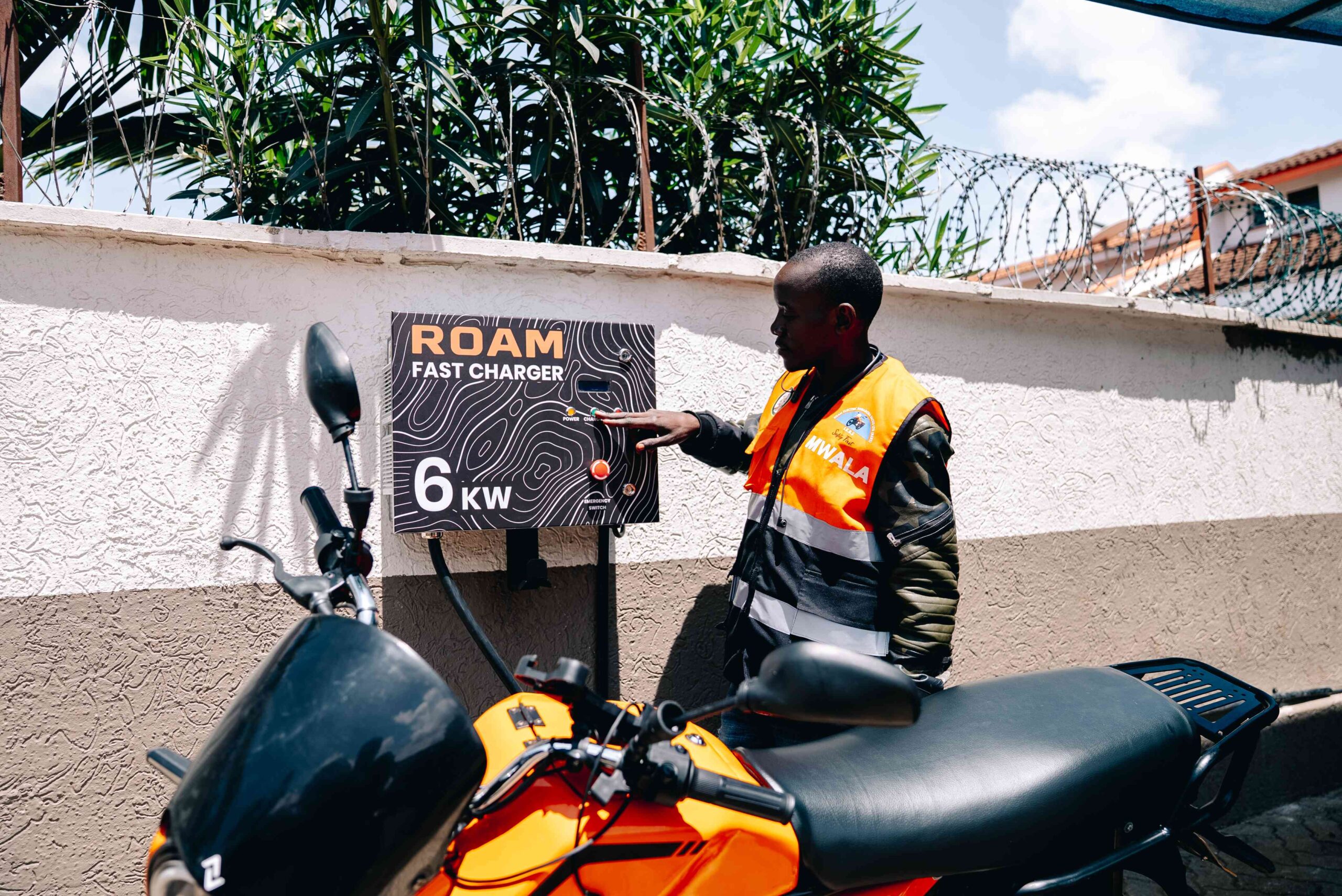
M-KOPA has extended its pay-as-you-go financing model to electric tuk-tuks, opening asset financing to a segment of Kenya’s transport sector after crossing 10,000 financed electric motorcycles in the country.
The expansion, announced on September 7, 2026, moves the fintech beyond two-wheelers and into a three-wheeler market the Kenya Tuk Tuk Operators Network estimates includes more than 250,000 registered vehicles and roughly 750,000 active drivers.
What the M-KOPA Electric Tuk-Tuk Finance Model Offers
The M-KOPA electric tuk-tuk finance approach mirrors the model that built the company’s motorcycle business.
Rather than requiring operators to pay the full cost of a vehicle upfront, M-KOPA spreads payments over time, lowering the barrier to acquiring what is, for most tuk-tuk operators, their primary income generating asset.
M-KOPA Mobility General Manager Brian Njao said the company is applying the same financing approach that worked for electric motorcycles to tuk-tuks, helping operators access cleaner, lower cost vehicles without the burden of a large upfront payment.
Customers under the programme also receive M-KOPA Cares, a bundle of flexible repayments, insurance, GPS tracking, security features and warranty protection layered on top of the core financing arrangement.
M-KOPA Kenya E-Mobility: From Motorcycles to a Broader Portfolio
M-KOPA Kenya e-mobility operations have scaled considerably since the company first began financing electric motorcycles in partnership with manufacturers including Ampersand, Roam and Spiro, later adding a partnership with ride-hailing platform Bolt to reach more drivers directly.
The company’s electric motorcycle business grew from roughly 1,500 financed vehicles in 2024 to more than 10,000 today, a jump that reflects both growing rider demand and M-KOPA’s own expanding manufacturer partnerships.
The tuk-tuk expansion effectively turns a single vehicle category success into a broader e-mobility financing portfolio, testing whether the underlying model, reducing upfront cost through spread payments, works as well for a different vehicle type with its own cost structure, passenger capacity and usage patterns.
The Economics Behind M-KOPA Pay-As-You-Go Tuk-Tuk Financing
M-KOPA pay-as-you-go tuk-tuk financing is built on savings data drawn from the company’s existing motorcycle riders.
According to M-KOPA, financed electric motorcycle riders save an average of KSh530 a day through lower energy and maintenance costs, along with access to the company’s battery-swapping infrastructure, savings that, multiplied across 10,000 riders, represent roughly KSh5.3 million in potential daily savings across the fleet.
Whether similar per-vehicle savings will apply to tuk-tuks remains an open question, since three-wheelers differ from motorcycles in acquisition cost, energy consumption, passenger and cargo capacity, and daily utilisation patterns.
READ ALSO:
SBM Bank Kenya Expands Green Banking with EV Financing Initiative
Tuk-tuks can carry more passengers or goods per trip, which could either amplify the daily earnings upside for operators or introduce a different cost profile than the one M-KOPA has already proven out with motorcycles.
Kenya Electric Three-Wheeler Finance 2026 and the Policy Backdrop
Kenya electric three-wheeler finance 2026 activity is unfolding against a policy environment specifically designed to accelerate this kind of transition.
Kenya has adopted a National Electric Mobility Policy that provides a framework for private sector investment and participation in electric transport, including zero rated VAT on electric buses, bicycles, motorcycles and lithium-ion batteries, along with zero excise duty on the same categories.
Those incentives lower the cost base for manufacturers and financiers alike, making financing models like M-KOPA’s more viable at scale than they would be without supportive tax treatment.
M-KOPA is not entering the electric tuk-tuk space in isolation either. Other manufacturers and battery-swapping operators have already begun marketing their own tuk-tuk financing packages in Kenya, suggesting the market is developing multiple parallel entry points rather than depending on a single company to prove the model works.
What This Reveals About the Future of E-Mobility Finance
The real test of M-KOPA’s tuk-tuk expansion will not be how many vehicles get financed in the initial rollout, but whether the underlying economics hold up once operators start making payments against real world usage.
That means tracking how much riders actually save after financing costs are deducted, how much they earn per day, how consistently the vehicles get used, how accessible battery-swapping infrastructure is outside major urban centres, and what happens to both the vehicle and the operator’s financial position once the repayment period ends.
Access to affordable finance has long been one of the biggest constraints facing Kenyan tuk-tuk operators looking to acquire or upgrade vehicles, and if M-KOPA’s model proves as durable for three-wheelers as it has for motorcycles, it could meaningfully accelerate the shift away from petrol-powered transport across one of Kenya’s largest grassroots commercial transport segments.
If the economics do not translate as cleanly, the expansion will still offer a useful data point on where the limits of asset-backed e-mobility financing actually sit as it moves beyond the vehicle category where it was first proven.