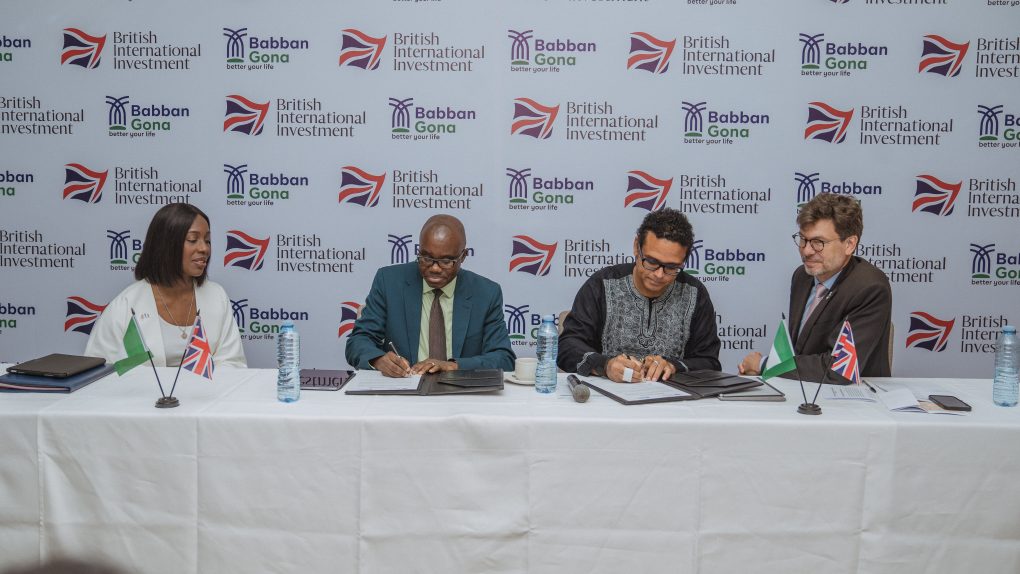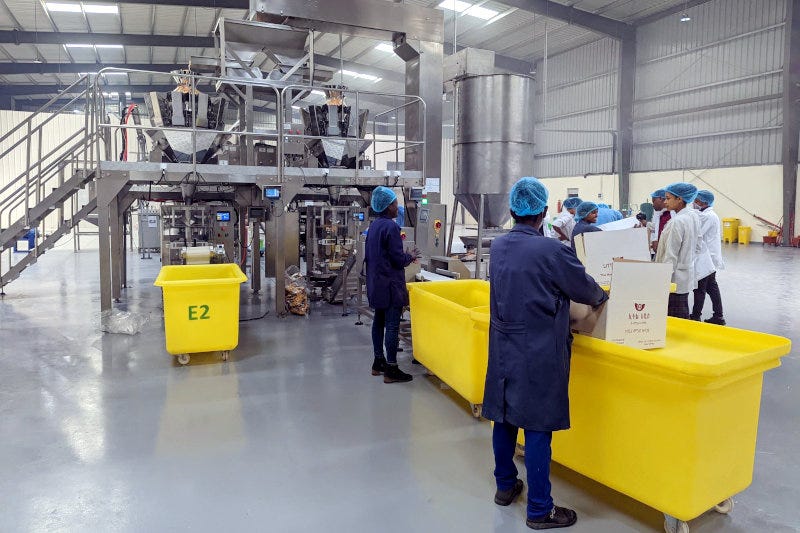
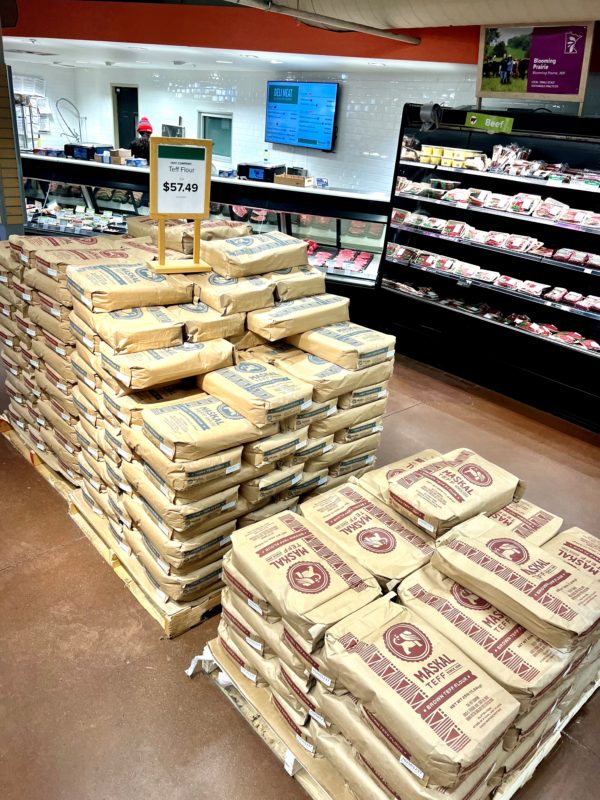
British International Investment (BII) has committed $5 million in growth capital to Lovegrass Ethiopia, an agri-food company specialising in the transformation of teff, which is Ethiopia’s ancient, nutrient-dense, gluten-free grain, into high-value, branded products for both domestic consumption and international markets.

The investment, announced in early February 2026, supports Lovegrass Ethiopia’s strategy to capture more value within Ethiopia by shifting from raw commodity exports to domestic processing and manufacturing.
This move aims to retain greater economic benefits locally while creating new opportunities in rural and industrial value chains.
Strategic Objectives of the Investment
BII’s financing targets four core priorities:
- Scaling production capacity to meet rapidly growing domestic and international demand for teff-based superfoods and healthy products.
- Expanding finished, branded product manufacturing to increase the share of value added and retained within Ethiopia.
- Generating hard-currency export revenues through sales to international markets, contributing to macroeconomic stability and foreign exchange inflows.
- Creating skilled employment in processing, packaging, quality control, and manufacturing operations.
These objectives align directly with Ethiopia’s broader economic goals of industrialisation, export diversification, and rural economic development.

Who Benefits from the Investment?
The $5 million commitment delivers value across multiple stakeholder groups:
1. Smallholder farmers
Lovegrass Ethiopia sources teff directly from thousands of smallholder farmers. The investment strengthens demand for their produce, provides a more stable and predictable market outlet, and supports improved rural incomes and economic resilience.
2. Rural communities
Increased sourcing and processing activity generate indirect economic benefits through local spending, transport, and services. The model contributes to food security and nutrition by keeping more of the value chain within Ethiopia.
3. Manufacturing and industrial workforce
The expansion creates skilled jobs in modern food processing, packaging, quality assurance, and logistics, positions that offer better wages, training, and career progression compared with traditional agricultural labour.
READ ALSO:
How Proparco Is Using Blended Finance to Scale Africa’s Climate Transition
4. Ethiopian economy
By shifting from raw grain exports to value-added products, the company increases domestic value capture and generates foreign exchange through higher-value exports, both critical for macroeconomic stability.
5. International consumers
Buyers in export markets gain access to premium, sustainably sourced teff-based products positioned as healthy, gluten-free superfoods.

Alignment with BII’s Investment Strategy
BII clearly stated:
“Our $5 million financing will help expand production and create skilled jobs while supporting exports that generate vital hard-currency inflows. Lovegrass Ethiopia is helping drive resilient, inclusive growth across rural communities.”
The transaction reflects BII’s long-standing focus on high-impact agribusiness models that:
- Strengthen food systems
- Promote economic inclusion
- Create sustainable employment
- Support export-oriented growth in frontier markets
Investments of this nature are particularly important in Ethiopia, where teff cultivation remains the livelihood foundation for over 6.6 million smallholder farmers and plays a central role in national food security and nutrition.
Looking Ahead
BII’s $5 million investment in Lovegrass Ethiopia represents a strategic and high-impact intervention in Ethiopia’s agri-food sector.
By accelerating the transformation of teff from a raw export commodity into higher-value, branded products, the financing creates benefits across the entire value chain, from smallholder farmers to industrial workers, from rural communities to the national economy.
As of February 6, 2026, this commitment exemplifies how targeted private capital can drive inclusive, resilient, and export-oriented growth in agriculture-dependent emerging markets.
For the latest developments, refer to official announcements from British International Investment and Lovegrass Ethiopia.
British International Investment Overview
British International Investment Africa is the UK’s development finance institution active across the continent, with the British International Investment CEO, Leslie Maasdorp, overseeing strategy and capital deployment.
British International Investment Kenya operates through its British International Investment Nairobi office, supporting investments across sectors such as financial services, climate, and infrastructure.
The British International Investment portfolio spans equity, debt, and funds across Africa and other emerging markets, managed from multiple British International Investment offices globally, while early-career opportunities are offered through the British International Investment internship and graduate programmes.
Ronnie Paul is a seasoned writer and analyst with a prolific portfolio of over 1,000 published articles, specialising in fintech, cryptocurrency, climate change, and digital finance at Africa Digest News.