Mahube Infrastructure Limited (JSE: MHB), one of South Africa’s few pure-play renewable energy investment vehicles, is preparing to leave the Johannesburg Stock Exchange .
This will be made possible through a scheme of arrangement that would shift the company into private ownership under Sustent Holdings, an SPV controlled by the Mergence Renewable Energy Debt Fund II and the Specialised Listed Infrastructure Equity Partnership (SLIEP).
The proposed R5.50-per-share offer, announced in late 2025, represents a hefty 30.6% premium to the last traded price of R4.21 and 32.3% above the 30-day VWAP. It’s a clear signal that this is not a distress exit.
For Mergence and SLIEP, the move is a calculated attempt to liberate Mahube from the valuation drag and illiquidity of the JSE and reposition it as a faster, more agile consolidator in the booming African green-energy market.
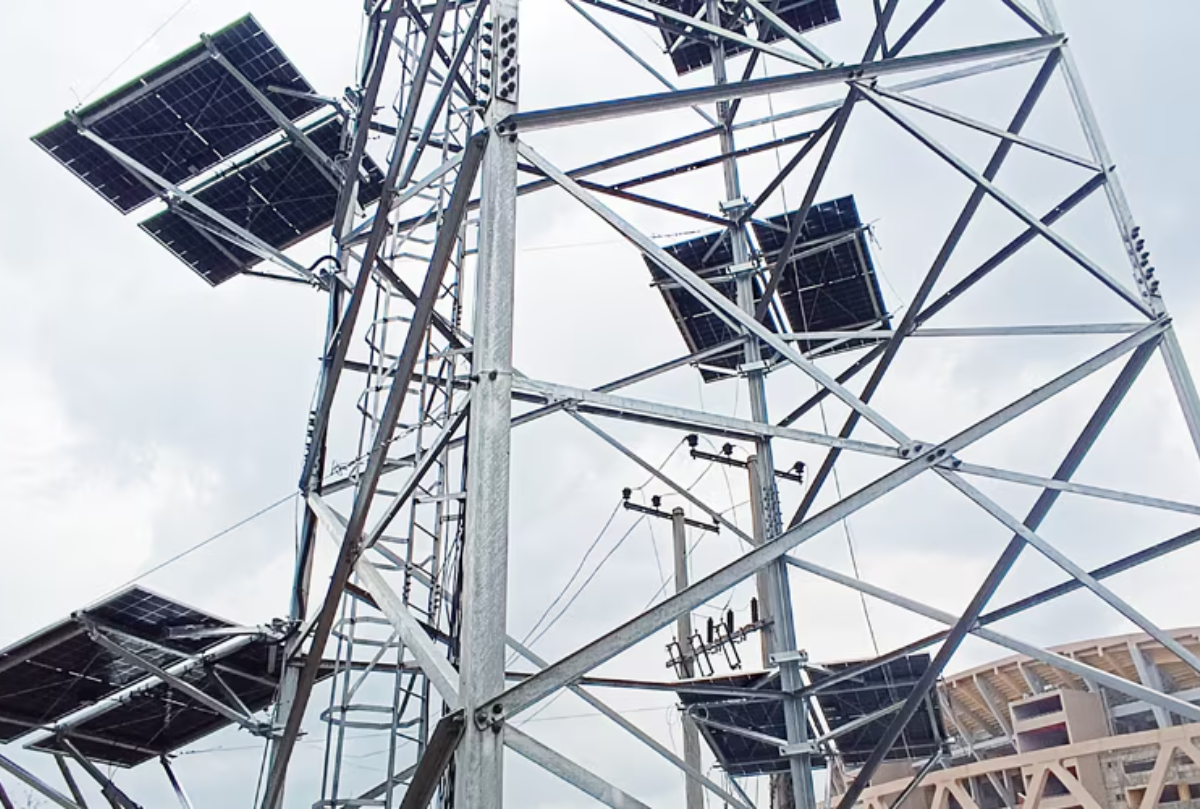
Established in 2015 (then as GAIA Infrastructure Capital), Mahube has quietly assembled minority equity stakes in five early-round REIPPPP projects, including three solar farms (Jasper, Lesedi, and Letsatsi) and two wind assets (Noblesfontein and Dorper), collectively contributing roughly 400 MW of operational renewable capacity.
These legacy Round 1 and 2 projects are gold mines in infrastructure terms: long-dated, inflation-linked PPAs with Eskom, backed by government guarantees, and positioned to throw off predictable, escalating cash flows for two decades.
The business finally turned a meaningful corner in FY2024, swinging from a prior R14 million loss to R68.2 million in revenue and R52.9 million in net income.
Yet despite its financial recovery, Mahube’s market cap has stayed around R270–300 million, placing it near the bottom of the JSE rankings and leaving the stock vulnerable to sentiment-driven swings.
With trading volumes thin, sometimes barely 100,000 shares a day, Mahube has been trapped in the classic small-cap infrastructure discount: high-quality assets undervalued because the market lacks depth and appetite.
In a year where loadshedding, rising rates, and political jitters have weighed heavily on the JSE’s small-cap complex, Mahube’s share price drifted between R3.89 and R4.94 and remained down nearly 20% year-to-date by August 2025.
For long-term infrastructure investors, it’s a mismatch between natural value and market behaviour.
The Offer: Premium Price, Private-Sector Logic
The Sustent Holdings bid effectively re-rates Mahube closer to private-market norms. At R5.50 per share, Mahube’s valuation aligns far more closely with the 10–15x EBITDA multiples seen in private REIPPPP transactions, rather than the weak 5x earnings multiple implied by the JSE.
Once delisted, Mahube immediately sheds the costs and constraints of public reporting everything from quarterly disclosures to external compliance burdens redirecting those savings into growth.
It also gains the agility to pursue bolt-on acquisitions without lengthy shareholder approval cycles.
Mergence’s private-debt chief, Mosa Molebatsi, describes the logic succinctly: Mahube performs better when judged on fundamentals rather than daily price fluctuations.
SLIEP and its partners go further, framing the delisting as the first step toward building an acquisition engine targeting early-round REIPPPP projects now entering a phase of ownership churn.
These assets, originally developed between 2009 and 2013, have begun shifting hands as initial investors recycle capital, a moment tailor-made for a specialist aggregator like Mahube.
The proposed scheme still requires 75% shareholder approval, along with regulatory nods from the Takeover Regulation Panel and the JSE, but given the valuation uplift and compelling rationale, passage in early 2026 appears probable.
Why Delist? The Strategic Logic for Mergence and SLIEP
For both investors, the appeal of taking Mahube private reflects a confluence of structural and market forces.
The company has been chronically undervalued on the public market due to its minority stakes, limited liquidity, and the JSE’s persistent small-cap discount.
Off-market, however, its inflation-linked REIPPPP cash flows are the kind of assets infrastructure funds price aggressively and hold for decades.
Privatisation also removes governance and reporting overheads that weigh disproportionately on a smaller listed entity, opening room for operational efficiency and faster strategic execution.
Freed from public-market optics, Mahube can tap private and development finance institutions more effectively, structuring capital around long-term returns rather than quarterly scrutiny.
This positions the company to scale rapidly, particularly as Rounds 1 and 2 REIPPPP projects come to market at discounted valuations and as the state pushes ahead with Bid Window 7 and other green-energy procurement programmes.
READ ALSO:
How the EIB’s €2 Billion Pledge Could Reshape Africa’s Renewable Energy Future
The larger ambition is clear: transform Mahube from a static, discounted holding company into a nimble, privately held platform with the balance sheet to acquire R1–2 billion in renewable assets and potentially surpass 1 GW of equity exposure by 2030.
With South Africa targeting a just energy transition and DFIs eager to deploy capital into mature, operational renewables, a private Mahube is structurally better placed to absorb and scale these opportunities.
For minority investors, including the GEPF with its sizeable 41.35% stake,he offer provides clean liquidity at a substantial premium in a stock plagued by thin volumes.
For the sector, the move highlights the maturation of South Africa’s renewable energy ecosystem, where secondary-market transactions of early REIPPPP assets are accelerating and sophisticated private capital is stepping in aggressively.
Yet the delisting also underscores a persistent weakness in the JSE: an inability to retain or properly value small- and mid-cap infrastructure players.
As more of these companies migrate into private hands, the exchange risks losing diversity and diminishing its role as a marketplace for long-duration, real-economy assets.
Still, the central story remains compelling. Mergence and SLIEP aren’t extracting Mahube from the public markets to shrink it; instead, they’re unshackling it.
Delisted, Mahube becomes what it was always structurally designed to be: a steady, scalable, unlisted renewables consolidator powered by high-quality contracted cash flows rather than the emotional turbulence of daily trading.
If approved, the transaction won’t just change Mahube’s address; it will unlock its real utility, building the next generation of South Africa’s renewable energy infrastructure from a far more efficient vantage point.
South Africa’s renewable energy landscape
South Africa’s renewable energy landscape has been transformed by the REIPPPP renewable projects in South Africa, the government’s flagship programme attracting billions in private-sector investment.
From the early successes of REIPPPP Bid Window 1, which kickstarted large-scale solar and wind deployment, to the much-anticipated REIPPPP Bid Window 7, the initiative continues to anchor the country’s energy transition.
Today, REIPPPP South Africa serves as both a benchmark and a catalyst proving that competitive procurement, stable PPAs, and investor certainty can unlock sustainable infrastructure at scale.
Ronnie Paul is a seasoned writer and analyst with a prolific portfolio of over 1,000 published articles, specialising in fintech, cryptocurrency, climate change, and digital finance at Africa Digest News.