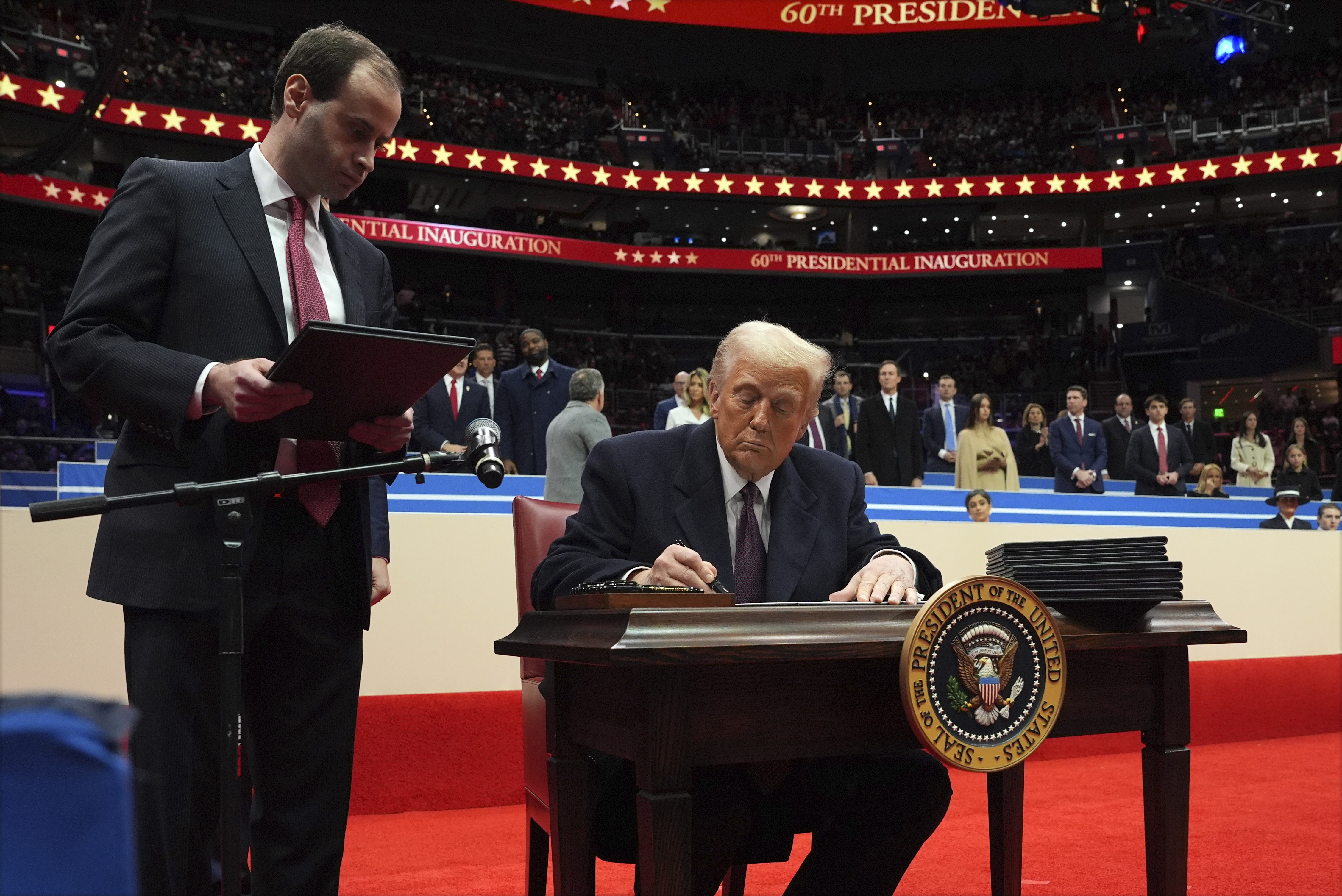
United States is set to withdraws from UNFCCC, as announced by the White House on January 7, 2026, marking a significant retreat from global climate cooperation under President Donald Trump.
This decision encompasses the foundational United Nations Framework Convention on Climate Change (UNFCCC), the parent treaty for all major international climate agreements, alongside 65 other international organizations deemed contrary to U.S. interests.
This move, effective after a one-year notice period, positions the U.S. as the first nation to exit the UNFCCC, a treaty ratified by nearly every country since its adoption in 1992.
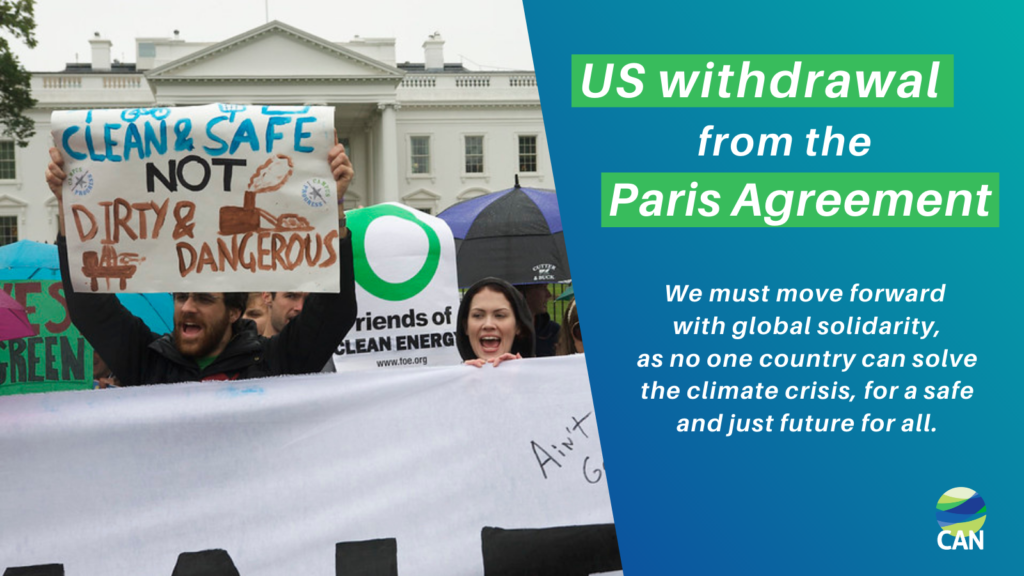
Illustrations depicting the U.S. withdrawal from international climate agreements, highlighting global implications.
Amid this development, questions arise regarding the feasibility of achieving Paris Agreement objectives limiting global warming to well below 2°C, preferably 1.5°C without U.S. participation, a major emitter and historical leader in climate initiatives.
Implications of the U.S. Withdrawal
The U.S. exit from the UNFCCC undermines the framework supporting the Paris Agreement and subsequent accords, potentially reducing global momentum for emission reductions.
As the world’s second-largest greenhouse gas emitter, the U.S. absence could exacerbate challenges in meeting collective targets, particularly in funding and technology transfer to developing nations.
Historical precedents, such as the prior U.S. withdrawal from the Paris Agreement, indicate that rejoining is possible under future administrations, but repeated disruptions erode trust and delay progress.
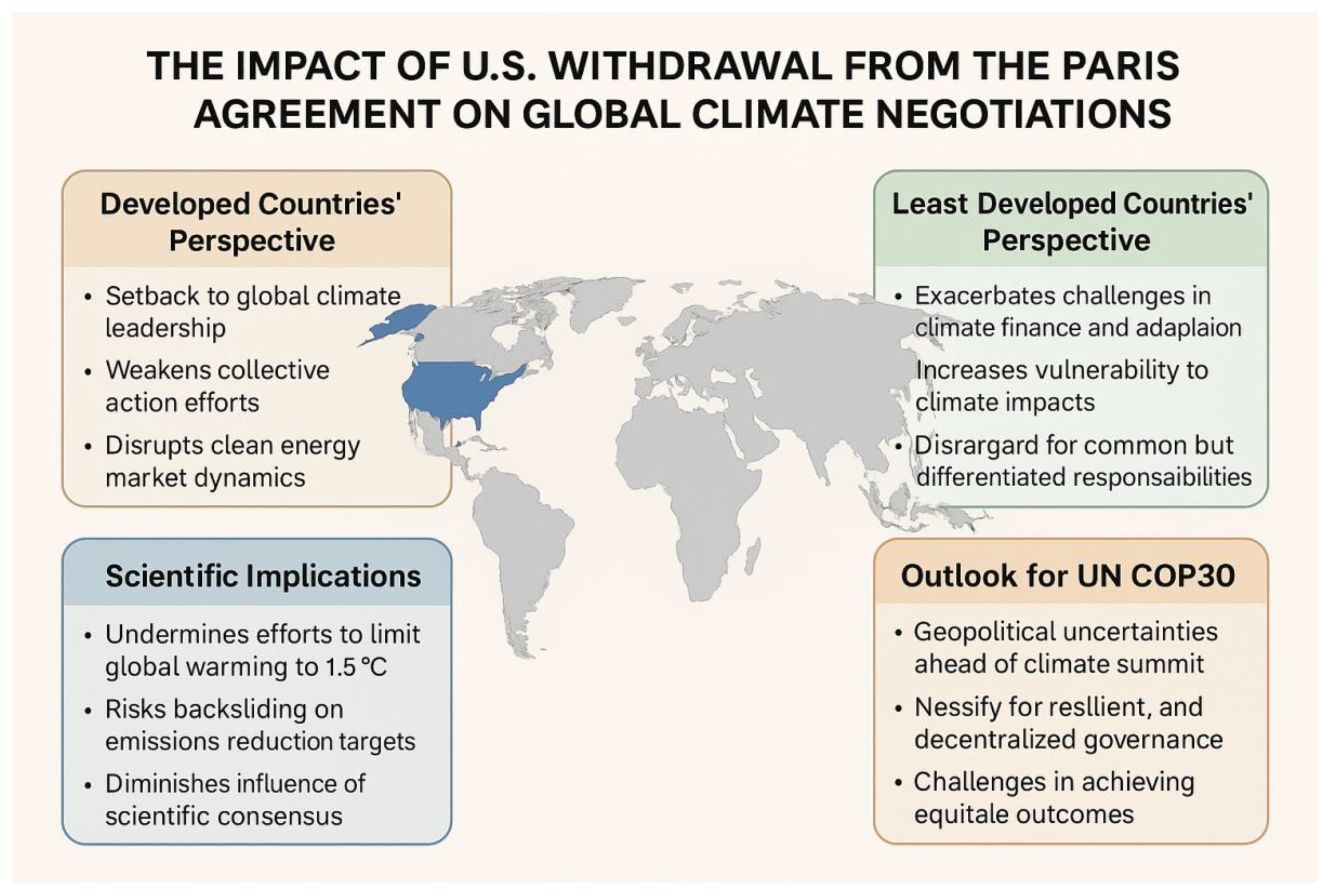
Visuals representing the Paris Agreement and the impact of U.S. policy shifts on international climate efforts.
Furthermore, this action aligns with domestic policies favoring fossil fuels, potentially increasing U.S. emissions and complicating global supply chains for clean energy technologies.
READ ALSO:
How the World’s Poorest Face the Worst of Climate Change They Didn’t Cause
Current Global Progress Toward Climate Goals
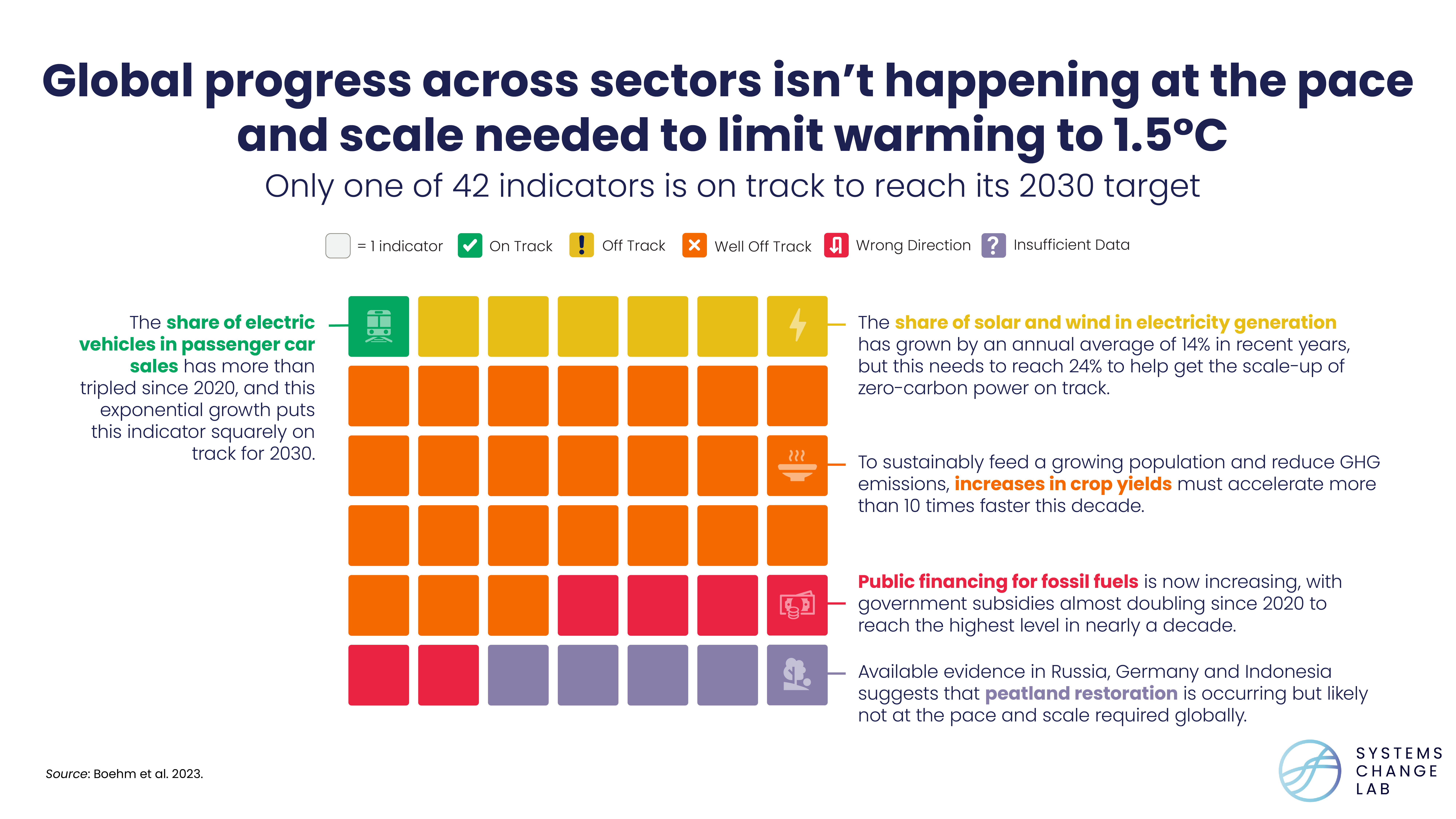
As of January 8, 2026, global efforts remain insufficient to meet Paris Agreement targets. Combined national pledges project warming of approximately 2.5°C by century’s end, far exceeding the 1.5°C threshold.
Recent assessments indicate that without intensified action, trajectories lead to 2.8°C warming, highlighting gaps in ambition and implementation. Progress in areas like electric vehicle adoption exists, yet overall advancements lag across most sectors.
Graphs and charts showing projections of global warming scenarios and alignment with UN Sustainable Development Goals.
The U.S. withdrawal compounds these challenges, as its historical emissions and financial contributions are critical for collective success.
Efforts by Other Nations and Opportunities
Despite the setback, major economies like China, the European Union, and India have reaffirmed commitments to the Paris Agreement, emphasizing independent action to reduce emissions.
Initiatives such as the EU’s Green Deal and China’s carbon neutrality pledge by 2060 demonstrate potential for leadership vacuums to be filled.
Subnational U.S. entities, including states and cities, may continue pursuing climate goals domestically, mitigating some federal-level impacts.

Depictions of international climate action reports and visual overviews of progress toward emission reduction targets.
Opportunities arise through technological innovation and private sector investments, which could accelerate transitions independent of U.S. policy.
Challenges Ahead
Key obstacles include insufficient pledges, enforcement gaps, and the absence of coordinated global mitigation. Without U.S. engagement, funding for adaptation in vulnerable regions may diminish, heightening risks from climate impacts.
The U.S. withdrawal from the UNFCCC, effective as of January 8, 2026 announcements, poses substantial hurdles to global climate objectives, yet the Paris Agreement’s resilience through other nations’ commitments offers a pathway forward.
While current trajectories fall short of 1.5°C goals, enhanced ambition and collaboration could still limit warming, albeit with increased difficulty absent U.S. participation.
Ongoing monitoring of international responses and domestic U.S. developments will be essential. For the most recent analyses, refer to official UNFCCC and IPCC resources.
The UNFCCC Overview
The UNFCCC headquarters are located in Bonn, Germany, where the secretariat coordinates implementation of the UNFCCC treaty adopted in UNFCCC 1992 as the foundational international agreement on climate change.
The convention brings together UNFCCC members from nearly all countries worldwide, with commitments and obligations outlined in the official UNFCCC text and supported by a wide range of UNFCCC document resources.
Progress under the convention is reviewed and negotiated during each UNFCCC COP, which serves as the primary decision-making forum for advancing global climate action.
Ronnie Paul is a seasoned writer and analyst with a prolific portfolio of over 1,000 published articles, specialising in fintech, cryptocurrency, and digital finance at Africa Digest News.