South African-founded artificial intelligence startup Refiant has secured US$5 million in seed funding, led by climate-focused investment firm VoLo Earth Ventures.
The capital will accelerate the development and commercialisation of its proprietary model compression technology, which significantly reduces the energy and infrastructure required to run large-scale AI systems.
The funding round, closed in April 2026, supports Refiant’s mission to challenge the conventional industry model of scaling AI performance through ever-larger data centres.
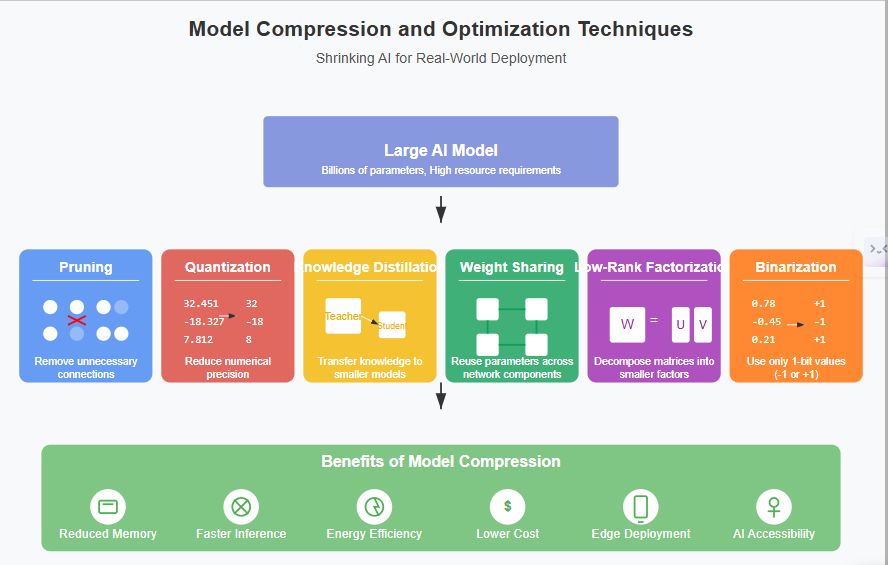
Instead, the company applies nature-inspired algorithms to compress advanced AI models, enabling them to operate with substantially lower computational power while preserving 95–99% of original performance.
Breakthrough in Model Compression Technology
Refiant’s core innovation lies in its ability to compress large AI models without meaningful loss of capability.
In a recent demonstration, the startup successfully ran a 120-billion-parameter model on a standard MacBook Pro with a task that would typically require enterprise-grade hardware with at least 80 GB of memory while reducing energy consumption by more than 80%.
Co-founder Sid Gutta explained the fundamental shift in approach:
“The AI sector’s default response to performance demands has been to build more servers and consume more electricity. Refiant’s technology offers a fundamentally different path by focusing on efficiency at the model level rather than infrastructure expansion.”
This efficiency breakthrough has particular relevance for emerging markets, including Africa, where limited data centre infrastructure and high energy costs have historically constrained widespread AI adoption.
By lowering compute requirements, Refiant enables more organisations to deploy advanced AI locally, improving data sovereignty and reducing reliance on distant hyperscale facilities.
Use of Proceeds and Growth Strategy
The US$5 million seed round will be allocated to:
- Further product development and refinement of the compression algorithms.
- Team expansion, particularly in engineering and research roles.
- Building enterprise partnerships with organisations seeking to lower AI compute costs and maintain control over sensitive data.
READ ALSO:
PowerLabs Targets Nigeria’s Power Crisis with AI-Powered Energy Platform
The investment also supports Refiant’s global outlook while maintaining strong roots in its South African origins and a focus on solving real-world challenges in resource-constrained environments.
Managing Partner Joseph Goodman of VoLo Earth Ventures highlighted the strategic alignment:
“This investment reflects our commitment to technologies that address the escalating energy demands of modern AI while supporting more accessible and environmentally responsible innovation across Africa and beyond.”
Broader Relevance for Sustainable AI
Refiant’s technology addresses one of the most pressing challenges in the AI industry: its rapidly growing environmental footprint.
As AI models continue to scale, energy consumption and infrastructure demands have become significant sustainability concerns.
By achieving dramatic efficiency gains at the model level, Refiant offers a scalable path toward more sustainable AI deployment without compromising performance.
The solution is particularly well-suited for sectors and regions where access to high-performance computing is limited or prohibitively expensive.
Its potential to enable local AI inference on standard hardware could accelerate adoption in emerging markets while reducing the overall carbon intensity of AI applications globally.
For the most current information on Refiant’s technology or partnership opportunities, refer to official company announcements.
Energy-efficient AI Overview
Energy-efficient AI refers to models and systems designed to reduce computing power and electricity use.
The most energy-efficient AI approaches include smaller models, edge AI, and optimised architectures that deliver results with fewer parameters and lower training costs.
Energy-efficient AI models use techniques such as model compression, quantisation, and sparse training to reduce compute demand.
This helps address the growing AI energy consumption issue driven by large data centres and GPU-intensive workloads.
The AI energy consumption problem is becoming significant because training large models can require megawatt-hours of electricity, increasing costs and carbon emissions.
This has prompted research in Nature AI energy and academic journals focusing on sustainable machine learning and green AI practices.
The future of AI in the energy sector includes grid optimisation, demand forecasting, renewable energy integration, and battery management.
These AI energy projects help utilities reduce waste, balance supply and demand, and improve efficiency across power systems.