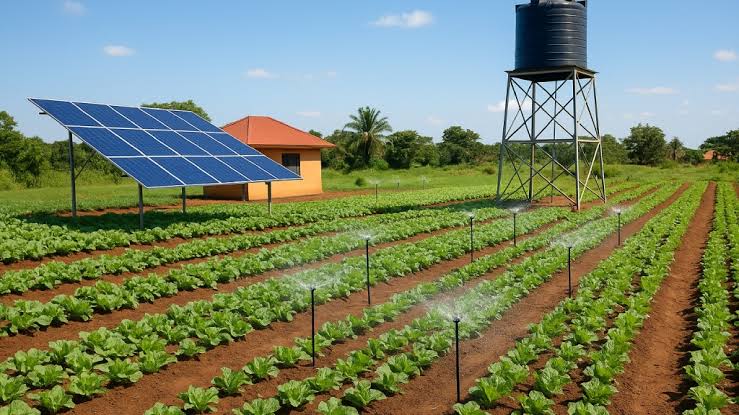
Copenhagen-based impact investor Nordic Impact Funds has invested in Irrisol Engineering, a Ugandan company that designs, builds and operates solar-powered water mini-grids and standalone water systems for rural and peri-urban communities.
The investment, announced on 20 October 2026, was made alongside existing investor DOB Equity, a Dutch family-backed impact investment firm focused on sustainable businesses across East Africa.
Together, the two investors are backing Irrisol’s expansion from its current base in Western Uganda toward a goal of reaching one million people with clean, piped water by 2028.
What Irrisol Actually Builds
Irrisol Uganda funding is going into a company with a specific and replicable model.
Founded in 2017 by water and irrigation engineer Joash Bwambale in Kasese, Uganda, Irrisol identifies communities beyond the reach of national utility networks, which in rural Uganda describes the majority of the population, and builds solar-powered water mini-grids that deliver piped water directly to households and community taps.
The solar component removes the dependence on grid electricity that has historically made rural water infrastructure expensive to operate and prone to failure when the grid is unreliable.
Beyond community water networks, Irrisol designs and installs standalone solar-powered water systems for schools, healthcare facilities, businesses and individual households, extending its reach into the institutions that anchor rural communities.
The model is utility-like in structure: Irrisol owns and operates the infrastructure, and users pay through consumption-based billing and pay-as-you-go plans via mobile money that align payment amounts with household income levels.
Today, Irrisol’s systems serve approximately 350,000 people across Uganda.
The Pay-as-You-Go Model and Why It Works
The pay-as-you-go clean water model for rural Africa that Irrisol operates solves a financing problem that has defeated many rural water projects before it.
Large upfront connection fees price out the households that need clean water most urgently.
Subsidised systems that do not charge users at all collapse when maintenance costs exceed the budget of the NGO or government programme that installed them.
Irrisol’s consumption-based billing and mobile money payment system threads between those two failure modes.
Users pay for the water they consume, in amounts calibrated to what they can afford, using mobile money infrastructure that is already embedded in rural Uganda’s daily economic activity.
That revenue stream funds ongoing maintenance and operation without dependence on donor cycles or government budget allocations.
READ ALSO:
Why GRIPS Energy’s Latest Funding Could Accelerate Commercial Solar and Storage Across Africa
Bwambale, in DOB Equity’s announcement of its earlier investment in September 2026, articulated the founding principle directly: access to reliable water should not depend on where someone lives or how much they earn, and sustainable, financially viable rural water systems are possible when communities are served with dignity and the infrastructure is built to last.
Why Nordic Impact Funds Joined DOB Equity in the Investment
The solar water mini-grids Uganda investment thesis for Nordic Impact Funds mirrors the logic that DOB Equity applied when it made its initial investment in September 2026.
Africa Private Equity News described Irrisol’s model as creating recurring, utility-style revenue that funds the ongoing operation and maintenance of each system, which is the combination that impact investors focused on long-term sustainability rather than short-term grant cycles find most compelling.
DOB Equity’s track record as a Dutch family-backed impact investor with a specific East Africa focus gives it both the regional knowledge to assess Irrisol’s model and the patient capital approach that early-stage infrastructure companies require.
Nordic Impact Funds, operating from Copenhagen, brings a complementary profile: an institutional impact investor with a mandate to back companies addressing fundamental development challenges at the intersection of climate and access.
The two investors together provide Irrisol with capital from two geographies and two institutional traditions, widening the strategic network available to the company as it scales beyond its home region in Western Uganda.
From 350,000 to One Million: The Expansion Road Map
Irrisol’s target of reaching one million people by 2028 requires moving from the 350,000 currently served to nearly three times that number in under two years.
That pace demands the kind of capital and operational support that a single investor relationship at an earlier stage could not have provided.
The Nordic Impact Funds and DOB Equity investment in combination gives Irrisol the financial foundation to expand into new districts, replicate the mini-grid model in communities with similar conditions to those it already serves, and build the operational and maintenance capacity needed to sustain systems across a larger geographic footprint.
The expansion strategy focuses on communities in Uganda that share the structural characteristics of Irrisol’s existing markets: rural locations beyond national utility coverage, communities where current water access involves long walks or payments to informal vendors for water of uncertain quality, and populations where mobile money penetration makes consumption-based billing operationally viable.
What the Investment Means for Uganda’s Rural Water Access
The clean water access challenge in Uganda is structural and large.
Uganda’s national water coverage statistics mask significant variation between urban and rural areas, and for many communities the practical alternative to a system like Irrisol’s is walking several kilometres to a surface water source or paying informal vendors prices per litre that far exceed what piped utility customers in Kampala pay.
The health consequences of contaminated water sources, including waterborne diseases that are among the leading causes of child mortality, are direct and well-documented.
Solar-powered water mini-grids that operate on a financially sustainable model represent a private sector complement to government and NGO-funded water infrastructure that has chronically underfunded rural Uganda’s water access needs.
Irrisol is not the only company working in this space, but its combination of solar infrastructure, consumption-based billing, mobile money integration and community-level engagement creates a model that has demonstrated viability at 350,000 users and is now backed to prove it at three times that scale.


