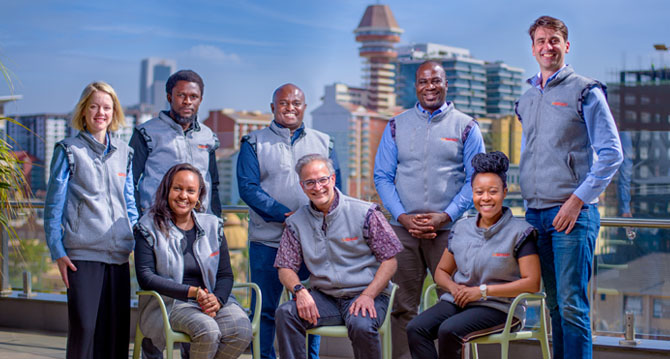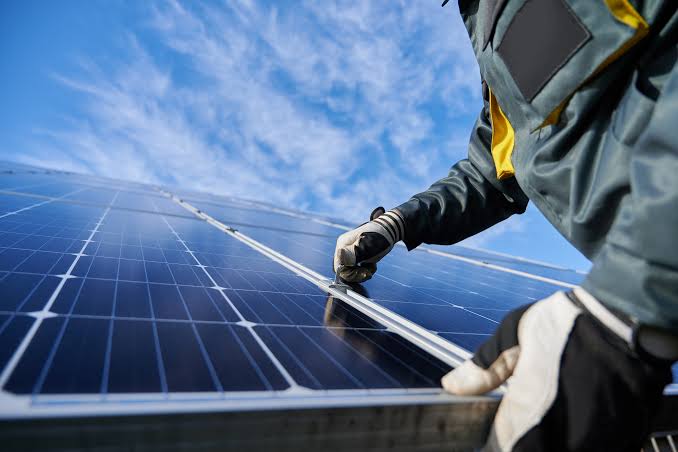
Fortis Green Renewables Investment Management and Zeitinger Invest GmbH have made a growth equity investment in GRIPS Energy Group, a Berlin-based independent power producer and energy service company that finances, builds, owns and operates solar and battery storage systems for commercial and industrial customers across sub-Saharan Africa.
The investment, announced on 13 October 2026, will fund the acquisition of operational renewable energy assets in Senegal, Botswana, Zambia and Uganda, alongside the development of new solar-plus-storage projects, as GRIPS pursues a portfolio target exceeding 100 MW by 2030.
What GRIPS Energy Does and Why It Matters
GRIPS Energy funding in 2026 backs a company that operates at the intersection of two structural realities in African energy: unreliable national grids and rising electricity tariffs that are pushing businesses toward distributed solar as a commercially rational, not just environmentally motivated, decision.
GRIPS structures its projects as an IPP and ESCO, meaning it does not just install panels and hand over a system.
It finances, owns and operates the infrastructure, selling energy to commercial and industrial customers under long-term agreements that give those customers predictable electricity costs without requiring them to carry the capital investment themselves.
That model is increasingly the standard for C&I solar deployment in markets where small and medium-sized businesses cannot access the upfront capital to own distributed energy assets.
By retaining ownership and providing energy as a service, GRIPS removes the financing barrier that has historically slowed C&I solar adoption among African businesses that would benefit most from it.
Why Fortis Green Renewables and Zeitinger Invest Backed GRIPS
The Fortis Green Renewables C&I solar and battery storage Africa investment thesis for GRIPS is rooted in a market assessment that the sector’s fundamentals are as strong as anywhere globally.
Benito Grimaudo, Managing Director of Fortis Green Renewables Investment Management, described Africa’s C&I renewable energy sector as one of the most attractive investment opportunities globally, pointing to GRIPS’s strong pipeline, deep local market expertise, and clear strategy for delivering affordable and sustainable energy solutions to commercial and industrial customers.
Fortis Green already has exposure to Africa’s C&I solar market through Spark Energy Services, making the GRIPS investment a deliberate deepening of a sectoral bet rather than an exploratory allocation to an unfamiliar market.
That existing presence signals institutional conviction rather than opportunistic capital following a trend.
Marcel Zeitinger, Managing Director of Zeitinger Invest, framed the rationale around development impact as much as financial return: reliable and affordable electricity remains one of the most important drivers of economic growth across sub-Saharan Africa, and GRIPS has demonstrated its ability to deliver impactful renewable energy solutions that improve competitiveness for businesses while advancing the energy transition.
The Acquisition Strategy: Senegal, Botswana, Zambia and Uganda
The Zeitinger Invest solar Africa and GRIPS acquisition strategy targeting Senegal, Botswana, Zambia and Uganda reflects a deliberate approach to scaling through operational assets rather than relying exclusively on greenfield development.
Acquiring assets that are already generating revenue and serving customers allows GRIPS to expand its portfolio and customer base faster than building every project from the ground up, while immediately adding operational cash flow that supports further investment.
The four target markets represent different stages of Africa’s energy transition, from West Africa’s growing commercial sector in Senegal to the more established C&I solar markets in Botswana and Zambia, and Uganda’s expanding industrial base.
That geographic range also reduces the concentration risk of building an African energy portfolio around a single market’s regulatory or macroeconomic conditions.
READ ALSO:
KCB Foundation Launches EV Innovation Challenge to Advance Electric Mobility in Kenya
Carsten Jung, Chief Investment Officer of GRIPS Energy Group, described the investment as an important milestone, noting that it brings both capital and strategic expertise to speed deployment across multiple countries.
The 100 MW Target and the Carbon Impact
The C&I solar and battery storage Africa target of 100 MW for GRIPS Energy by 2030 sits within a sector that is growing faster than most projections anticipated.
According to the Global Solar Council’s Africa Market Outlook for Solar PV 2026 to 2029, the continent installed 54% more solar capacity in 2025 than in 2024.
Distributed systems accounted for an estimated 44% of newly installed photovoltaic capacity, confirming that C&I and off-grid solar are not a niche within Africa’s solar build-out but its mainstream.
GRIPS projects that its expanded portfolio will avoid approximately 100,000 tonnes of CO2 emissions annually once the targeted assets are developed.
For commercial customers whose corporate sustainability commitments are increasingly enforced by supply chain requirements and international reporting standards, that emissions reduction is not incidental to the commercial proposition. It is part of it.
What the Investment Signals for Africa’s C&I Renewable Energy Sector
The GRIPS Energy funding round signals two things for the C&I solar and storage sector in sub-Saharan Africa that extend beyond the company itself.
First, that growth equity capital from specialist renewable energy investors is finding its way to African distributed energy platforms, not just the large utility-scale projects that have historically attracted international infrastructure capital.
Second, that the acquisition-plus-development model, combining speed through operational asset purchases with long-term portfolio building through new projects, is becoming an established template for scaling distributed renewable energy companies on the continent.
For African businesses still relying on diesel generators or expensive, unreliable grid electricity, the scaling of companies like GRIPS represents a more immediate route to affordable, reliable power than waiting for national grid improvement programmes to deliver.
Every megawatt added to GRIPS’s portfolio is another commercial or industrial customer with access to distributed solar that removes that dependency.