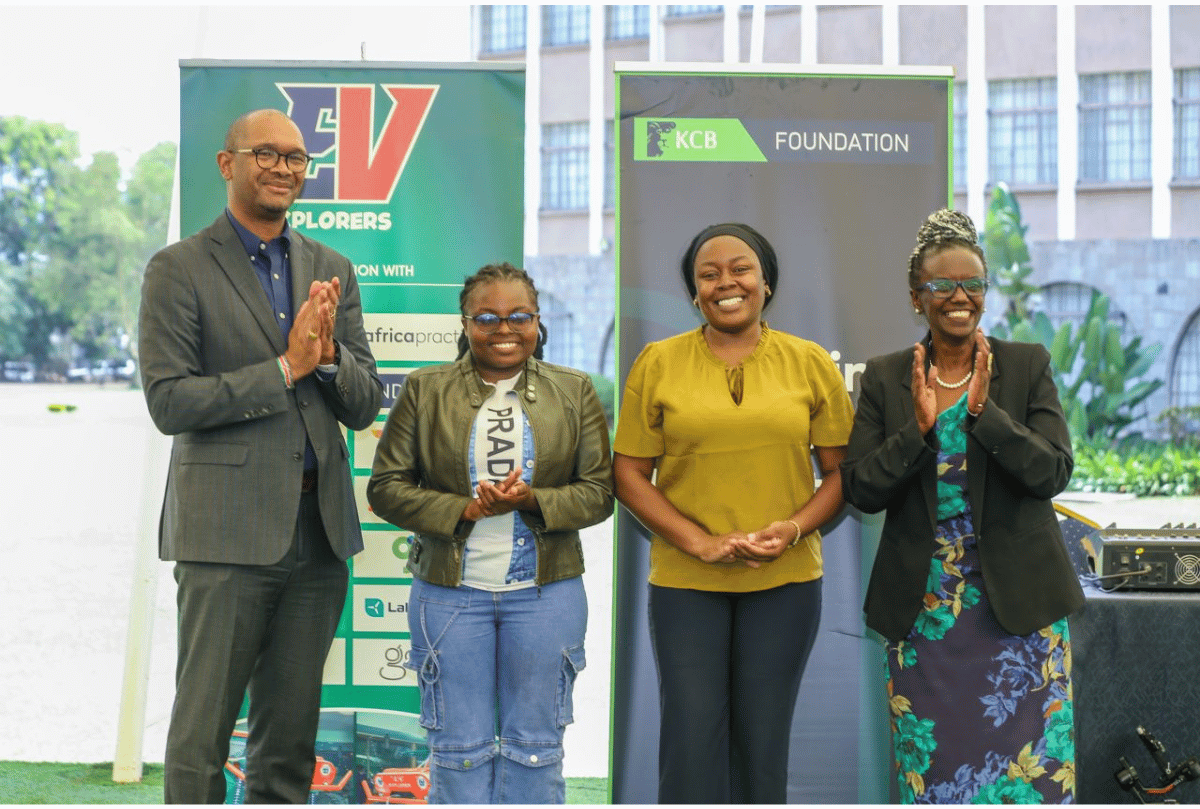
KCB Foundation has launched the EV Explorers Rhino Charge 2026 Innovation Challenge, bringing together innovators, engineers and industry players to develop solutions aimed at advancing electric mobility in Kenya and beyond.
Launched at the KCB Leadership Centre, the initiative connects education, practical engineering experience and innovation, with two female students pursuing engineering courses at technical and vocational education and training institutions set to work on real-world electric mobility solutions.
What the KCB Foundation EV Challenge Kenya Actually Involves
The KCB Foundation EV challenge Kenya programme is built around applied engineering rather than classroom instruction alone.
KCB Foundation Managing Director Mendi Njonjo said the initiative is designed to help young people gain practical skills and experience while giving them opportunities to contribute to solutions for the future of mobility.
The Foundation has framed the challenge as going beyond simply supporting green technology, positioning it instead as a mechanism for creating pathways through which young people build technical skills, gain industry exposure and participate directly in Kenya’s emerging electric mobility sector.
That emphasis on hands on participation rather than theoretical training reflects a recognition that electric mobility skills are most effectively built by working on actual vehicles and systems rather than studying them at a distance.
The KCB Foundation Rhino Charge 2026 Connection
The KCB Foundation Rhino Charge 2026 link gives the challenge an unusually demanding real world testbed.
The Rhino Charge is an annual off-road 4×4 competition run by the Rhino Ark Kenya Charitable Trust, raising funds that have built more than 780 kilometres of electric fencing protecting over 80,000 families across Kenya.
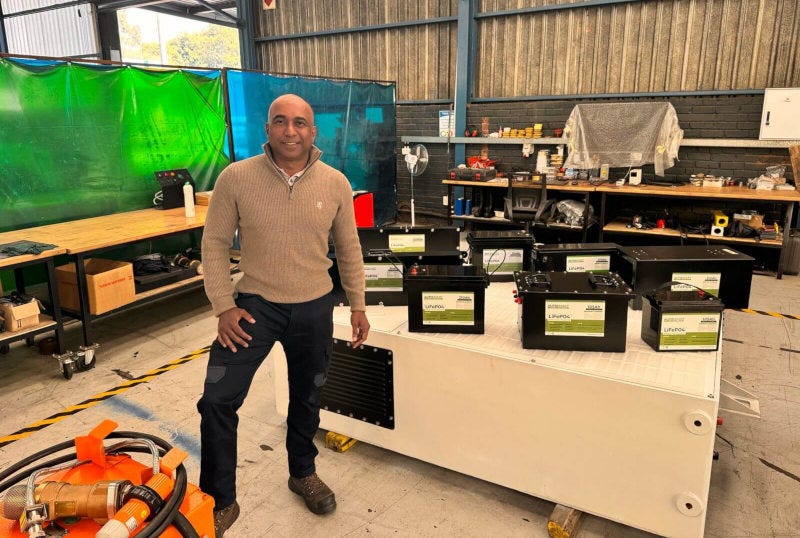
EV Explorers made history as the first team to enter a fully electric, zero-emissions vehicle into the event’s 35 year history, and returned to the 2026 edition in Samburu County with a re-engineered, entirely Kenyan built electric competition vehicle.
That vehicle’s development has already produced genuine engineering lessons.
Team lead Timothy Kabiru noted that during the previous attempt, the car performed exceptionally well through six checkpoints before the team discovered they had severely underestimated the torque produced by the electric drivetrain, an insight of exactly the kind that engineering students rarely encounter outside actual field conditions.
Kabiru has articulated an ambition that extends well past motorsport, saying the team hopes its 100 percent Kenyan built vehicle can inspire young people, encourage innovation around electric mobility, and help spark an industry around converting combustion vehicles into electric ones or eventually building Kenyan electric vehicles for everyday use.
READ ALSO:
KCB, Mastercard and Heifer Launch Digital Payments Pilot for 30,000 Kenyan Dairy Farmers
Women Engineering TVET Kenya EV Participation
The women engineering TVET Kenya EV component is a specific, deliberate feature of the challenge rather than an incidental detail.
By placing two female engineering students from technical and vocational education and training institutions onto real electric mobility projects, the initiative addresses two structural gaps simultaneously, the underrepresentation of women in Kenyan engineering fields and the limited practical exposure TVET students typically get to emerging technologies still absent from standard curricula.
TVET institutions occupy an important position in Kenya’s skills pipeline, training the technicians and applied engineers the country’s industries actually employ, yet their curricula often lag behind rapidly evolving sectors like electric mobility.
Embedding students directly into a working EV project offers a faster route to relevance than waiting for formal curriculum reform to catch up.
Kenya Electric Mobility Innovation 2026 in Broader Context
Kenya electric mobility innovation 2026 activity is being supported by a policy environment specifically designed to accelerate adoption.
The Energy and Petroleum Regulatory Authority has pointed to a special e-mobility electricity tariff, a reduction in excise duty on electric vehicles from 20 percent to 10 percent, and an exemption of fully electric vehicles from Value Added Tax as interventions driving momentum in the sector.
Kenya’s underlying energy profile strengthens the case further, with roughly 90 percent of the country’s electricity generated from renewable sources including geothermal, hydro, wind and solar, meaning electric vehicles charged on the Kenyan grid deliver substantially larger emissions reductions than they would in markets still reliant on coal or gas generation.
This challenge also fits within a broader pattern of KCB activity across the electric mobility sector.
In July 2026, KCB Foundation partnered with CFAO Mobility Kenya to train 200 young Kenyans in automotive engineering and electric mobility technologies at the Toyota Kenya Academy, and KCB Bank Kenya separately launched a public service vehicle charging station in Nairobi’s Buruburu Estate alongside the Matatu Owners Association and ePureMotion.
Taken together, those initiatives suggest KCB is pursuing a layered approach spanning workforce training, charging infrastructure financing and now applied innovation, rather than treating any single intervention as sufficient on its own.
Why Workforce Development Is the Binding Constraint
Industry leaders across Africa have increasingly identified workforce development, rather than capital or policy, as the most pressing constraint facing electric mobility expansion.
Technicians trained exclusively on combustion engines risk falling behind as EV and hybrid models enter the market in greater numbers, creating a skills gap that limits how quickly the sector can actually scale regardless of how favourable the surrounding policy environment becomes.
By combining education, hands on training and innovation through an event as technically demanding as the Rhino Charge, KCB Foundation’s challenge is positioned to develop practical solutions while preparing young engineers for opportunities in sustainable mobility.
Whether that translates into a meaningful pipeline of skilled EV technicians and engineers will depend on how far the model extends beyond this initial cohort, but as a proof of concept pairing real engineering problems with students who rarely get access to them, the approach addresses a constraint that policy incentives alone cannot solve.