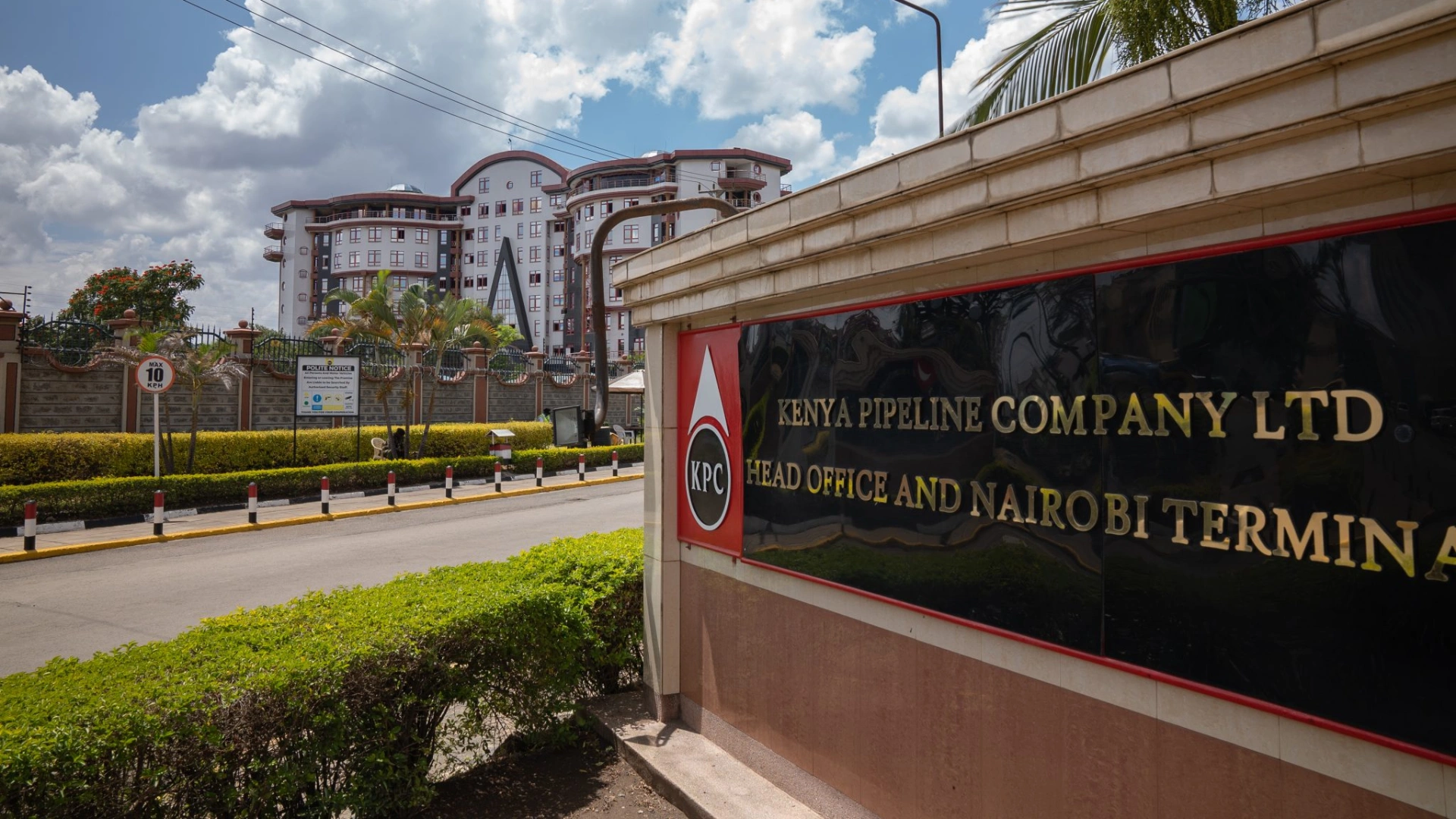
Kenya Pipeline Company is the newest arrival on the Nairobi Securities Exchange and, by transaction size, its most significant listing in nearly two decades.
Its March 2026 debut was Kenya’s first major IPO since Safaricom in 2008, and it marked a state monopoly of more than fifty years handing a majority stake to the public for the first time. Here’s the full picture.
History and Founding Story
Kenya Pipeline Company was incorporated on 6 September 1973 under the Companies Act, established by the Kenyan government to solve a specific national problem: getting refined petroleum products from the port of Mombasa to the rest of the country efficiently, safely, and cheaply, without relying entirely on road transport.
Feasibility studies at the time concluded that a pipeline network was the most practical way to move fuel inland.
It took five years to build. The first stretch, a 450 kilometre, 14 inch diameter pipeline from Mombasa to Nairobi, was completed in 1978, marking the start of commercial operations.
An additional 446 kilometre extension from Nairobi through to Western Kenya (Nakuru, Eldoret, and Kisumu) followed in 1994, and the network has been expanded and upgraded further since.
Today the system spans 1,342 kilometres and can handle roughly 14 billion litres of petroleum products a year, moving fuel not just for Kenya but for transit markets in Uganda, Rwanda, Burundi, South Sudan, and eastern DRC.
For over fifty years, KPC operated as a State Corporation, 100% owned by the Government of Kenya (99.9% via the National Treasury and a fractional stake via the Ministry of Energy and Petroleum) and governed under the State Corporations Act.
That changed decisively in 2026. As part of President William Ruto’s wider push to reduce state ownership of public enterprises and fund infrastructure differently, the government sold a 65% stake in KPC through an initial public offering that opened on 19 January 2026 and closed on 24 February 2026 (some reports cite 19 February as the formal closing date), priced at KSh9.00 per share.
The offer was oversubscribed by 105.7%, raising KSh106.3 to KSh112.4 billion for the state (reports vary slightly depending on whether over-allotment is included).
Trading began on 10 March 2026, with President Ruto ringing the bell at the NSE. In April 2026, the National Treasury formally gazetted the removal of KPC from the list of government owned entities, closing the chapter on more than five decades as a wholly state run monopoly.
Core Business Lines / Revenue Streams
KPC’s business is straightforward and infrastructure heavy: it moves, stores, and distributes petroleum products rather than producing or retailing them.
- Pipeline transportation: The core business. KPC transports refined petroleum products (petrol, diesel, jet fuel, and other white products) through its 1,342 kilometre pipeline network stretching from Mombasa through Nairobi to Nakuru, Eldoret, and Kisumu.
- Storage: The company operates an extensive depot and storage network along the pipeline route, allowing oil marketing companies to hold inventory close to demand centres rather than at the coast alone.
- Regional distribution: Roughly 40% of the products KPC moves are destined for transit markets beyond Kenya’s borders, including Uganda, Rwanda, Burundi, South Sudan, and eastern DRC, making it a genuinely regional piece of infrastructure rather than a purely domestic one.
- Customer base: KPC’s revenue comes almost entirely, around 99%, from the roughly 120 oil marketing companies that use its network, with a handful of major players (Total, Vivo Energy, and Rubis among them) accounting for about 80% of the volume transported.
Because KPC charges tariffs for transporting and storing products rather than owning the fuel itself, its revenue model is closer to a toll operator or a utility than to an oil and gas producer, a distinction that matters for how investors should think about its earnings.
Competitive Position in Its Industry
KPC’s competitive position is unusual for an NSE listed company: it holds what amounts to a natural monopoly over Kenya’s primary inland fuel transport route.
Building a rival pipeline network of comparable scale would require enormous capital and years of construction, so KPC’s main “competition” is really the alternative of moving fuel by road tanker, a costlier, slower, and less safe method that the pipeline was originally built to replace.
That monopoly position gives KPC unusually predictable revenue for a listed company, tied closely to Kenya’s and the wider region’s fuel consumption rather than to competitive market share battles.
READ ALSO:
Inside the NSE: KenGen (KEGN)
Its scale is also significant in absolute terms: at listing, KPC’s implied market capitalisation of roughly KSh163.6 billion to KSh167 billion made it the fifth or sixth largest company on the NSE by market value, behind only Safaricom, Equity Group, KCB Group, and East African Breweries, and around the same size as Co-operative Bank.
The main risks to its competitive position are regulatory and strategic rather than competitive in the traditional sense: government tariff setting, geopolitical disruptions to regional transit routes, and the pace of any future demand shift away from liquid fuels are the factors most likely to affect KPC’s long term earnings power.
Ownership Structure
KPC moved in 2026 from full state ownership to a mixed public-private structure, though the government retains a meaningful, locked-in stake and significant strategic influence.
- Government of Kenya (National Treasury): Retains a 35% stake, roughly 6.4 billion shares, locked in for two years following the IPO to reduce near term supply risk and support price stability. The Cabinet Secretary for Energy and Petroleum continues to represent KPC’s interests at the cabinet level.
- Local institutional investors: The single largest new ownership bloc, holding around 40.99% of the company after institutional demand significantly exceeded its initial allocation during the IPO, a sign that Kenyan pension funds and fund managers were the deal’s most enthusiastic buyers.
- East African Community (EAC) investors: Governments and institutions from Uganda and Rwanda in particular took up a large allocation, around 21.22% of the offer, reflecting KPC’s importance as regional transit infrastructure rather than a purely domestic Kenyan asset.
- Kenyan retail investors: A comparatively modest 2.56% of the offer, well below the 20% originally set aside for this group, with just over 70,000 to 73,000 individual investors participating, a much smaller retail turnout than famous prior IPOs like Safaricom’s.
- Employees: A small allocation, around 0.06% taken up against a 5% reservation, and oil marketing companies (KPC’s own customers) were also offered a dedicated allocation as part of the offer structure.
Why It’s Listed on the NSE Specifically
KPC’s NSE listing was a direct instrument of government privatisation policy under the Privatisation Act, 2025, rather than a move initiated by the company itself seeking growth capital.
President Ruto framed the transaction as a shift away from relying on debt and taxation to fund infrastructure, arguing that KPC’s modest annual dividends to the state (averaging around KSh5 billion) would take two decades to raise the kind of capital a single IPO could unlock immediately.
Proceeds from the sale were earmarked, under the Privatisation Act, exclusively for infrastructure development through the National Infrastructure Fund, which the government said could crowd in significantly more investment (cited figures around KSh1.2 trillion) alongside the direct IPO proceeds.
Listing on the NSE specifically, rather than selling the stake in a private transaction, served several public policy goals at once: it widened Kenyan and East African citizen ownership of a strategically important regional asset, it gave the government a transparent, market tested valuation for the stake it sold, and it was explicitly designed to demonstrate the depth of Kenya’s capital markets and encourage further privatisations.
The listing also coincided with the rollout of the Ziidi Trader platform, aimed at broadening retail participation in the stock market more generally, part of a wider push described by officials to elevate the NSE from frontier to emerging market status.
Current Stock Price
As of the most recent available trading data (around late June to September 2026), Kenya Pipeline Company’s share price was trading in the region of KSh9.08 to KSh9.10, essentially flat to marginally below its KSh9.30 debut day close and its KSh9.00 IPO price.
Analysts have noted that the stock has shown limited price volatility compared to earlier famous NSE IPOs like Safaricom’s, largely because the bulk of its shares are held by institutional investors rather than a broad retail base prone to rapid buying and selling.
Share prices move daily, and newly listed stocks can behave differently from more established counters as the market continues to price them. For a live quote, check the NSE’s official market data page or a licensed brokerage platform before making any decisions.
How to Buy Kenya Pipeline Company Shares
You don’t need to be in Kenya to buy KPC shares; it can be bought locally or from abroad:
- Open a CDS (Central Depository System) account. This is Kenya’s electronic share registry account, required to hold any NSE listed stock. It’s opened through a licensed stockbroker or investment bank.
- Choose a licensed NSE stockbroker or investment bank. Examples include firms like Standard Investment Bank, AIB-AXYS Africa, Genghis Capital, and Faida Investment Bank. A full list of licensed trading participants is available on the NSE website.
- Fund your trading account via bank transfer, mobile money (M-Pesa is widely supported), or card, depending on the broker. Kenyan retail investors can also use newer platforms like Ziidi Trader, launched alongside the KPC listing to broaden capital market access.
- Place an order for KPC through the broker’s trading platform, app, or by instructing your broker directly, specifying the number of shares or amount you want to invest.
- For non resident and diaspora investors, several online platforms (such as mystocks.africa and similar cross border brokerages) let you open an account remotely, fund it in USD or your local currency, and buy NSE listed shares like KPC without needing an in country presence, though you should confirm licensing and custody arrangements before using any platform.
- Hold and track. Shares are held electronically in your CDS account. KPC’s dividends to its sole government shareholder averaged around KSh5 billion a year before listing, but the company had not yet established a post-listing NSE dividend track record as a newly public company, so check its latest financial disclosures for updates on dividend policy.
This profile is for informational and editorial purposes and is not investment advice. Stock prices, especially, change constantly, so always verify current figures with the NSE or a licensed broker before making any investment decision. Other figures reflect the most recent publicly reported data as of 2026 and may change with new financial disclosures.