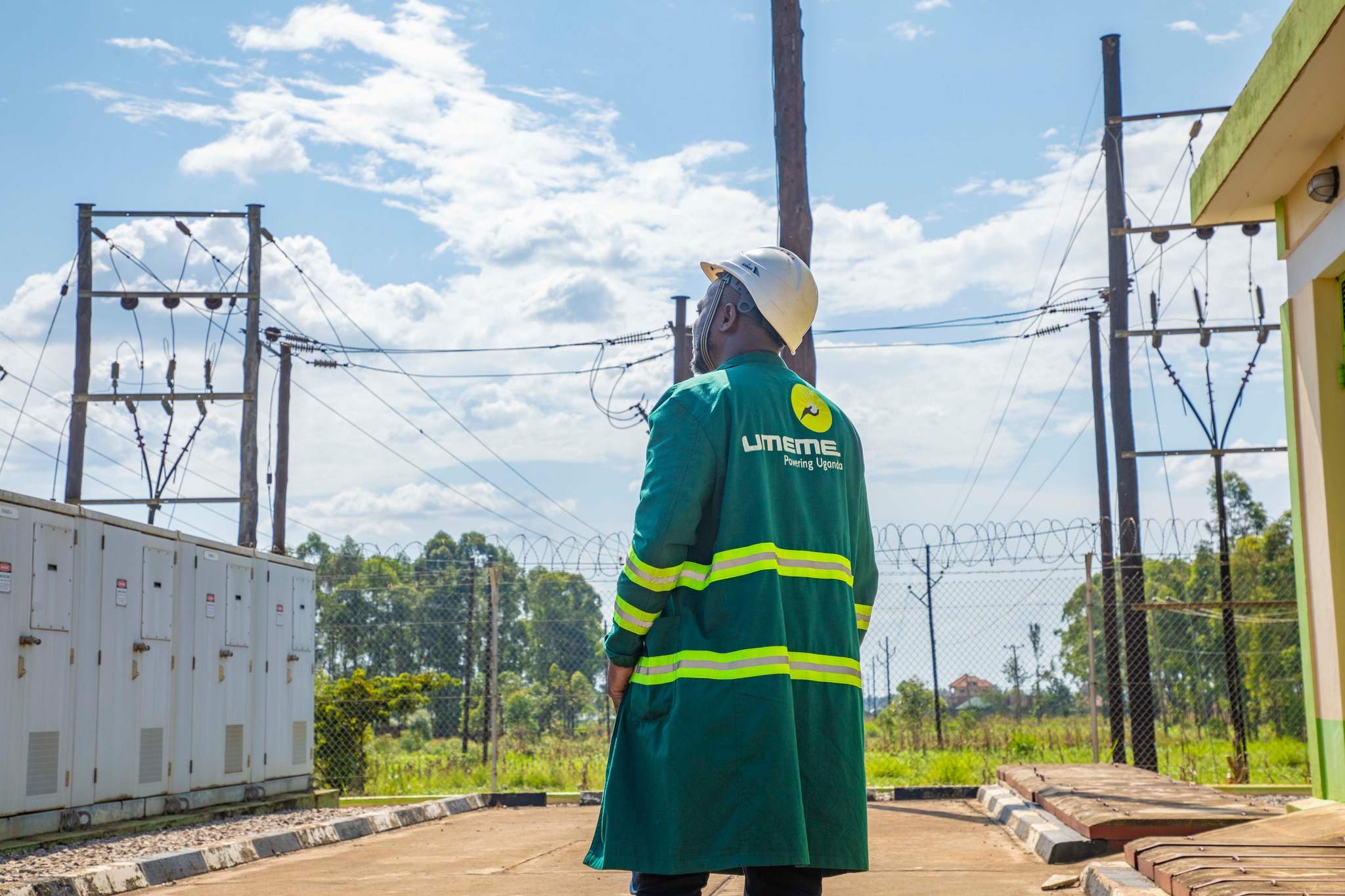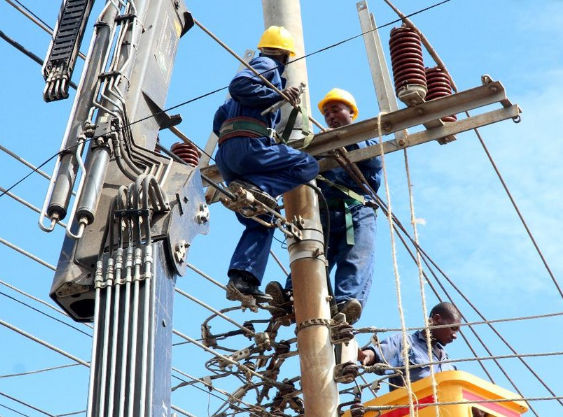
Kenya Power is the company that keeps the lights on for over nine million Kenyan customers, and its story on the NSE is one of the most dramatic turnarounds on the exchange: a stock that traded as low as KSh1.38 in December 2023 has since risen more than 400%, then kept climbing further still. Here’s the full picture.
History and Founding Story
Kenya Power’s roots reach back further than almost any other company in this series, to 1875, when the Sultan of Zanzibar acquired a generator to light his palace and nearby streets.
That same generator eventually found its way to Mombasa: in 1908, merchant Harrali Esmailjee Jeevanjee acquired it and used it to power the newly formed Mombasa Electric Power and Lighting Company.
In that same year, engineer Clement Hertzel was granted the exclusive right to supply electricity to Nairobi, then just a district, and formed the Nairobi Power and Lighting Syndicate, building a hydroelectric plant on the Ruiru River.
In 1922, these two pioneering utilities merged to form the East African Power and Lighting Company (EAP&L), a single business initially serving Kenya, Uganda, and Tanganyika (now Tanzania).
EAP&L expanded aggressively through the following decades, taking a controlling interest in what became TANESCO in Tanzania in 1932 and securing generation and distribution licences in Uganda in 1936.
That regional footprint narrowed in 1948, when Uganda established its own electricity board, and in 1964, when EAP&L sold its majority stake in TANESCO to the newly independent Tanzanian government, gradually refocusing the business on Kenya alone.
In 1954, EAP&L was contracted to manage a newly created entity, the Kenya Power Company, formed specifically to transmit hydropower from Uganda’s Owen Falls Dam into Kenya.
For decades, EAP&L (renamed The Kenya Power and Lighting Company in 1983) both generated and distributed the country’s electricity under a single roof.
That changed in 1996 and 1997, when energy sector reforms formally split generation from distribution: the generation business became the separately listed KenGen, while Kenya Power retained the transmission, distribution, and retail side of the business, along with its role as Kenya’s national system operator, dispatching electricity across the grid.
Core Business Lines / Revenue Streams
Kenya Power’s business today is focused and largely regulated: it buys bulk electricity, mostly from KenGen and a growing set of independent power producers, and transmits, distributes, and retails it to homes, businesses, and institutions across the country.
- Electricity distribution and retail (the core engine): Kenya Power sells electricity to over 9 million customers as of 2026, organised regionally across Nairobi, Mount Kenya, Coast, and West Kenya, with the Nairobi region historically generating the majority of company revenue.
- Transmission and system operation: Kenya Power owns and operates most of Kenya’s electricity transmission and distribution infrastructure and serves as the country’s national system operator, responsible for balancing supply and demand across the grid in real time.
- Residual generation assets: Following the 1997 split, Kenya Power retained management of a small number of diesel and hybrid generating stations, typically ones not connected to the national grid, though generation is no longer its primary business.
- Fibre optic connectivity: A smaller but notable revenue line, Kenya Power leases optic fibre capacity to telecommunications companies through a fibre network that runs alongside its high voltage power lines across the country, monetising infrastructure it already owns for electricity transmission.
- Metering, billing, and customer services: Electric metering (including the ongoing rollout of prepaid tokens and smart meters), billing, licensing, and emergency electricity services round out the company’s core distribution utility functions.
READ ALSO:
Inside the NSE: KenGen (KEGN)
Competitive Position in Its Industry
Kenya Power holds a near total monopoly over electricity distribution and retail in Kenya: it owns and operates the vast majority of the country’s transmission and distribution network, making it the only realistic route to market for electricity generators (including KenGen and independent power producers) serving Kenyan homes and businesses.
In that sense, its “competitive position” is less about rivalry and more about regulatory relationships and operational execution, since the Energy and Petroleum Regulatory Authority sets the tariffs Kenya Power can charge and the terms under which it buys power.
The company’s recent history is a genuine turnaround story. Kenya Power came close to financial collapse in the early 2020s, posting a net profit of just KSh319 million in the 2023 financial year, badly squeezed by a weak Kenyan shilling that inflated the cost of its dollar denominated debt.
The recovery since has been dramatic: net profit jumped to nearly KSh10 billion in the 2024 financial year, rose further to KSh25 billion for the year ended June 2026 (up 2.13% from KSh24.4 billion the year before), and half year results to December 2025 showed continued momentum, with net profit up 4.3% to KSh10.4 billion.
Much of the improvement has come from a stabilising shilling (which sharply reduced foreign exchange losses on dollar debt), improved distribution and transmission efficiency (rising from around 76% to over 81% during the year to June 2026), rising customer numbers (more than 411,000 new customers added in the year to June 2026 alone), and disciplined debt reduction, with total borrowings falling six percent to KSh84.2 billion by December 2025.
Kenya Power’s most important “competitor,” in a sense, is the broader question of Kenya’s energy mix and demand growth: as national peak electricity demand hits new records and the moratorium on new power generation contracts is expected to lift, Kenya Power’s role as the sole distributor connecting new supply to new demand puts it in a structurally strong position, assuming it can keep executing operationally.
Ownership Structure
Kenya Power is a majority state owned, publicly traded company, with a structure that has remained broadly stable since its NSE listing.
- Government of Kenya: The controlling shareholder, holding a 50.1% stake, giving the state a bare majority and effective control over strategic direction, though notably a much smaller government stake proportionally than at sister companies like KenGen (70%) or Kenya Re (60%).
- Private and institutional investors: The remaining 49.9% is held by private shareholders, including local and foreign institutional investors, pension funds, and a large and notably vocal base of individual retail investors.
- Notable individual shareholders: Kenya Power’s shareholder register includes some high profile individual investors; Kiharu Member of Parliament Ndindi Nyoro has been widely reported in Kenyan media as one of the company’s largest individual shareholders, benefiting substantially from the stock’s recent dividend increases and share price rally.
Why It’s Listed on the NSE Specifically
Kenya Power’s NSE listing predates the 1997 generation and distribution split by decades, reflecting its origins as East African Power and Lighting Company, one of colonial and early independence era Kenya’s most significant public companies.
As the business evolved into its modern, distribution focused form, the NSE listing carried forward, giving Kenyan investors continuous access to the company responsible for delivering their electricity even as its underlying operations and ownership structure changed substantially over the decades.
The listing has also served a specific financial purpose in recent years: it gave Kenya Power a transparent, market disciplined way to demonstrate its turnaround to investors and rebuild credibility after its early 2020s near collapse.
The dramatic share price recovery, and the return to paying (and then rapidly increasing) dividends, has been closely watched as a signal of the government’s broader success in stabilising state linked enterprises and the Kenyan shilling more generally.
For investors, KPLC’s NSE listing offers something distinct: direct exposure to Kenya’s national electricity distribution monopoly, a business with a structurally captive market but one whose profitability has proven historically sensitive to currency swings and debt management, making it as much a story about financial discipline as about the underlying utility business.
Current Stock Price
Kenya Power’s share price has been one of the standout performers on the NSE. Recent trading data put the price at around KSh17.40 to KSh19.40, depending on the exact date and data source consulted, with the stock’s 52 week range spanning roughly KSh9.78 to KSh18.75.
That represents a staggering rise from its all time low of KSh0.50 (reached in October 2002) and from its more recent low of just KSh1.38 in December 2023, with tracked data showing gains of well over 150% to nearly 250% over the trailing year depending on the exact period measured. Market capitalisation stands at roughly KSh30 billion to KSh33 billion.
Share prices move daily, and KPLC in particular has shown notably higher volatility than many of its NSE peers given the scale of its recent turnaround.
For a live quote, check the NSE’s official market data page or a licensed brokerage platform before making any decisions.
How to Buy Kenya Power Shares
You don’t need to be in Kenya to buy KPLC shares; it can be bought locally or from abroad:
- Open a CDS (Central Depository System) account. This is Kenya’s electronic share registry account, required to hold any NSE listed stock. It’s opened through a licensed stockbroker or investment bank.
- Choose a licensed NSE stockbroker or investment bank. Examples include firms like Standard Investment Bank, AIB-AXYS Africa, Genghis Capital, and Faida Investment Bank. A full list of licensed trading participants is available on the NSE website.
- Fund your trading account via bank transfer, mobile money (M-Pesa is widely supported), or card, depending on the broker.
- Place an order for KPLC through the broker’s trading platform, app, or by instructing your broker directly, specifying the number of shares or amount you want to invest.
- For non resident and diaspora investors, several online platforms (such as mystocks.africa and similar cross border brokerages) let you open an account remotely, fund it in USD or your local currency, and buy NSE listed shares like KPLC without needing an in country presence, though you should confirm licensing and custody arrangements before using any platform.
- Hold and track. Shares are held electronically in your CDS account. Kenya Power’s dividend has been recovering rapidly alongside its profits: the company paid an interim dividend of KSh0.30 per share for the half year to December 2025, a 50% increase from the KSh0.20 paid a year earlier, and reported trailing dividend yields in the range of roughly 6.5% to 8.7% depending on the measurement period, paid out directly to your linked bank account.
This profile is for informational and editorial purposes and is not investment advice. Stock prices, especially, change constantly, so always verify current figures with the NSE or a licensed broker before making any investment decision. Other figures reflect the most recent publicly reported data as of 2026 and may change with new financial disclosures.