Carbacid Investments has one of the most unusual origin stories on the entire NSE: a company built on a natural underground reservoir of carbon dioxide, discovered almost by accident in a Kenyan forest nearly a century ago.
Today it’s East Africa’s dominant supplier of food and industrial grade CO2, and a company that made regional headlines in 2020 for an acquisition attempt that fell spectacularly flat. Here’s the full picture.
History and Founding Story
Carbacid’s story begins with a genuine natural phenomenon. In 1933, a natural source of carbon dioxide gas was discovered in Kerita (also spelled Kereita) Forest, roughly 60 kilometres from Nairobi.
It took until 1957 for serious investigation into the gas’s nature and potential to begin, under the ownership of Kitchener Morson’s company, BEA Sawmills Limited.
In 1958, Kagwe Limited was established specifically to process the gas, installing the first 150 kg per hour high pressure plant at the well head, which began converting the raw CO2 into liquid and dry ice form.
The small scale operation grew steadily. In 1960, the company acquired its first storage tank and road tanker, addressing early handling and distribution challenges by adopting a bulk CO2 system.
By 1971, business across the East African region had grown enough to justify opening a dedicated office and distribution depot in Nairobi, complete with stockholding facilities, a cylinder filling unit, and a dry ice plant.
To finance this expansion and a larger production plant, the operating company changed its name to Carbacid (CO2) Limited, and its parent holding company, Carbacid Investments Limited, was floated on the Nairobi Stock Exchange, officially through various mergers and acquisitions completed in 1975 (some company materials describe the formal 1975 renaming and listing as the culmination of the earlier 1957-1958 discovery and development work).
Growth continued steadily through the following decades: by the late 1980s, the company had begun exporting to neighbouring Uganda and Tanzania, and in 2001, it installed a state of the art catalytic oxidation unit, further purifying its CO2 output and making Carbacid the only supplier in Africa of natural carbon dioxide at 99.99%+ purity.
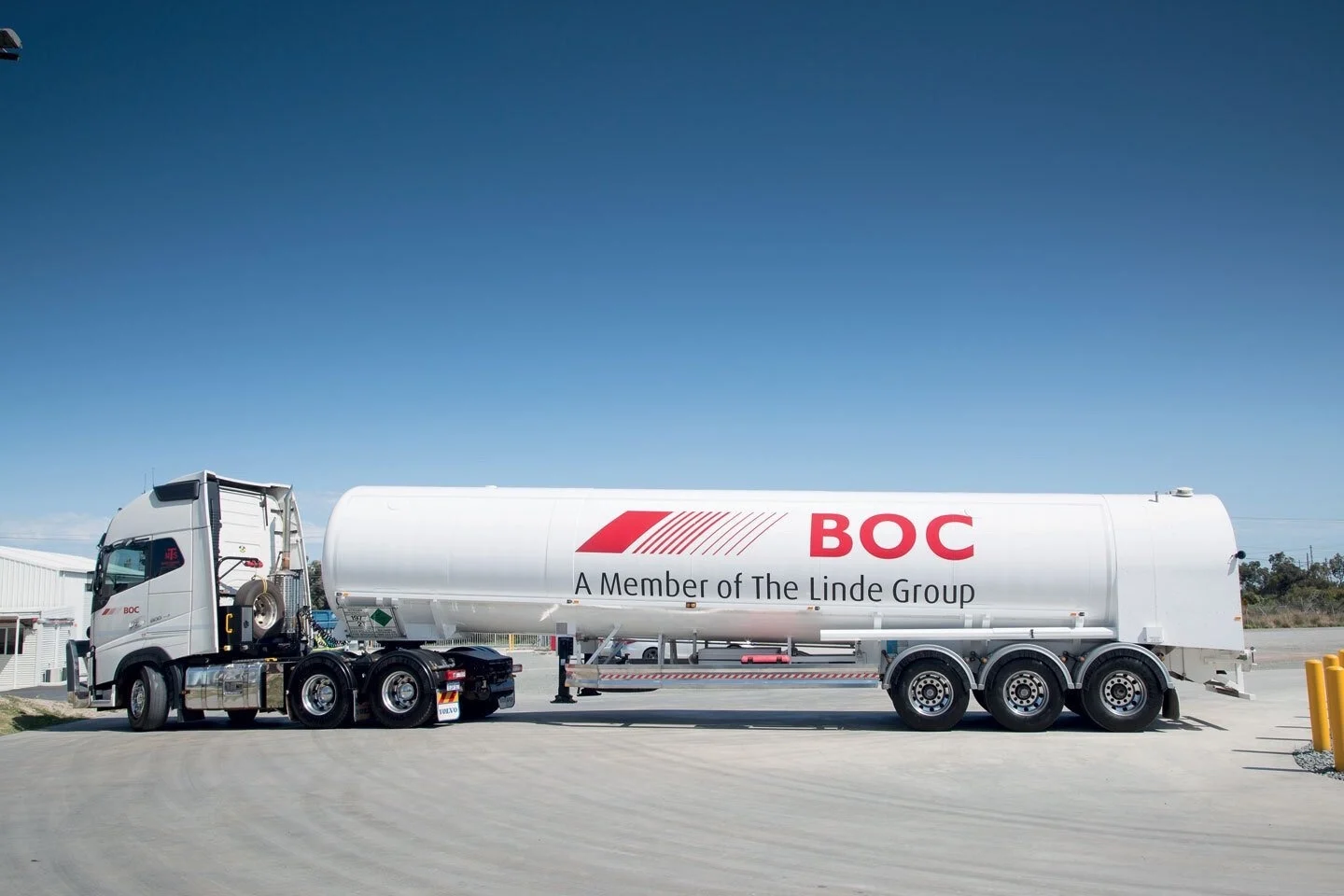
The company’s most dramatic recent moment, however, came in November 2020, when Carbacid and its controlling shareholder Aksaya Investments LLP made an unsolicited offer to acquire 100% of NSE listed rival BOC Kenya at KSh63.5 per share, a bid opposed by BOC’s minority shareholders, including billionaire businessman Ngugi Kiuna, who argued the offer undervalued the company.
Carbacid ultimately withdrew the bid, and BOC’s share price subsequently more than doubled, a rare, publicly visible example of an NSE minority shareholder revolt actually changing a corporate outcome.
Core Business Lines / Revenue Streams
Carbacid Investments is a holding company whose core operating business, Carbacid (CO2) Limited, manufactures, processes, and markets carbon dioxide gas and related products, supplemented by a portfolio of financial investments.
- Food and beverage grade CO2 (the core engine): Natural, certified food grade carbon dioxide (99.99% purity, Halaal certified) supplied primarily to major drinks bottlers and breweries across the region for use in carbonated water, soft drinks, and alcoholic beverages, its single largest and most important market.
- Industrial CO2: Compressed carbon dioxide sold to industrial users for applications including MIG welding and fire extinguishers.
- Medical CO2 and dry ice: Additional product lines serving healthcare and cold-chain logistics customers.
- Cylinder testing and validation: A specialised service line testing and validating gas cylinders, adding a technical services revenue stream alongside core gas production.
- Regional export markets: Carbacid supplies customers well beyond Kenya, including Uganda, Tanzania, Ethiopia, South Sudan, Somaliland, Malawi, Zambia, Rwanda, and Burundi, and has more recently expanded into new markets in the Southern African region.
- Investment portfolio: Beyond its gas business, Carbacid Investments (the holding company) holds a substantial portfolio of property, listed equities on both the NSE and Dar es Salaam Stock Exchange, and bonds and other financial assets, a segment that has increasingly driven the group’s bottom line profit growth in recent periods, sometimes more than the core gas operations themselves.
Competitive Position in Its Industry
Carbacid has historically held a commanding position in its core market, with a market share cited above 65% of the regional carbon dioxide market, built on its unique natural underground CO2 source and decades of infrastructure investment across East Africa.
That dominance, however, has come under increasing pressure in recent years.
The company has said it lost significant market share to regional alcohol manufacturers who harvest carbon dioxide as a byproduct of their own fermentation processes, effectively creating new, low cost competitive supply that didn’t previously exist, and management has more recently flagged new entrants in several of its established export markets, prompting a response focused on enhanced customer experience and delivery commitment rather than price competition alone.
READ ALSO:
Inside the NSE: Umeme (UMME)
Financially, the company has remained solidly profitable even amid this competitive pressure, though growth has become more reliant on its investment portfolio than its core operations.
Full year 2025 results (year ended 31 July 2025) showed turnover growing a modest 1.6% to KSh2.1 billion, with net profit up a much larger 18.8% to KSh1.0 billion, driven substantially by a recovery in the NSE and Dar es Salaam Stock Exchange lifting the value of Carbacid’s investment portfolio (unrealised gains of KSh68 million on NSE-listed equities and KSh52 million on DSE-listed equities).
Half year results to January 2026 continued that pattern: net profit rose 6.9% to KSh465 million even as sales grew just 3.8% and operating profit actually dipped slightly, with gains from equity investment revaluations (more than doubling to KSh106.2 million) doing the heavy lifting, while softer fixed income returns from falling interest rates offset some of that gain.
The failed 2020 attempt to acquire BOC Kenya remains a notable data point in understanding Carbacid’s competitive strategy: rather than growing purely organically or through price competition, the company has at times looked to consolidation as a route to strengthening its regional position, though that particular attempt was rebuffed by the target company’s own shareholders.
Ownership Structure
Carbacid Investments is majority controlled by a single private investment vehicle, with a notable international industrial gas company also holding a meaningful minority stake.
- Aksaya Investment Holdings Limited: The controlling shareholder, holding a 49.9% stake, the same entity that partnered with Carbacid in the unsuccessful 2020 bid for BOC Kenya.
- Linde plc: A significant minority shareholder, holding 5.83%. Linde is itself one of the world’s largest industrial gas companies, giving Carbacid a notable strategic international shareholder within its own competitive industry.
- T. I. Friedman: An individual shareholder holding around 4.42%.
- Individual insiders: Company executives, directors, and related individuals collectively hold around 11% of shares.
- General public: The remaining roughly 30.3% is held by the broader investing public on the NSE, alongside smaller institutional holdings (around 2.99%) and other public companies (around 5.83%, separate from the Linde stake noted above).
With a controlling shareholder holding just under half the company outright, plus meaningful additional stakes from insiders and a strategic industry player like Linde, Carbacid’s free float, the shares genuinely available for public trading, has been estimated at around 33.7%, a relatively modest figure that can affect the stock’s day to day liquidity.
Why It’s Listed on the NSE Specifically
Carbacid’s 1975 listing (as the holding company Carbacid Investments Limited, floated on what was then the Nairobi Stock Exchange) was driven by a specific operational need: financing the expansion of processing capacity and infrastructure required to serve a rapidly growing regional customer base of bottlers and breweries.
As a natural resource-based business tied to a single geographic source (the Kerita Forest deposit), Carbacid needed sustained capital investment in storage, transport, and processing technology to translate that natural advantage into a genuinely regional supply business, and the public listing provided a route to that capital beyond what a small, privately held operating company could generate alone.
The listing has endured for half a century since, giving Kenyan investors access to a genuinely unusual business model: a natural resource extraction and processing company whose product underpins much of the region’s beverage industry, combined with an increasingly significant investment holding function that gives shareholders indirect exposure to the wider performance of the NSE and Dar es Salaam Stock Exchange through Carbacid’s own equity portfolio.
That dual nature, industrial gas producer and investment holding company, is part of what makes Carbacid a genuinely distinctive counter among NSE listed manufacturers.
Current Stock Price
Carbacid’s share price has traded at around KSh34.95 in recent data, up approximately 19.08% since the start of the year in one recent measurement window, with a market capitalisation of roughly KSh7.6 billion.
The stock has shown solid momentum across several time frames, including gains of around 18.07% over three months and 14.40% over six months in the same dataset, reflecting both the company’s own steady profitability and the broader NSE rally that has lifted many Kenyan counters, including Carbacid’s own investment portfolio, over the past year.
Share prices move daily. For a live quote, check the NSE’s official market data page or a licensed brokerage platform before making any decisions.
How to Buy Carbacid Investments Shares
You don’t need to be in Kenya to buy CARB shares; it can be bought locally or from abroad:
- Open a CDS (Central Depository System) account. This is Kenya’s electronic share registry account, required to hold any NSE listed stock. It’s opened through a licensed stockbroker or investment bank.
- Choose a licensed NSE stockbroker or investment bank. Examples include firms like Standard Investment Bank, AIB-AXYS Africa, Genghis Capital, and Faida Investment Bank. A full list of licensed trading participants is available on the NSE website.
- Fund your trading account via bank transfer, mobile money (M-Pesa is widely supported), or card, depending on the broker.
- Place an order for CARB through the broker’s trading platform, app, or by instructing your broker directly, specifying the number of shares or amount you want to invest. Given the relatively modest free float, be aware that trading volumes and liquidity may be thinner than for the NSE’s largest counters.
- For non resident and diaspora investors, several online platforms (such as mystocks.africa and similar cross border brokerages) let you open an account remotely, fund it in USD or your local currency, and buy NSE listed shares like CARB without needing an in country presence, though you should confirm licensing and custody arrangements before using any platform.
- Hold and track. Shares are held electronically in your CDS account. Carbacid has a strong and improving dividend record, having declared a record final dividend of KSh2.00 per share (up from KSh1.70 the year before) for the 2025 financial year, totalling roughly KSh509.7 million, with reported dividend yields in the range of around 9% to 10% in recent measurement windows, paid out directly to your linked bank account.
This profile is for informational and editorial purposes and is not investment advice. Stock prices, especially, change constantly, so always verify current figures with the NSE or a licensed broker before making any investment decision. Other figures reflect the most recent publicly reported data as of 2026 and may change with new financial disclosures.