
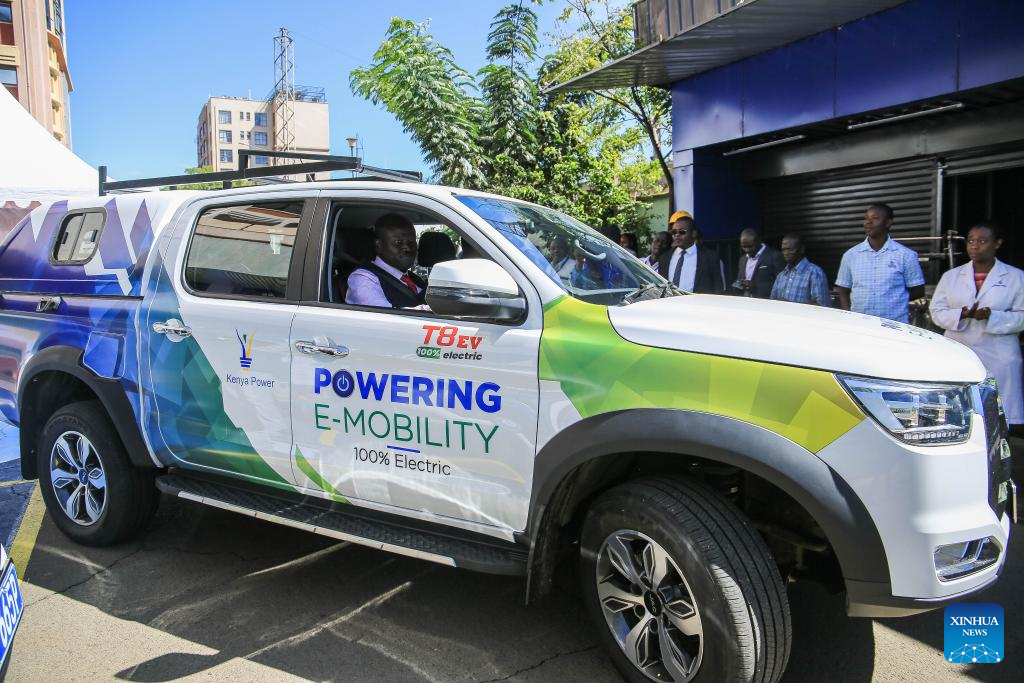
Kenya’s National Treasury has launched the country’s largest single public-sector electric mobility procurement to date, inviting bids to lease 600 electric vehicles and supply 70 fast chargers under a four-year fleet expansion programme.
The tender, which closes on 21 April 2026, will equip the National Government Administrative Services, National Police Service, Kenya Prisons Service, and other ministries, departments, and agencies with modern, lower-carbon vehicles.
This initiative represents a significant policy signal for Kenya’s emerging electric mobility sector, moving beyond pilot projects to large-scale public fleet adoption and infrastructure deployment.
Tender Composition and Operational Focus
The procurement is structured as a leasing arrangement and includes:
- 335 double-cab 4×4 EV pick-ups
- 125 medium-duty 4×4 passenger EVs
- 90 medium-duty 4×2 passenger EVs
- 50 hybrid vehicles
The remaining requirement in the broader fleet modernisation covers 2,423 petrol and diesel units, indicating a phased approach to electrification rather than an immediate full transition.
A critical component is the inclusion of 70 units of 200-kilowatt fast chargers. This stresses that the programme is not limited to vehicle procurement but also addresses operational readiness by ensuring adequate charging infrastructure is in place from the outset.
Economic and Environmental Rationale
Treasury estimates highlight substantial cost savings. Each electric vehicle is projected to cost approximately Sh508 to charge for a 430-kilometre range, resulting in an annual operating cost of around Sh185,000.
In contrast, a comparable internal combustion engine vehicle consuming 15 litres of fuel per day incurs at least Sh1.08 million in annual fuel costs.
This translates to potential annual fuel savings of Sh894,580 per EV for the government.
Beyond direct savings, the programme is expected to generate forward and backward linkages for local vehicle assemblers, lessors, financiers, accessory suppliers, and charging infrastructure providers.
It also supports Kenya’s broader climate and energy goals by reducing the public sector’s carbon footprint and demonstrating leadership in sustainable procurement.
Market Relevance and Sector Implications
As of the end of 2024, Kenya had registered 14,570 electric vehicles, the majority being motorcycles and bicycles. The government’s 600-unit order represents a meaningful scale signal for the growing electric mobility sector. It is expected to:
- Strengthen commercial confidence among manufacturers, assemblers, and service providers.
- Stimulate investment in charging infrastructure and local assembly capabilities.
- Accelerate the transition toward a lower-carbon public fleet.
- Catalyse domestic industry development in electric vehicle supply chains.
The tender also aligns with Kenya’s National Electric Mobility Policy and broader climate commitments, positioning public procurement as a tool to drive market transformation.
Potential Challenges and Success Factors
While the initiative is ambitious, successful implementation will depend on several factors:
- Timely delivery of vehicles and chargers.
- Development of adequate charging infrastructure and maintenance ecosystems.
- Effective contract management and performance monitoring over the four-year lease period.
- Ability to demonstrate tangible cost savings and environmental benefits to justify further public-sector electrification.
The inclusion of hybrid vehicles in the tender reflects a pragmatic, phased approach rather than an abrupt shift to full electrification.
For the most current tender details or updates, refer to official National Treasury or Public Procurement Regulatory Authority communications.
E-mobility Overview
E-mobility meaning refers to electric-powered transport such as electric motorcycles, buses, and cars that reduce fuel use and emissions.
E-mobility companies in Kenya include providers like Spiro EV Kenya, Roam, and other startups deploying electric motorcycles and charging infrastructure.
The E-Mobility Policy Kenya framework supports adoption of electric transport through incentives, charging infrastructure, and regulatory alignment.
Electric Mobility Association of Kenya (EMAK) promotes collaboration among manufacturers, financiers, and policymakers.
KCB E-Mobility refers to financing solutions by KCB Group supporting electric motorcycles and vehicles.
Electric cars in Kenya include imported and locally assembled EVs used for ride-hailing, corporate fleets, and private transport, with growing charging networks in Nairobi and other cities.


