The Green Climate Fund (GCF) has selected Nairobi, Kenya, as the host city for its new Eastern and Southern Africa regional office.
This decision, announced during the GCF’s 44th Board meeting, held from 25 to 28 March 2026 in Songdo, South Korea, represents a landmark shift in the Fund’s operational model.
At the same meeting, the Board approved US$960.3 million in new climate financing, pushing the GCF’s total committed portfolio above US$20 billion across 354 projects in more than 130 countries.
Nairobi will serve as a regional hub for project development, technical assistance, and funding coordination for East and Southern Africa.
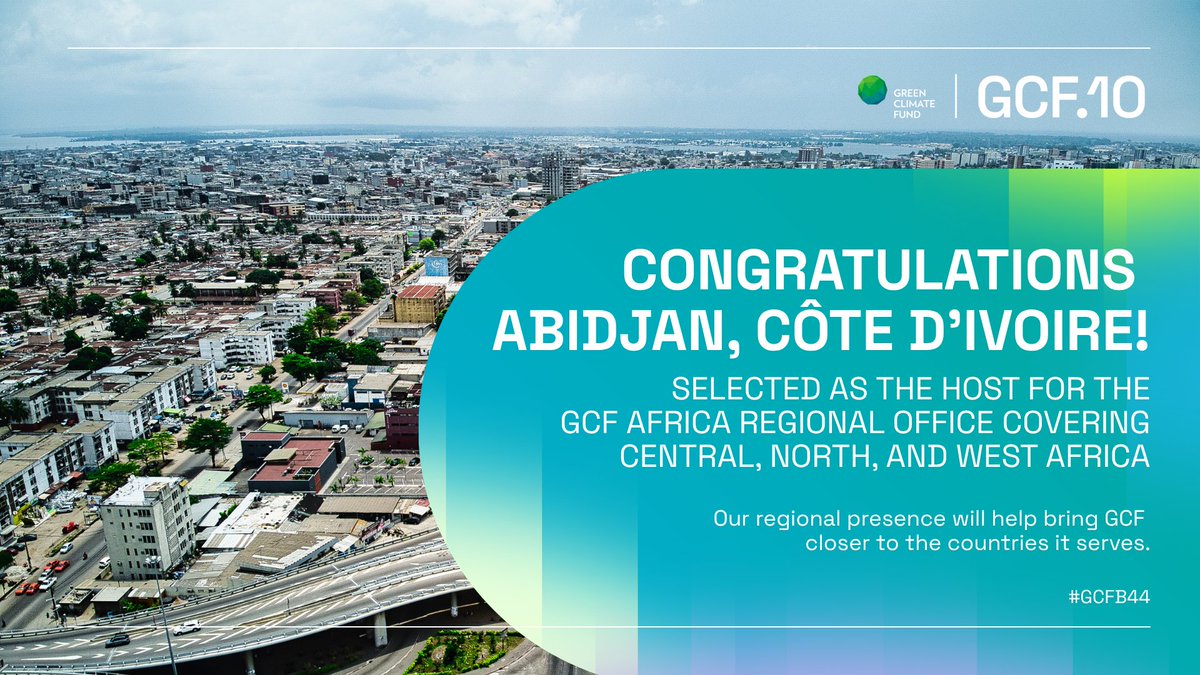
A parallel office will be established in Abidjan, Côte d’Ivoire, for Central, North, and West Africa. This marks the first time the GCF will maintain a physical presence closer to the developing countries it serves.

Strategic Drivers Behind the Regional Expansion
The establishment of regional offices addresses long-standing criticisms of the GCF’s centralised structure in Songdo, South Korea, which has often resulted in slow project approval timelines, limited country ownership, and challenges in aligning funding with local priorities.
Key objectives of the decentralisation include:
- Accelerating Access to Climate Finance: Bringing technical expertise and decision-making closer to recipient countries to shorten project preparation and approval cycles.
- Strengthening Country Ownership and Coordination: Enhancing direct engagement with national designated authorities, implementing partners, and local stakeholders to ensure projects better reflect national climate priorities.
- Improving On-the-Ground Results Monitoring: Enabling more effective oversight, adaptive management, and impact measurement in highly climate-vulnerable regions.
- Building Local Capacity: Catalysing demand for climate expertise, attracting additional financiers and project developers, and fostering regional knowledge exchange.
The move aligns with the GCF’s broader reform agenda to enhance efficiency, equity, and effectiveness in delivering climate finance, particularly for adaptation and resilience-building in the most exposed developing nations.
At the 44th Board meeting, nearly 46% of the newly approved funding (approximately US$441 million) was directed toward African projects, including a flagship US$250 million programme with the World Bank to expand climate-resilient energy access across 21 countries in Eastern and Southern Africa.
Prime Cabinet Secretary Musalia Mudavadi stated:
“The Nairobi regional hub will expand access to climate finance, strengthen partnerships across the continent and enhance the delivery of climate programmes, further positioning Kenya at the forefront of global climate action.”
Competitive Selection Process and Kenya’s Positioning
The selection of host cities followed a rigorous, competitive global process involving bids from 47 developing countries, 17 of which were from Africa.
Kenya’s successful bid reflects Nairobi’s established role as a diplomatic, economic, and logistical hub in Africa, with strong infrastructure, a vibrant private sector, and growing expertise in climate finance and sustainable development.
The decision also reflects Kenya’s proactive climate leadership, including alignment with its National Climate Change Action Plan and Nationally Determined Contributions.
Hosting the office is expected to increase investment inflows, strengthen Kenya’s influence in shaping regional climate priorities, and create opportunities for local institutions and experts.

Broader Implications for Developing Regions
By decentralising operations, the GCF aims to overcome structural barriers that have historically limited the flow and impact of climate finance in the Global South. Regional offices will facilitate:
- Faster project origination and preparation support.
- Closer alignment between funding and country-driven strategies.
- Enhanced private-sector mobilisation and blended finance approaches.
- Greater focus on adaptation needs in highly vulnerable economies.
This expansion complements the GCF’s milestone of surpassing US$20 billion in committed funding and signals a commitment to more responsive, regionally tailored climate action.
Future Outlook
The Green Climate Fund’s decision to establish regional offices in Nairobi and Abidjan represents a deliberate and strategic expansion of its presence in developing regions.
Driven by the need to accelerate access, improve efficiency, enhance country ownership, and strengthen on-the-ground impact, this reform addresses longstanding operational challenges while responding to the urgent climate finance needs of vulnerable nations.
For Kenya and Eastern and Southern Africa, the Nairobi hub offers a platform to scale climate investments, build local capacity, and advance regional resilience.
This development marks a significant evolution in global climate finance architecture, bringing resources and expertise closer to the communities that need them most.
For further details, refer to official GCF Board outcomes or announcements from the Kenyan government.
Green Climate Fund (GCF) Overview
Green Climate Fund (GCF) is the world’s largest climate fund supporting developing countries in mitigation and adaptation.
The Green Climate Fund headquarters is in Incheon, and it was established in 2010 under the UNFCCC framework.
Green Climate Fund projects finance renewable energy, climate resilience, and low-carbon development across Africa, Asia, and Latin America. Funding comes from donor governments, so Green Climate Fund contributions by country mainly include developed nations.
The fund regularly issues Green Climate Fund calls for proposals, but applicants must go through Accredited Entities such as banks, NGOs, or development institutions rather than applying directly as individuals.
To apply for Green Climate Fund support, organizations partner with these Green Climate Fund Accredited Entities, which submit and manage project proposals.
Who funds the Green Climate Fund: primarily developed countries, along with some private sector contributions, to support climate action in developing economies.