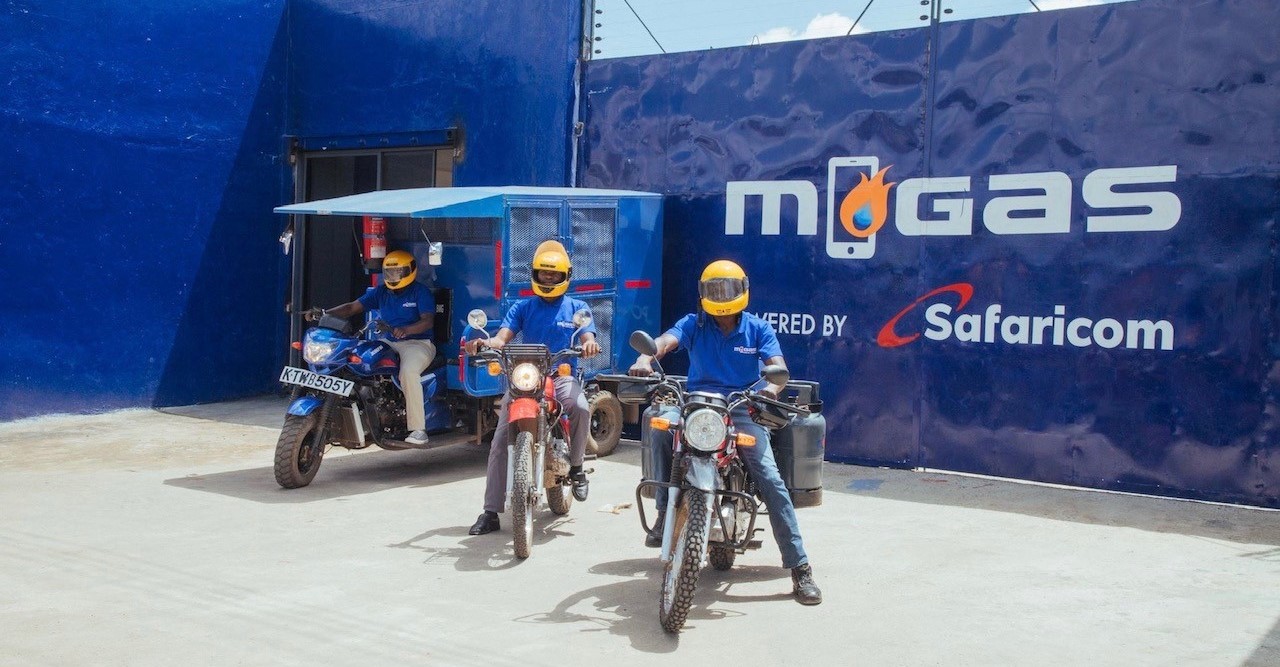
M-Gas, the Safaricom-backed liquefied petroleum gas (LPG) distributor, is advancing its application for a licence to sell carbon credits generated from its clean-cooking operations in Kenya.
The company has secured a government Letter of Approval (LoA), an initial milestone in the authorisation process, and is progressing through subsequent regulatory stages while engaging potential offtakers and financing partners.
This development occurs against the backdrop of heightened regulatory scrutiny in Kenya’s carbon markets, following the collapse of Koko Networks in early 2026 due to the government’s refusal to issue necessary authorisations for credit monetisation.
A successful licence for M-Gas would enable the monetisation of verified emissions reductions from households transitioning to cleaner LPG, providing critical revenue to sustain its subsidised pay-as-you-cook model.
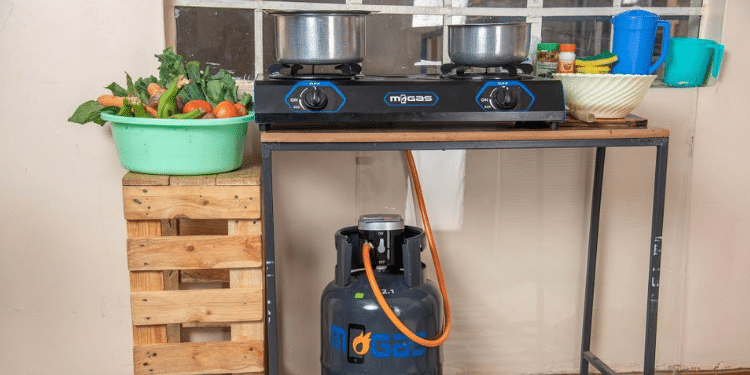
M-Gas Operating Model and Role of Carbon Credits
M-Gas targets low-income households through a pay-as-you-cook system that eliminates upfront costs for equipment. Customers receive a cylinder and two-burner cooker at no initial charge, paying small amounts starting from as low as KSh 10—via M-PESA for gas credit.
Smart meters, connected through Safaricom’s Narrowband IoT network, monitor usage in real time and discontinue supply when credit expires.
TotalEnergies supplies the LPG and cylinders, while the model relies on carbon-credit revenues to offset subsidised stove distribution and below-market fuel pricing.
By replacing traditional fuels such as charcoal and firewood, M-Gas generates verifiable emissions reductions that qualify for carbon credits under international standards.
The business model depends heavily on these revenues to achieve financial sustainability, as direct user payments alone do not cover full costs in a price-sensitive segment.

Regulatory Context and Recent Challenges
Kenya’s Climate Change (Carbon Markets) Regulations, 2024, establish a framework requiring independent verification of project outcomes, adherence to national safeguards, and alignment with ecological, social, and economic priorities.
Projects must secure government authorisation, typically through a Letter of Authorisation (LoA) for international trading, to ensure integrity and prevent double counting under mechanisms such as Article 6 of the Paris Agreement.
The recent collapse of Koko Networks highlighted vulnerabilities in this system. Koko, which deployed bioethanol-based clean-cooking solutions to over a million households, ceased operations after the government withheld LoA approval despite a June 2024 investment framework agreement.
The refusal stemmed from concerns over credit credibility, volume allocation, and national priorities, leading to financial unsustainability and a potential compensation claim against the state.
M-Gas’s application therefore serves as a critical test of whether Kenya can enforce rigorous controls on transparency, verification, and market integrity while preserving viable models that depend on carbon income to maintain affordability.
READ ALSO:
What Koko Networks’ Administration Means for 1.5 Million Households
Implications of a Successful Licence for M-Gas
Securing the licence would allow M-Gas to monetise emissions reductions from over 350,000 households currently served under its pay-as-you-cook model.
Revenue from international carbon markets potentially through voluntary or compliance schemes would subsidise equipment and fuel costs, enabling continued low pricing and broader scale-up.
This outcome would strengthen the company’s financial position, support expansion to additional low-income communities, and contribute to Kenya’s clean-cooking objectives by accelerating the shift from polluting traditional fuels.
Benefits for Low-Income Households
For end-users, a functional carbon-credit revenue stream would preserve or enhance affordability:
- Sustained access to subsidised stoves and fuel, reducing reliance on costly or health-damaging alternatives like charcoal.
- Lower household energy expenditure, freeing resources for other essential needs.
- Health and environmental gains from reduced indoor air pollution and deforestation pressures.
Without reliable carbon income, M-Gas risks pricing pressures that could limit reach or force cost pass-throughs, undermining the model’s inclusivity.
Broader Implications and Outlook
A positive outcome for M-Gas would signal Kenya’s capacity to balance stringent oversight with support for innovative clean-energy initiatives.
It could encourage further investment in carbon-credit-dependent projects while reinforcing confidence in the regulatory framework.
Conversely, delays or rejection would echo Koko’s experience, potentially deterring similar ventures and constraining progress toward universal clean-cooking access.
As of February 10, 2026, M-Gas’s progression beyond the LoA stage remains under active engagement with authorities.
The resolution will influence the viability of carbon-financed clean-cooking models in Kenya and their role in supporting low-income households.
For the latest developments, consult official statements from M-Gas, Safaricom, or Kenya’s climate and energy ministries.
Brief overview of M-Gas in Kenya:
M-Gas price list / M-gas price in Kenya: M-Gas uses a Pay-As-You-Cook model where you top up gas credit via M-PESA (Paybill 804040 or *479# USSD) and pay only for what you use.
To apply for M-Gas (including How to apply for M-Gas online), first sign up by calling the toll-free number 0800 721 148 or submitting your details on the M-Gas website; a sales agent will contact you, verify your ID and address, and arrange free doorstep delivery and installation of the smart LPG cylinder system.
M-Gas contact number is 0800 721 148, and the M-Gas WhatsApp number for support and enquiries is 0792 556 677.
There is typically a small initial M-gas deposit (e.g., an initial top-up of about KSh 250) to start using the system, but installation and delivery of the cylinder and meter are at no extra cost.
M-Gas has multiple M-Gas branches/depots where customers can engage or get support, including outlets such as M‑Gas Mukuru Depot, M‑Gas Kangemi Depot, M‑Gas Rongai Depot, M‑Gas Kibera Depot, M‑Gas Athi River Depot, M‑Gas Kiambu Town Depot, M‑Gas Nakuru West Depot and others in Utawala, Mathare, Tassia and Mwiki.
This setup makes clean cooking gas more affordable and accessible for households across Nairobi and other Kenyan towns through flexible payment and delivery.
Ronnie Paul is a seasoned writer and analyst with a prolific portfolio of over 1,000 published articles, specialising in fintech, cryptocurrency, climate change, and digital finance at Africa Digest News.