Genser Energy Investments has closed a €456 million package of term and revolving credit facilities to fund its next phase of energy infrastructure development across West Africa.
The financing was arranged by a syndicate of three major African banking groups, First Rand Bank through its Rand Merchant Bank division, Absa Bank, and Standard Bank of South Africa, with Standard Bank serving as mandated lead arranger, lender and facility agent on the deal.
Standard Bank’s Role in the Deal
The Standard Bank Genser Energy financing arrangement builds on a relationship the two companies have deepened over the past year.
Standard Bank previously acted as lender and facility agent on Genser Energy Ghana’s 428 million dollar corporate refinancing and Genser Energy Côte d’Ivoire’s 200 million euro equipment loan facility, both completed in 2025.
This latest transaction marks the first time Standard Bank has taken on the mandated lead arranger role for Genser, in addition to its continuing positions as lender and facility agent.
Tyson Sithole, Standard Bank’s Executive Head of Equity Finance and Structured Capital, described the deal as a strategic inflection point in Genser’s growth trajectory, saying the bank expects the facility to give Genser additional flexibility for its ongoing projects.
What the Money Is For
The facilities are structured to provide working capital for the completion of ongoing engineering, procurement and construction projects, strengthen Genser’s balance sheet, and give the company added financial flexibility as it pursues expansion beyond Ghana.
Genser Energy founder and CEO Baafour Asiamah-Adjei said the financing reflects the confidence of its financial partners in the company’s long term plans.
Part of that plan includes converting existing open cycle gas turbine plants into more efficient combined cycle facilities, work expected to boost output from Genser’s existing generation fleet without building entirely new plants.
A West Africa Energy Infrastructure Finance Milestone
This deal represents one of the larger pieces of West Africa energy infrastructure finance activity in 2026, reflecting how much capital regional banks are willing to commit to companies solving the continent’s persistent power access gap.
Roughly 600 million people across Africa, nearly half the continent’s population, still lack access to electricity, and industrial growth across West Africa remains constrained by unreliable power supply.
Financing packages of this scale signal that commercial banks increasingly view integrated energy platforms like Genser as bankable at a size that was harder to reach even a few years ago.
READ ALSO :
Blended Finance 101: How It De Risks Climate Investment in Africa
Genser’s Ghana Energy Infrastructure Project 2026 Pipeline
Founded in 2006, Genser has built and commissioned power plants across Ghana and Burkina Faso, with installed generation capacity exceeding 334 megawatts.
The company supplies power directly to industrial clients and utilities in Ghana while participating in cross border power exports to Côte d’Ivoire.
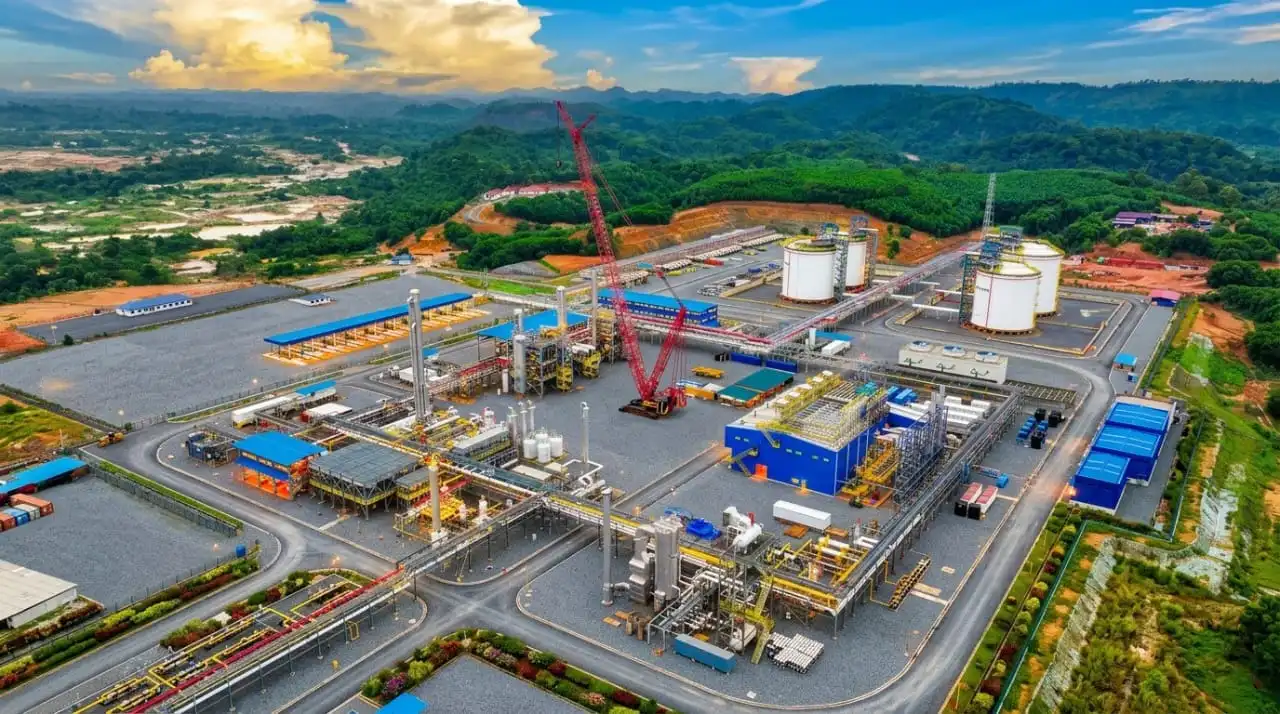
Among the Ghana energy infrastructure project 2026 milestones the new financing supports are the completion of a Gas Conditioning Plant and the Takoradi Natural Gas Liquids Export Terminal, both expected to be commissioned later this year.
These midstream projects extend Genser’s business beyond power generation into processing and exporting the natural gas liquids that come off its own pipeline network.
The Pipeline at the Center of the Business
Central to Genser’s integrated model is its Genser Energy natural gas pipeline Ghana network, a privately developed 436 kilometre system that lets the company transport gas directly to its own power plants and industrial customers, including mining companies, rather than relying on third party infrastructure.
That vertical integration, controlling gas transport and power generation under one roof, is part of what has made Genser attractive to lenders, since it reduces the company’s exposure to external supply disruptions that often affect independent power producers elsewhere in the region.
What Comes Next
The credit package arrives on the heels of a July 2026 shareholder transition in which Genser redeemed the entire 40.4 percent stake previously held by Oppenheimer Partners, ending the South African investor’s five year involvement in the company.
Genser has also said it plans to raise a further 350 million dollars through an equity sale beginning this month, with proceeds intended to pay down part of its roughly 1 billion dollars in current debt.
The company is not yet profitable, since financing costs currently consume most of the profit it generates while it continues borrowing to fund new capacity, but it expects to turn profitable once its growth phase slows and existing projects move from construction into full operation.
For now, the €456 million facility gives Genser the balance sheet strength to finish its current construction pipeline and keep pursuing expansion across West Africa, with Standard Bank positioned as its lead financing partner through the next stage of that growth.