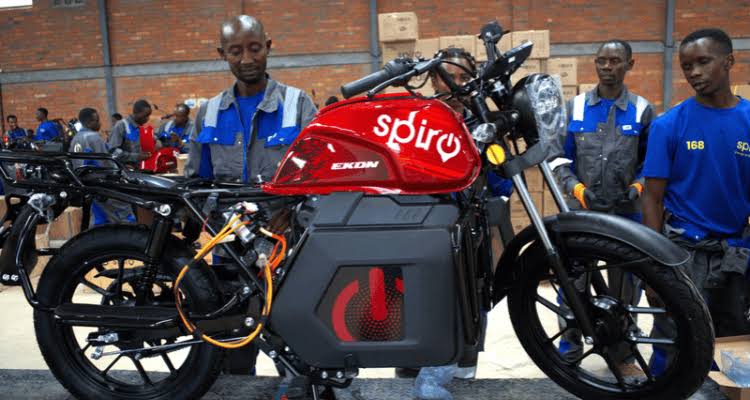
Skoot Technology has launched the Skoot e3W, a battery-swapping electric three-wheeler specifically designed for urban tuk-tuk operators in Kenya.
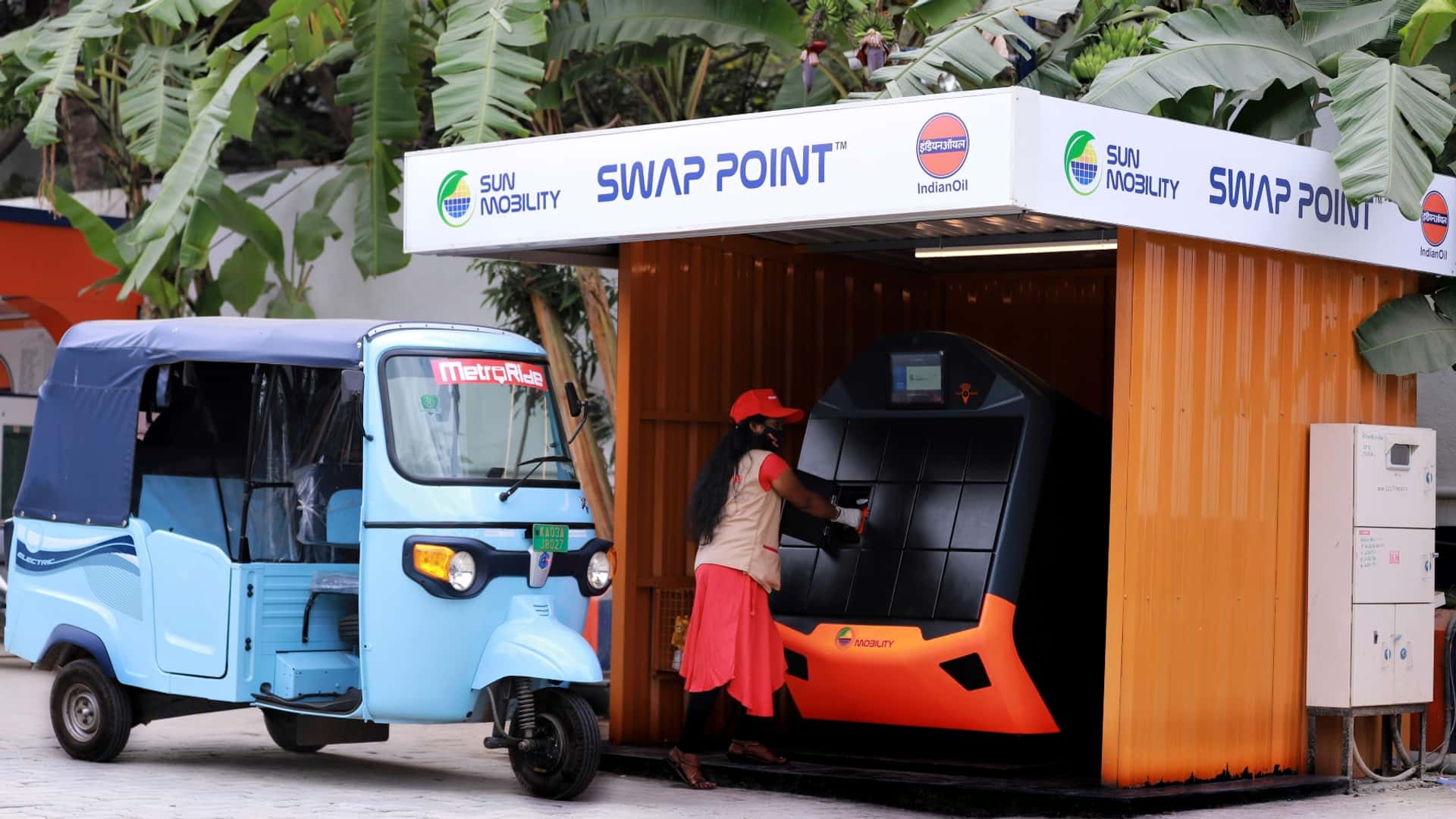
Distributed locally by Car & General and powered by SUN Mobility’s battery-swapping platform, the vehicle addresses rising fuel prices and vehicle downtime challenges prevalent in the informal transport sector.
Following two years of pilot testing in Nairobi under varied load and road conditions, the e3W combines a Piaggio-designed chassis with swappable batteries to enable rapid energy replenishment.
Operators swap depleted batteries in minutes at dedicated stations, treating energy as a predictable operating expense rather than a variable fuel cost.

Battery-Swapping Mechanism and Operational Efficiency
The e3W utilises SUN Mobility’s ultrafast battery-swapping technology, a model proven in India and now introduced to Africa through this partnership.
Drivers replace fully depleted batteries at swapping stations in under five minutes, eliminating the extended downtime associated with conventional charging.
This approach maximises vehicle uptime, which is critical for high-utilisation operators and transforms energy costs into a fixed, per-swap expense.
The mobile app manages lease payments, station location mapping, battery availability, and access to delivery contracts, providing operators with integrated operational tools.
Cost Comparison and Savings Calculation
The e3W delivers substantial savings compared to diesel counterparts, driven by lower energy costs and reduced maintenance requirements.
- For a typical daily distance of 150 km, energy costs approximate KSh 650 using SUN Mobility’s swapping system.
- Equivalent diesel consumption costs around KSh 850.
- This differential yields savings of up to 30%, depending on route, load, and utilisation patterns.
Leasing options start at KSh 1,200 per day (inclusive of maintenance), available on daily, weekly, or monthly terms.
These plans incorporate maintenance coverage, further enhancing predictability and reducing total ownership costs relative to outright purchase or diesel alternatives.
Actual savings may vary based on driving habits, traffic conditions, and local electricity or diesel prices, but pilot data supports the indicative 30% reduction as a realistic benchmark.
READ ALSO:
How IFC’s $5 Million Equity Commitment Strengthens ARC Ride’s Position
Partnership Ecosystem and Market Context
The launch benefits from strategic collaborations:
- Car & General handles local distribution, after-sales service, and maintenance support, leveraging its established footprint.
- SUN Mobility provides the battery-swapping infrastructure, marking its first African deployment after significant scaling in India.
- Skoot Technology manages the overall platform, including digital tools for payments, fleet management, and operator support.
Kenya’s electric vehicle ecosystem supports this introduction: Kenya Power estimates approximately 35,000 electric vehicles on the road by the end of 2025, up from 5,294 in 2024, driven by growth in electric motorcycles and buses.
This expansion creates a more conducive environment for swapping infrastructure and broader operator adoption.
The e3W positions electric mobility as a practical alternative for high-utilisation urban transport, directly addressing cost pressures and reliability issues in Kenya’s informal sector.

Looking Ahead
The Skoot e3W achieves fuel cost reductions of up to 30% for urban operators through SUN Mobility’s battery-swapping system, which replaces lengthy charging with minutes-long exchanges and converts energy into a predictable expense.
Combined with leasing starting at KSh 1,200 per day (inclusive of maintenance) and a mobile app for seamless management, the vehicle offers a compelling economic case in a high-fuel-price environment.
This launch, supported by Car & General and SUN Mobility, represents a meaningful step toward scalable electric mobility in Kenya’s urban transport sector.
For the latest availability, pricing, and station details, refer to official channels from Skoot Technology or Car & General.
Battery swapping Overview
Battery swapping companies are firms that offer modular battery exchange services so electric vehicle (EV) owners can swap depleted batteries for fully charged ones instead of waiting to recharge.
Battery swapping technology lets compatible EVs pull into a station where robotic or mechanised systems remove the empty battery pack and replace it with a charged unit in minutes, improving uptime and convenience.
This approach is used in the EV battery swapping ecosystem, especially for two-wheelers, three-wheelers, and some cars.
Battery swapping technology for electric vehicles typically requires standardised packs, secure locking systems, and back-end energy management to track charge levels and battery health.
The battery swapping cost varies by provider and location and can be structured as pay-per-swap, subscription (e.g., monthly plans), or included with vehicle financing; it aims to lower upfront EV pricing by separating the battery purchase from the vehicle.
Among EV battery swapping companies, notable examples include NIO battery swapping stations in China and parts of Europe, where NIO pioneered interchangeable battery services for its SUV and sedan models.
Other regional startups and OEMs are deploying battery swap models for scooters and bikes in Asia and Africa.
A battery swapping car refers to an electric car designed or adapted for this service; while most such vehicles today are scooters and smaller urban EVs, companies like NIO and select partners are working with cars that accept standardised, modular battery packs for fast exchange.
Ronnie Paul is a seasoned writer and analyst with a prolific portfolio of over 1,000 published articles, specialising in fintech, cryptocurrency, climate change, and digital finance at Africa Digest News.