KCB Group Plc has disbursed KShs. 48.8 billion in green financing loans across East Africa, surpassing its strategic target of allocating 25% of total lending to green projects and reaching 25.84% in 2025, up from 21.6% in 2024.
The figures are disclosed in KCB’s 2025 Sustainability Report themed “Transitioning Economies,” which positions sustainable finance as a driver of inclusive economic transformation across the region.
Green Finance Loans at Scale
KCB’s green finance loan portfolio covers five sectors: renewable energy, sustainable agriculture, green buildings, clean transportation, and water management.
Taken together, those categories represent the infrastructure backbone of a climate-resilient economy, and KCB’s decision to measure and report against a lending allocation target signals that green finance investment is now a core performance metric rather than a corporate responsibility footnote.
The Group also screened KShs 587.9 billion in transactions under its Environmental and Social Due Diligence framework, applying sustainability criteria not just to dedicated green products but to the broader lending book.
That screening volume is what makes KCB a credible green finance bank rather than one that maintains a small ESG-labelled portfolio alongside a conventional lending operation. Sustainability criteria applied at that scale shape the entire credit portfolio.
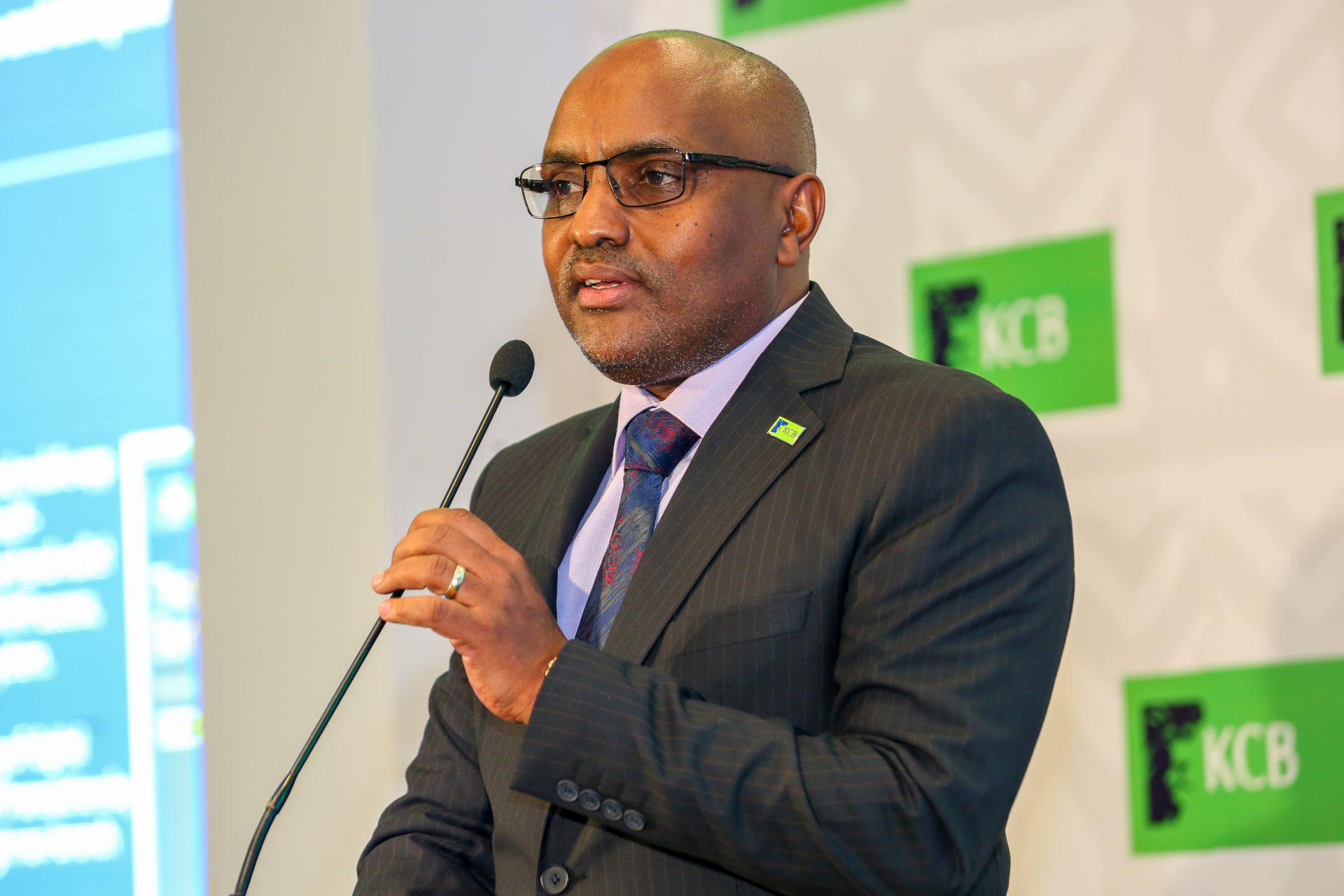
Group CEO Paul Russo described the approach as intentional alignment of financing decisions to support climate resilience and sustainable enterprise growth, with tailored green financing solutions developed for MSMEs, households, and corporates while mobilising capital at scale through global climate finance partnerships.
READ ALSO:
Can KCB Bridge the Climate Finance Gap for MSMEs?
How KCB Is Building a Green Finance Platform Across East Africa
KCB’s green finance platform across East Africa reflects an infrastructure-first approach to sustainability. The bank is not simply originating green loans and reporting against them.
It is building the assessment frameworks, product structures, and partnership pipelines that allow sustainable finance to reach the segments of the economy where climate risk is highest and access to green capital is most limited.
For MSMEs and households, that means tailored products that accommodate the smaller transaction sizes and less formalised documentation typical of small business and retail borrowers.
For corporates, it means structured green finance investment vehicles that can absorb larger ticket sizes and satisfy the reporting requirements of international climate finance partners.
The range from household solar installations to corporate green buildings in a single green lending portfolio is what distinguishes a genuine green finance bank from one offering a single labelled product.
Beyond Loans: Trees, Schools, and Solar
The sustainability commitments in KCB’s 2025 report extend well beyond the lending portfolio. The Group planted more than 3.5 million trees in 2025, more than doubling its 1.5 million target.
It supported 266 schools in adopting cleaner cooking systems backed by KShs. 782.5 million in financing and expanded solar installations to 16 branches, contributing to a 13% reduction in emissions across the Group.
These operational commitments sit alongside the lending numbers as evidence that KCB’s sustainability framing is not limited to what it finances externally but extends to how it operates internally.
A green finance loan company that also reduces its own emissions, plants trees at twice its target, and finances cleaner energy in schools demonstrates institutional coherence between the product portfolio and the organisation’s own environmental footprint.
Green Finance Loan Requirements and the MSME Opportunity
The green finance loan requirements that determine which projects and borrowers qualify for KCB’s sustainable lending portfolio reflect the challenge and the opportunity simultaneously.
MSMEs represent the largest share of employment and economic activity across East Africa, yet they are often the segment least equipped to navigate the documentation, impact measurement, and reporting requirements that green finance certification typically demands.
KCB’s approach to developing tailored solutions for MSMEs within its green finance framework acknowledges that addressing climate finance at the MSME level requires product design that meets borrowers where they are rather than requiring borrowers to meet institutional standards designed for larger corporates.
Whether those tailored products can scale to the volume needed to meaningfully move the needle on East Africa’s MSME climate financing gap will be one of the defining tests of KCB’s green lending strategy over the next five years.
Social Finance Running Alongside Green
KCB’s 2025 Sustainability Report does not treat green finance in isolation from social impact.
The Group disbursed KShs. 149 billion to women-led businesses, supported over 265,300 jobs, and extended formal banking services to 20,299 refugees.
Those figures sit alongside the green lending numbers as part of an integrated sustainability framework that treats climate and social outcomes as complementary rather than competing priorities.
For a bank operating across East Africa, that integration makes strategic sense. The communities most exposed to climate risk are often the same communities most underserved by formal financial systems.
A green finance strategy that also advances financial inclusion is more likely to achieve durable impact than one that optimises for environmental metrics alone.