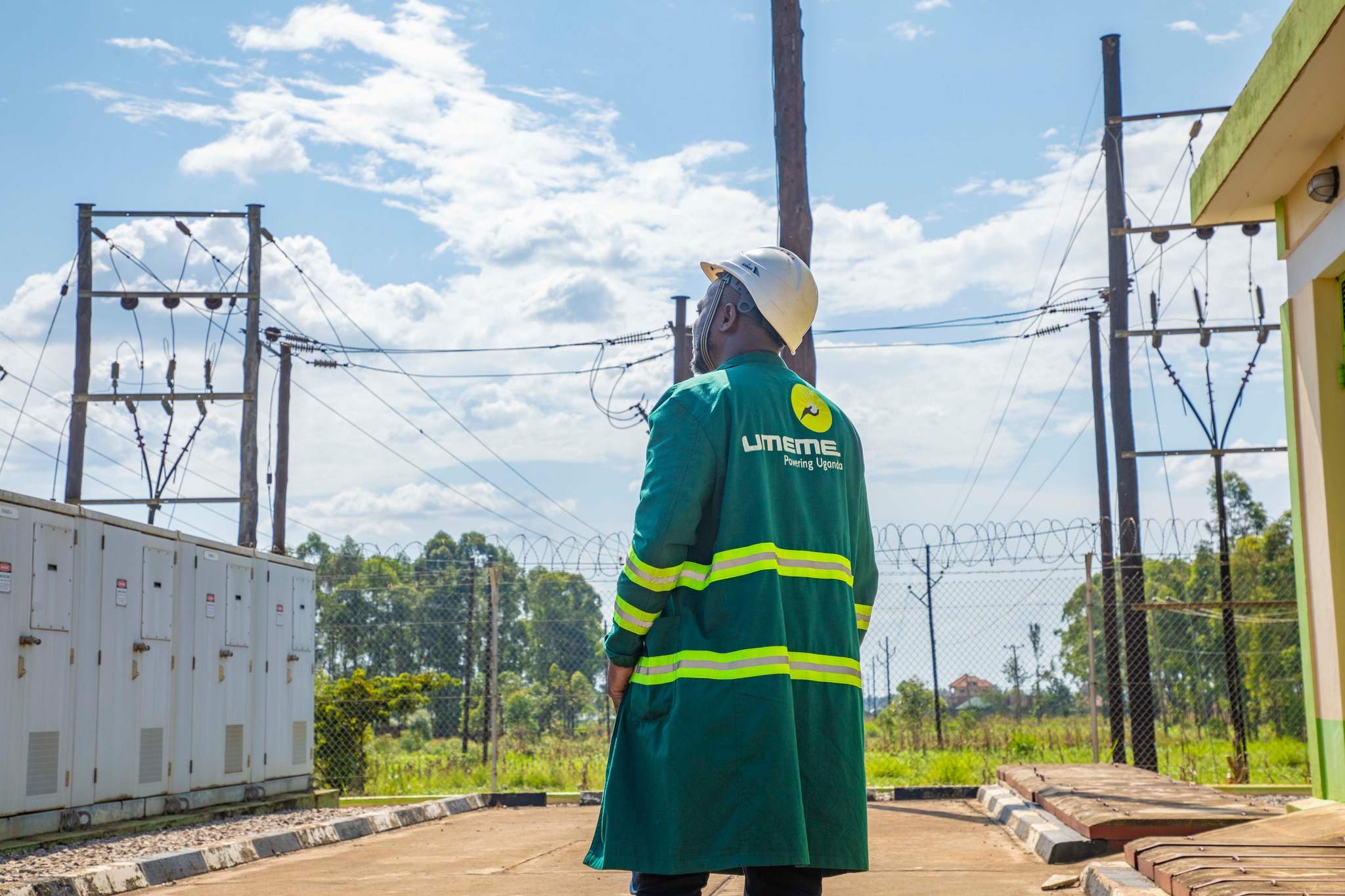
Umeme is the outlier of this entire series: a company whose core business no longer exists.
For two decades it was Uganda’s sole electricity distributor and one of the NSE’s most reliable dividend payers, cross-listed from Kampala.
Then its 20-year government concession ran out in March 2025, was not renewed, and the company effectively lost its business overnight.
What’s left is a fascinating, still unfolding story about buyout disputes, international arbitration, and a company trying to reinvent itself. Here’s the full picture.
History and Founding Story
Umeme was incorporated in Uganda as a private limited company on 6 May 2004. It was formed when the Ugandan government sold Uganda Electricity Distribution Company Limited (UEDCL) to a consortium made up of Globeleq (56%), a subsidiary of the UK’s Commonwealth Development Corporation (CDC), and Eskom (44%), South Africa’s national power utility.
In 2006, Eskom exited by selling its 44% stake to Globeleq, making Globeleq the sole owner, and in October 2009, ownership passed to CDC Group Plc, with the company renamed Umeme Holding Limited.
Later that same year, London-based private equity fund Actis took over the company in a deal valued at $15 million, and Umeme became a core holding of Actis Infrastructure 2 LP, managed through a Mauritius domiciled holding structure.
The foundation of Umeme’s entire business was a concession: starting 1 March 2005, it took over the distribution and supply of electricity across Uganda from UEDCL under a 20-year agreement.
Under that concession, Umeme was contractually required to repair, upgrade, and expand Uganda’s electricity distribution network, effectively acting as the country’s sole electricity retailer for two decades, rather than owning the underlying assets outright.
On 28 June 2012, Umeme converted into a public company, and Actis moved to cash in on its investment through what was, at the time, framed as potentially the East African region’s first cross-border IPO.
Umeme Holdings sold 39.92% of its stake to the public, with shares listing on the Uganda Securities Exchange (USE) on 30 November 2012, following an offer oversubscribed by 36.9%, and cross-listing on the Nairobi Securities Exchange by introduction on 14 December 2012, with active NSE trading beginning on 31 July 2013.
Over the following decade, Umeme built a strong reputation among NSE investors, repeatedly posting some of the highest dividend yields on the exchange as it expanded its network, rolled out prepaid “Yaka” metering to the vast majority of its customer base, and grew profits steadily.
Then, in March 2022, the Ugandan government made the decision that would define Umeme’s next chapter: it announced it would not renew Umeme’s concession when it expired.
The 20-year concession officially ended on 31 March 2025 (some sources cite 28 February or 30 March 2025 as the precise cutoff), and Umeme handed over its distribution assets and operations to the state-owned UEDCL at a public ceremony in Kampala, transferring 99% of its roughly 2,200 to 3,200 strong Ugandan workforce in the process, and closing a chapter the company itself now openly describes as a 20-year legacy rather than an ongoing operation.
Core Business Lines / Revenue Streams
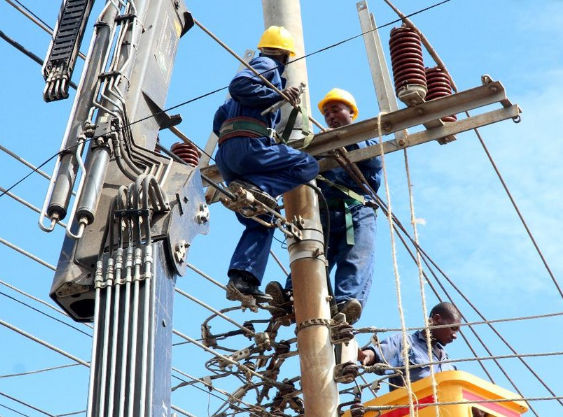
For two decades, Umeme’s business model was straightforward: it bought electricity in bulk from Uganda’s single buyer, the Uganda Electricity Transmission Company Limited (UETCL), and distributed and retailed it to a wide range of domestic, commercial, and industrial customers across Uganda, expanding its network to 42,466 kilometres and 19,783 transformers by the time of the 2025 handover.
That business, in its entirety, no longer exists. Since 1 April 2025, UEDCL has been the official electricity distributor across Uganda, and Umeme has had no ongoing operating revenue from its former core business. Today, Umeme’s activity centres on three things instead:
- Buyout dispute resolution: Pursuing outstanding compensation from the Government of Uganda for unrecovered capital investments and regulatory income under the terms of the original concession agreement, now the subject of international arbitration before the London Court of International Arbitration (LCIA).
- Cash management: Managing and investing the cash the company has already recovered, and preserving what remains of shareholder value during this transitional period.
- New business development: Actively exploring new opportunities that build on its two decades of electricity distribution experience, including a potential venture to support the Government of Sierra Leone with its own electricity distribution system, subject to shareholder approval.
In effect, Umeme today functions less like an operating utility and more like a company in wind-down and reinvention mode, with its share price now largely a bet on how the Uganda buyout dispute resolves and whether management can build a credible new business from what remains.
Competitive Position in Its Industry
For the length of its concession, Umeme held an outright monopoly over Ugandan electricity distribution, giving it an extraordinarily strong, essentially unchallenged competitive position domestically for two decades.
That monopoly is now gone entirely; UEDCL, the state-owned entity, has taken over the role Umeme once played, and Umeme has no domestic distribution business left to compete on at all.
Financially, the transition has been brutal. Umeme’s first half 2025 results showed a UGX 166.7 billion loss, compared to a profit in the same period of 2024, as revenue collapsed 56% to UGX 503.5 billion with the loss of concession income.
Total assets fell from UGX 1.39 trillion to roughly UGX 590 billion within a year.
READ ALSO:
Inside the NSE: TotalEnergies Marketing Kenya (TOTL)
For the full 2025 financial year, the company posted a net loss of UGX 223.6 billion, and its three-month operational period to 31 March 2025 alone (the final stretch before the handover) showed a loss of US$61.9 million on revenue of US$147.0 million, with shareholders’ equity turning negative at -US$97.7 million, reflecting the revaluation of assets and liabilities at the concession’s end.
Umeme’s only real “competitive position” going forward is defined by the strength of its legal claim against the Ugandan government and the credibility of its plans to redeploy its distribution expertise elsewhere, most notably in the early-stage discussions with Sierra Leone.
Whether that translates into a viable ongoing business, rather than simply a vehicle for winding down and returning residual cash to shareholders, remains genuinely uncertain, and is the central question hanging over the stock.
Ownership Structure
Umeme is majority owned by its founding private equity backer, with a notable institutional shareholder base built up since its 2012 listing.
- Umeme Holdings Limited: The controlling shareholder, holding a 60.08% stake. Umeme Holdings is itself fully owned by Actis Infrastructure Umeme Limited, which in turn is 97.77% owned by Actis Infrastructure 2 LP, a private equity fund managed by London-based Actis LLP, specialising in emerging market infrastructure investments across Africa, Asia, and Latin America.
- National Social Security Fund (Uganda): The largest single institutional shareholder outside the Actis structure, historically holding around 23.20% of the company, making Uganda’s public pension fund a major beneficiary (and now major stakeholder in the buyout dispute’s outcome) alongside private investors.
- Allan Gray: A significant foreign institutional investor, historically holding around 14.82%.
- Kimberlite Frontier Africa Master Fund and other institutional investors: Additional institutional shareholders round out the register, alongside retail investors; as of December 2017, shares were split roughly 72% institutional and 28% retail.
Why It’s Listed on the NSE Specifically
Umeme’s NSE listing was, from the outset, a cross-listing rather than a primary one: the shares first listed on the Uganda Securities Exchange in November 2012, and the NSE cross-listing followed by introduction weeks later, in December 2012, with trading beginning the following year.
The explicit goal, as stated by Actis at the time, was to secure liquidity in the secondary market and boost the chances of a full subscription for the Ugandan IPO by tapping into the larger, more liquid Kenyan investor base, an early example of the kind of cross-border East African capital markets integration that companies like BK Group would later pursue on a similar model.
For over a decade, that strategy worked well: Umeme became known among NSE investors specifically for its reliably high dividend yield, at times the highest on the exchange, making it a favourite among income focused Kenyan investors seeking exposure to a well-run, effectively monopolistic Ugandan utility.
The NSE listing has taken on a very different character since the concession’s 2025 expiry: trading in Umeme shares was suspended on the NSE for an extended period (initially through mid-May 2025, then extended a further 30 days into mid-June 2025) specifically to allow the company to work through legal and shareholder communication issues tied to the concession handover.
Since resuming, the stock has been one of the NSE’s most volatile and closely watched cautionary tales, illustrating a risk inherent to any company whose core business depends on a government concession: when that concession isn’t renewed, the listed shell that remains can lose the vast majority of its value almost overnight.
Current Stock Price
Umeme’s share price has collapsed dramatically since the concession’s expiry. The stock hit an all-time high of around KSh24.76 in July 2025, shortly after the company paid out a record interim dividend funded by its initial buyout compensation receipt.
It then fell as much as 71%, to roughly KSh6.94 by late September 2025, making it the NSE’s worst performing stock of 2025.
More recent trading data puts the share price at around KSh7.10 to KSh8.76, with a market capitalisation of roughly KSh3.5 billion to KSh13.6 billion depending on the exact date and data source (a wide range that itself reflects the stock’s continued volatility and thin trading). Reported one-year price changes have ranged from roughly -48% to -55% depending on the measurement window.
Share prices move daily, and Umeme in particular has shown exceptional volatility even by the standards of a newly transitioning company. For a live quote, check the NSE’s official market data page or a licensed brokerage platform before making any decisions.
How to Buy Umeme Shares
You don’t need to be in Kenya or Uganda to buy UMME shares; it can be bought through either exchange it trades on, or from abroad:
- Open a CDS (Central Depository System) account. This is Kenya’s electronic share registry account, required to hold any NSE listed stock, including cross-listed counters like UMME. It’s opened through a licensed stockbroker or investment bank.
- Choose a licensed NSE stockbroker or investment bank. Examples include firms like Standard Investment Bank, AIB-AXYS Africa, Genghis Capital, and Faida Investment Bank. A full list of licensed trading participants is available on the NSE website.
- Fund your trading account via bank transfer, mobile money (M-Pesa is widely supported), or card, depending on the broker.
- Place an order for UMME through the broker’s trading platform, app, or by instructing your broker directly, specifying the number of shares or amount you want to invest. Given the stock’s recent volatility and history of trading suspensions, extra caution and up-to-date research are especially warranted here.
- For non resident and diaspora investors, several online platforms (such as mystocks.africa and similar cross border brokerages) let you open an account remotely, fund it in USD or your local currency, and buy NSE listed shares like UMME without needing an in country presence, though you should confirm licensing and custody arrangements before using any platform.
- Hold and track. Shares are held electronically in your CDS account. Umeme’s dividend history has been dramatic in both directions: the company paid a substantial interim dividend of UGX 222 per share (around US$100 million in total) in July 2025, funded by the partial buyout payment received from the Ugandan government, but shareholders subsequently approved a decision not to declare any final dividend for the 2025 financial year at the company’s August 2026 AGM, given the net loss posted for the year. Future dividends will likely depend heavily on the outcome of the ongoing arbitration over the remaining buyout balance, so check the latest company disclosures closely before assuming any income from the shares.
This profile is for informational and editorial purposes and is not investment advice. Stock prices, especially, change constantly, so always verify current figures with the NSE or a licensed broker before making any investment decision. Other figures reflect the most recent publicly reported data as of 2026 and may change with new financial disclosures. Umeme’s situation in particular remains unusually fluid given the ongoing arbitration process, so readers considering this stock should seek the most current company announcements before making any decisions.